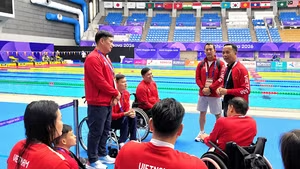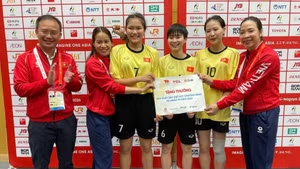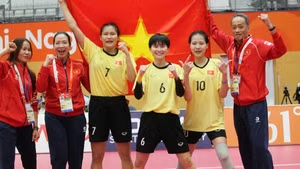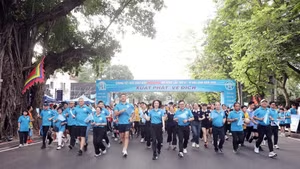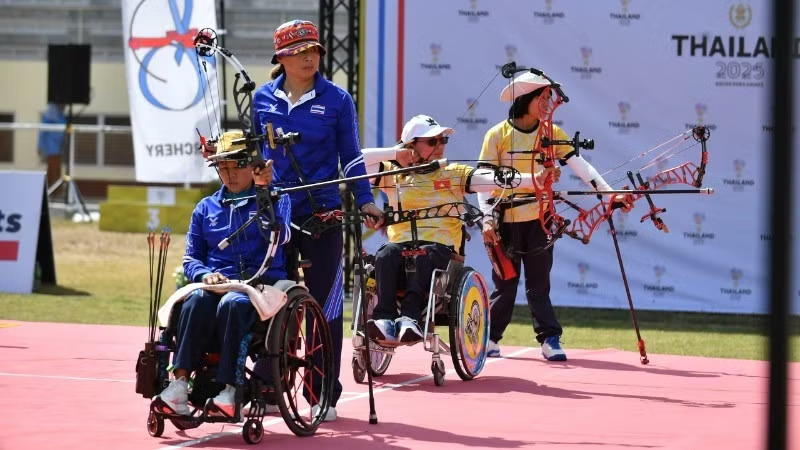
The 13th ASEAN Para Games concluded earlier this year with significant achievements. The Vietnamese Para Sports Delegation won 38 gold medals, 48 silver medals, and 58 bronze medals, ranking fifth overall, despite having a much smaller number of athletes compared to other countries in the region. These achievements not only reflect serious professional preparation but also show the courage, willpower, and aspiration of Vietnamese athletes with disabilities to affirm their value in regional competitions.
On the competition field, every finish line crossed, every successful lift, and every point scored is the result of overcoming personal limitations by athletes with disabilities, thereby conveying a positive message about resilience and belief in life. In this sense, sports have become a space for people with disabilities to affirm their true abilities, escaping subjective or pitying perceptions.
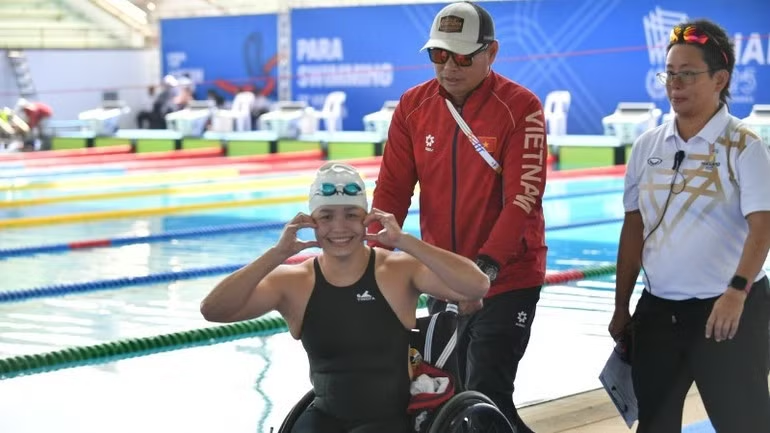
However, the spotlight of major sporting events also prompts broader reflection. The athletes who stepped onto the podium are only a very small part of the community of millions of people with disabilities nationwide. Behind the medals are a harsh reality of life: limitations in accessing education, employment, transportation, public spaces, and opportunities for social integration. From sports, the story highlights the need for comprehensive care for people with disabilities through a more long-term, synchronised, and substantive approach.
Through years of working with people with disabilities at the grassroots level, Phung Xuan Quy, former Vice Chairman of the Association of People with Disabilities, Agent Orange Victims, and Child Protection in Quang Tri Province, believes that the biggest gap today is not the lack of policies, but rather the accessibility and social awareness. Many sound policies have been issued, but their implementation still faces numerous obstacles, making it difficult for people with disabilities to access education, transportation, workspaces, and basic public services.
According to Quy, an approach focused on subsidies, though necessary, is insufficient to help people with disabilities escape their dependence. “What people with disabilities need most is suitable employment opportunities to become independent, reduce feelings of inferiority, and contribute to their families and society.” Quy said that expanding vocational training models linked to market needs, along with improving access to infrastructure and the working environment, will determine the effectiveness of people with disabilities' integration.
In the context of strong digital transformation, Quy particularly emphasised the role of technology and digital skills. According to him, besides being a support tool, it is also a “new door” that helps people with disabilities overcome mobility limitations, expand remote employment opportunities, and bring their products and services closer to the market. “When barriers are removed and opportunities are given correctly, people with disabilities can absolutely stand on their own two feet,” Quy affirmed.
This awareness is increasingly reflected in the Party's guidelines and the State's policies and laws, recognising people with disabilities as an inseparable part of the community, with full rights to live, study, work, and participate in social activities. Caring for people with disabilities is considered a measure of a civilised society, linked to the goal of sustainable development and the guarantee of human rights.
The Employment Law No. 74/2025/QH15, taking effect from January 1, 2026, has supplemented specific regulations on loans for job creation, training, and vocational skill enhancement for people with disabilities and those directly caring for people with severe disabilities. This approach shows a clear shift from subsidy-based support to creating livelihoods and providing opportunities for people with disabilities to actively participate in the labour market.
In addition, Decision No. 1190/QD-TTg approving the programme to assist people with disabilities for the 2021–2030 period and the conclusions of General Secretary To Lam in Notice No. 444-TB/VPTW dated December 5, 2025, continue to emphasise the need to shift from a "medical-care" approach to a "social-integration" approach, aiming to eliminate prejudice, reduce inequality, and empower people with disabilities.
In social life, sports for people with disabilities play a special role. Beyond being a training or competition activity, sports create an environment for people with disabilities to affirm their abilities, build self-confidence, and establish their social standing. Athletes wearing the national team jersey not only represent sporting achievements but also become powerful inspirational figures of resilience and contribution.
The new policies under Decree No. 349/2025/ND-CP, taking effect from February 2026, which adjust training, nutrition, benefits, and employment for coaches and athletes, demonstrate an increasingly comprehensive view of welfare in high-performance sports, including sports for people with disabilities.
One clear example of this approach to giving opportunities and developing the abilities of people with disabilities is the story of Luong Thi Minh Nguyet in Ha Noi. After a spinal injury that left her confined to a wheelchair, instead of succumbing to her physical limitations, she chose to actively participate in vocational education, livelihood development, and community connection activities for people with disabilities. Currently, she holds many roles such as Chairwoman of the Board of Directors and General Director of the social enterprise Khat Vong, member of the Executive Board of the Viet Nam Paralympic Committee, Vice Chairwoman of the Viet Nam Spinal Cord Injury Club, and member of the Ha Noi Association of People with Disabilities.
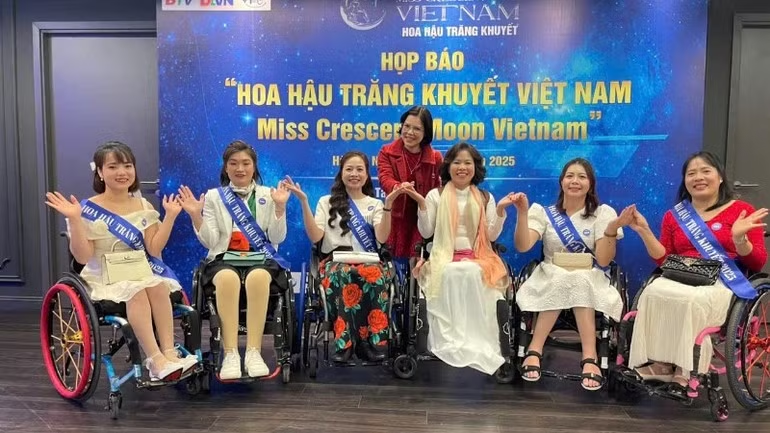
As a person with a disability herself and through accompanying many people with disabilities, Nguyet said that the biggest barrier is not physical disability, but the "invisible walls" caused by social prejudice, inaccessible infrastructure, and charity-oriented approaches. "Many doors are closed not because people with disabilities lack ability, but because society lacks the trust to give them opportunities," Nguyet shared. According to her, if it only stops at subsidies, people with disabilities will find it very difficult to escape the vicious cycle of dependence; the core issue is investing in vocational education, job creation suitable for each type of disability, and building a truly accessible work environment.
From her practical experience managing social enterprises and participating in organisations representing people with disabilities, Nguyet emphasised that with proper training, access to technology, and markets, many people with disabilities can stabilise their livelihoods and create economic and social value. More importantly, being trusted and empowered helps them regain self-confidence, affirm their role in the community, and thereby spread positive values of integration and sustainable development.
Meanwhile, Pham Xuan Huy, another person with a disability in Ha Noi, said that the medals at the Games bring pride, but do not fully reflect the lives of the community of people with disabilities. “We need to be seen with respect, have equal opportunities for education and employment, and a better environment to live independently and contribute to society,” Huy expressed.
From achievements at the 13th ASEAN Para Games to specific life stories, it is clear that social responsibility for people with disabilities does not stop at moments of glory. More importantly, it is crucial to continue removing visible and invisible barriers, from awareness and policies to living environments, so that people with disabilities are truly given opportunities, trusted, and can develop comprehensively. This is both a responsibility to a social group and a measure of the humanity and sustainability of the country's development.