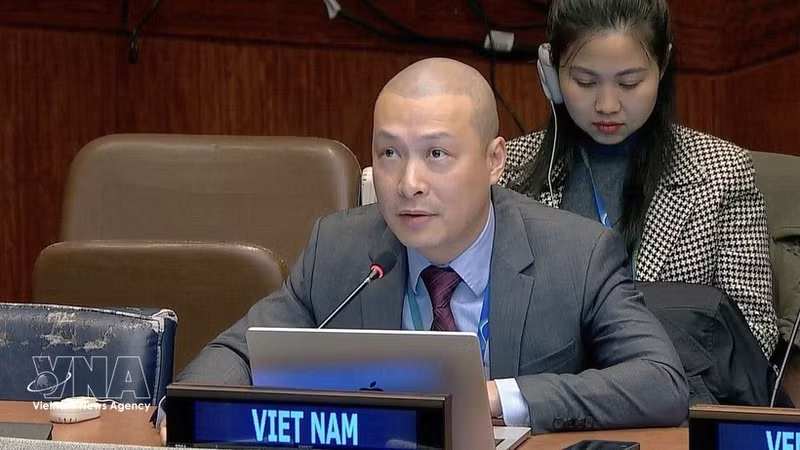
He made the remarks at the 64th session of the UN Commission for Social Development (CSocD), held in New York from February 2-10, under the theme “Advancing social development and social justice through coordinated, equitable and inclusive policies”. The session brought together ministers, senior labour and social-affairs officials from member states, and representatives of international organisations.
The Vietnamese representative noted that over the past five years, the multidimensional poverty rate in the Southeast Asian nation has fallen from 5.2% to 1.3%, while GDP per capita has increased 1.4-fold, placing it among upper-middle-income economies. Its policy framework for social development continues to be strengthened, including the new employment law, which will take effect in 2026, expanding protection for informal workers and enhancing labour-market services.
Women account for more than 30% of National Assembly deputies and nearly half of the workforce, while health insurance coverage has reached 96% of the population, with a goal of universal coverage by 2030, Nguyen said. Public education is now tuition-free nationwide, contributing to progress towards the quality-education target under the Sustainable Development Goals (SDGs).
The diplomat proposed stronger policy coordination through a whole-of-government and whole-of-society approach, integrating gender equality into labour and social policies and promoting women’s economic empowerment. He also highlighted the importance of advancing digital inclusion through investment in infrastructure and digital skills in rural, remote, and disadvantaged areas, alongside enhanced international cooperation and support for developing countries.
In her opening remarks, President of the 80th session of the UN General Assembly Annalena Baerbock warned that climate change and inequality could heighten the risk of instability without comprehensive policy responses.
President of the United Nations Economic and Social Council (ECOSOC) Lok Bahadur Thapa called for greater investment in social protection and social services, describing them as the foundation of resilience and long-term growth.
During the general debate, many countries emphasised people-centred policies, expanded social protection, sustainable employment, and support for vulnerable groups, while developing nations highlighted the need for finance, technology transfer, and capacity-building assistance.