A sustainable development foundation from marine spatial governance and green natural capital
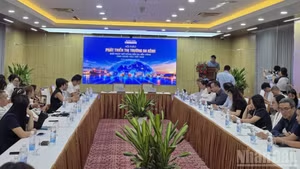
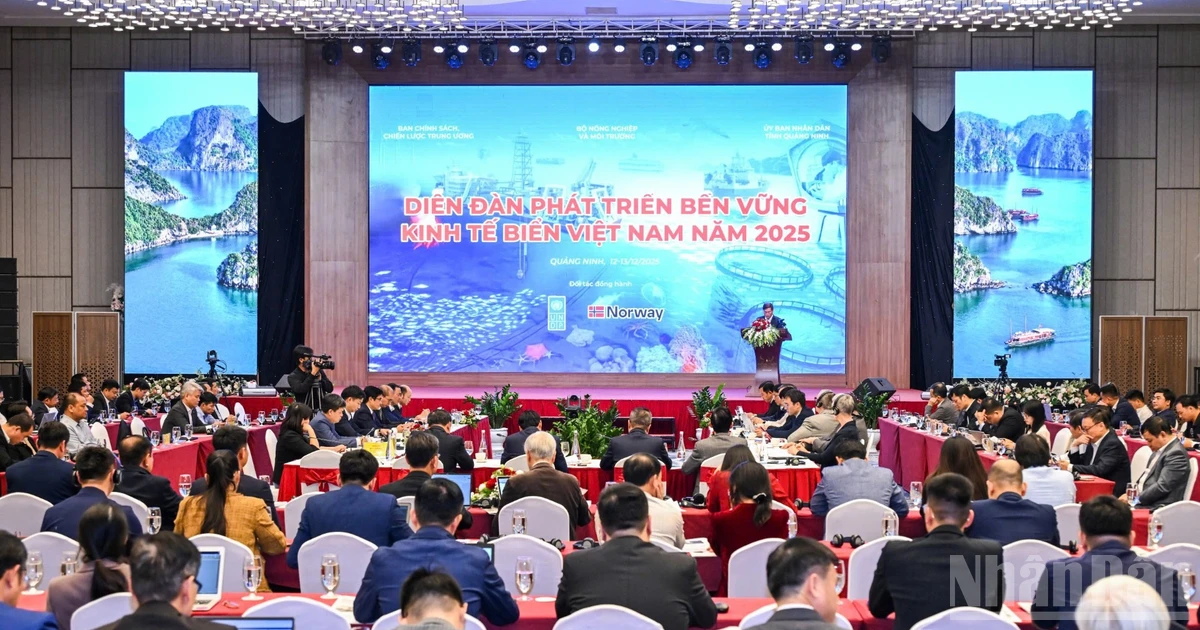
In the context where the marine economy is playing an increasingly important role in Viet Nam’s growth and sustainable development, discussions at the recent Viet Nam Marine Economy Sustainable Development Forum 2025, held in Quang Ninh Province, clarified key pillars for developing a modern and sustainable marine economy in the new period.
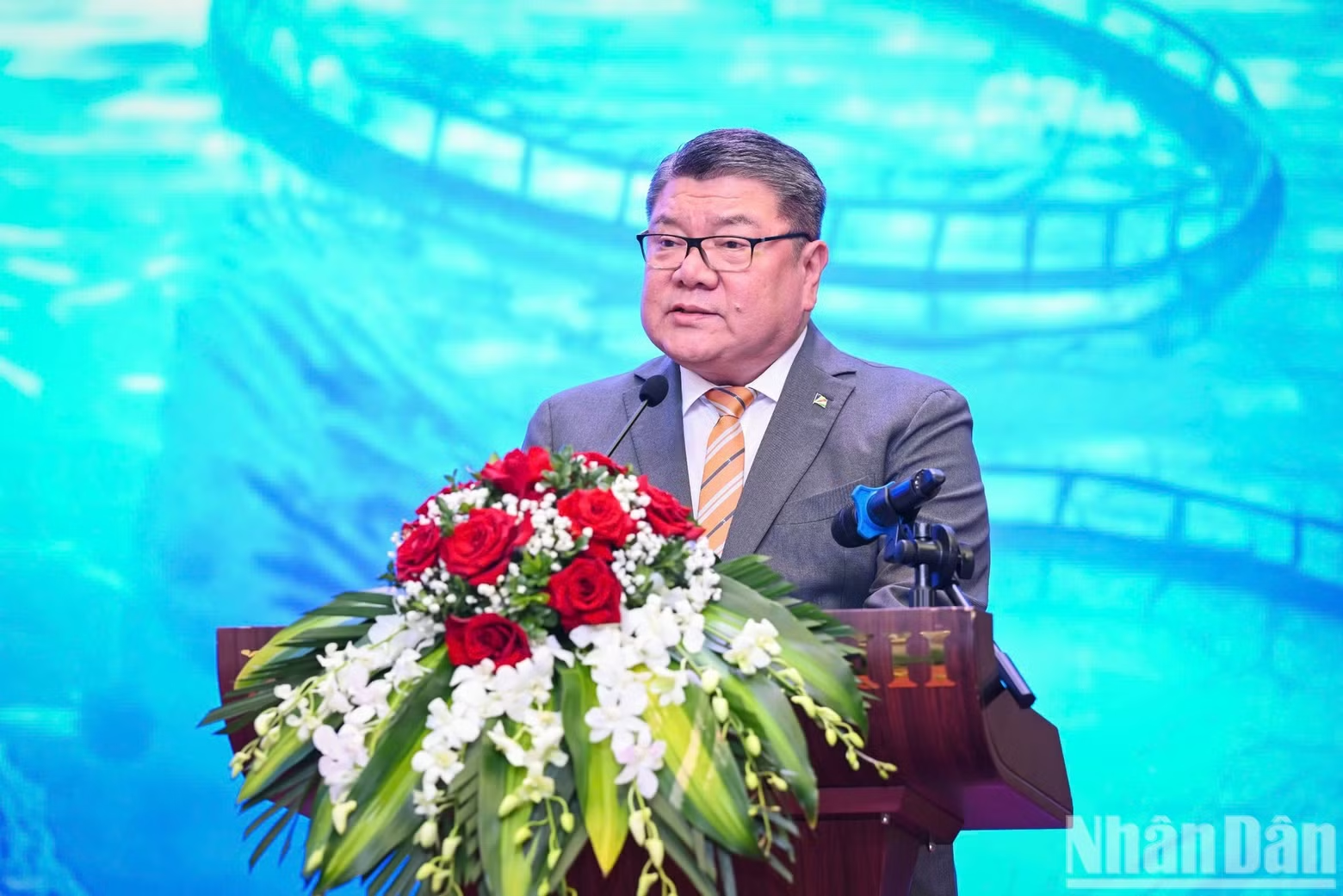
At the forum, Dr Nico Barito, Special Envoy of the President of the Republic of Seychelles to ASEAN, shared Seychelles’ experience in developing a green marine economy linked with ocean conservation and the promotion of natural capital values.
According to him, through marine spatial planning, Seychelles protected 32% of its ocean area, covering more than 400,000 km² by 2020, while zoning marine spaces according to different levels of protection and use in order to achieve balance in economic and ecological objectives.
Seychelles is also a pioneer in issuing blue bonds and implementing debt-for-climate swap models to finance conservation and sustainable development projects.
Notably, the Saya de Malha area, with an area of approximately 40,000 km², absorbs at least 18 million tonnes of carbon emissions each year, while Seychelles’ total emissions amount to only around 600,000 tonnes.
These strong commitments to nature and the ocean have directly contributed to GDP growth and helped make Seychelles a country with a developed economy.
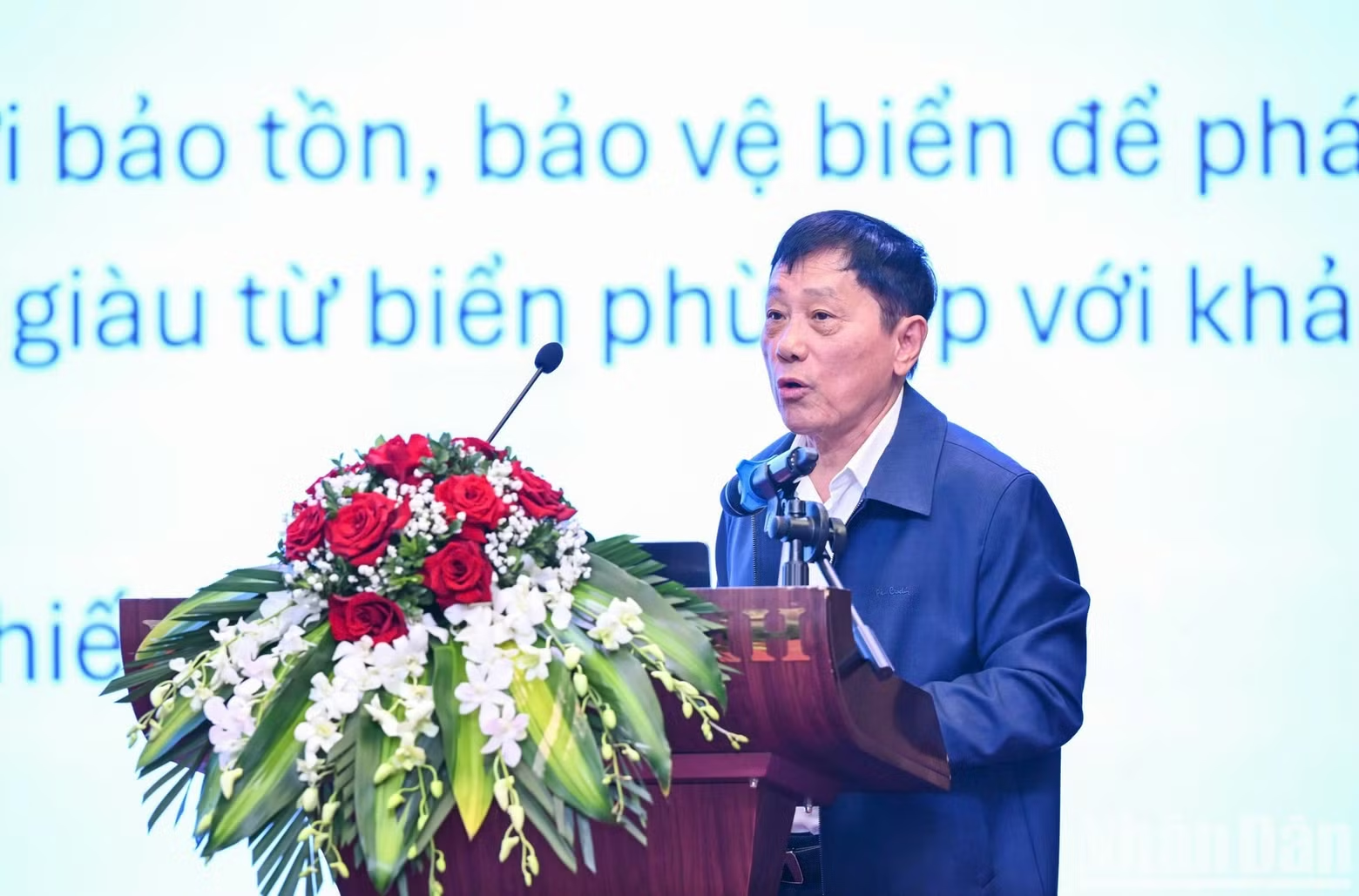
From a domestic perspective, Professor, Doctor Mai Trong Nhuan, former Director of Viet Nam National University, Ha Noi, noted that Viet Nam is facing many major opportunities from the sea, but also no few challenges in marine spatial governance, especially in the context of rearranging and adjusting administrative units and organising a two-tier local government system.
Professor, Doctor Mai Trong Nhuan pointed out that expanding management space at the provincial level allows for the restructuring of planning at a more macro scale, forming key marine economic zones, strengthening inter-regional coordination, and reducing fragmentation in coastal management.
This creates favourable conditions for developing seaport infrastructure, logistics, offshore renewable energy, marine tourism and green fisheries in a modern and sustainable manner.
However, this process also poses many challenges. The risk of “each locality going its own way” among former localities within newly formed provinces could lead to overlapping investments, waste of resources, and fragmentation of marine economic spaces.
The removal of the district level creates management gaps at the grassroots level, while the technical, human and financial capacities of coastal commune-level authorities remain limited. In addition, there are growing challenges related to environmental pollution, ecosystem degradation, climate change, and marine natural disasters.
Therefore, Professor, Doctor Mai Trong Nhuan stressed the need to redesign monitoring mechanisms, resource management, and environmental protection, alongside strengthening the role of the provincial level and enhancing the capacity of the commune level.
At the same time, it is necessary to adjust marine spatial planning in line with the two-tier government model to ensure effective and efficient marine governance; and to synchronously apply solutions in institutions, policies, science and technology, infrastructure development, and innovative marine human resources.
Mobilising capital for offshore wind power and marine aquaculture industries
From a quantitative analysis perspective, Hoang Thai Vinh, Programme Management Officer for Circular Economy and Marine Affairs at UNDP Viet Nam, said that the Blue Marine Economy scenario for Viet Nam shows a clear difference from the business-as-usual development scenario.
According to UNDP’s assessment, if developed under a blue marine economy scenario, Viet Nam’s GDP from purely marine economic sectors by 2030 could reach approximately 2.1 quadrillion VND, about 600 trillion VND higher than the baseline scenario, equivalent to more than 25 billion USD.
Along with this, the average income of marine workers could increase from around 163 million VND per person per year to nearly 290 million VND per person per year, thanks to improved productivity and a shift towards sustainable development models.
The UNDP representative also emphasised the role of marine spatial planning, building synchronised spatial data platforms, and enhancing marine governance capacity to ensure effective policy implementation.
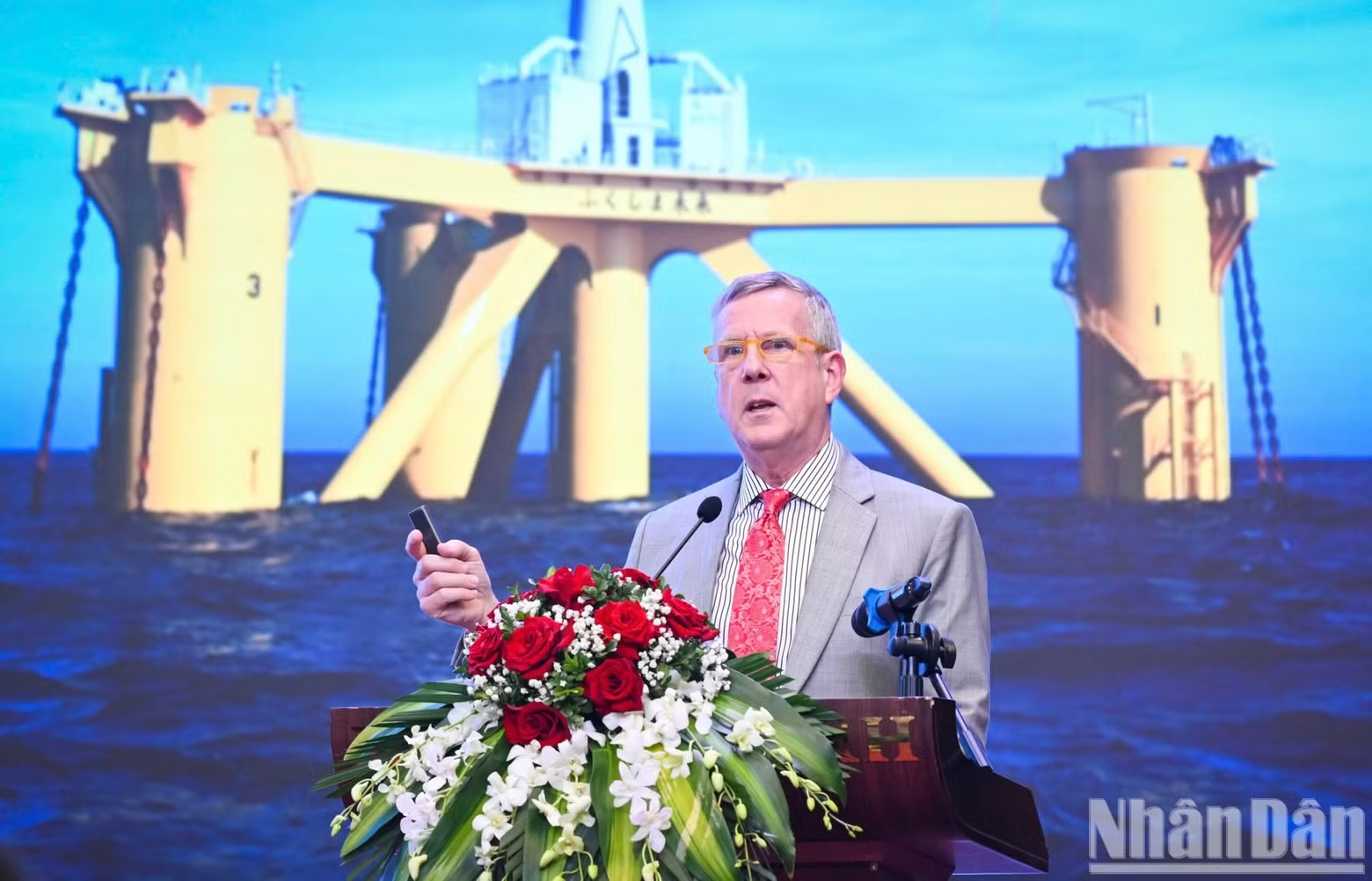
In the energy sector, Dr Mark Hutchinson, Asia Regional Director of the Global Wind Energy Council (GWEC), said that Viet Nam has very large potential to develop offshore wind power and attract international capital flows worth tens of billions of USD. However, there remain many risks that make financial institutions reluctant to provide non-recourse project financing, thereby increasing the cost of capital.
According to Dr Hutchinson, to attract international finance, Viet Nam needs long-term power purchase agreements acceptable to banks, competitive electricity prices, and clear and transparent risk-sharing mechanisms, particularly related to the power grid, curtailment, and adjustments in response to exchange rate fluctuations.
Close coordination among the government, Viet Nam Electricity (EVN), and project developers is considered a key condition for reducing costs and promoting the sustainable development of the offshore wind power industry.
Alongside energy, Associate Professor, Doctor Nguyen Huu Dung, Chairman of the Viet Nam Marine Aquaculture Association, proposed developing domestic marine aquaculture industrial clusters as a breakthrough direction for the marine economy.
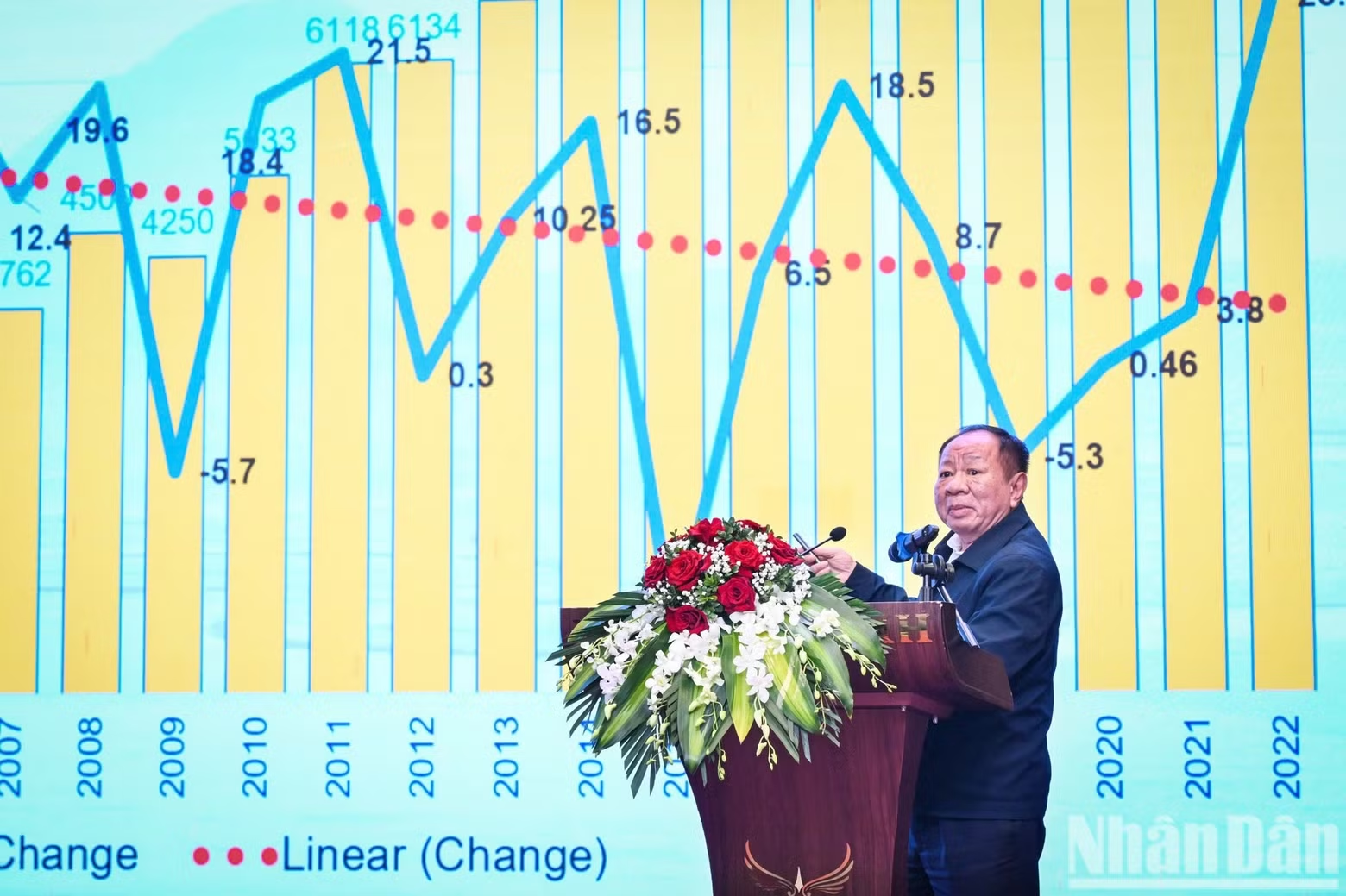
According to Dr Dung, by using only about 0.1% of the exclusive economic zone area, Viet Nam could achieve an output of approximately 10 million tonnes of marine fish per year. The formation of marine aquaculture industrial clusters with synchronised infrastructure — connecting industrial marine farming, processing, logistics services, and the circular economy — would generate large volumes of high-quality output with high added value, while also opening up opportunities for integration with marine tourism, offshore wind power, and other marine economic sectors.
Based on these analyses, Associate Professor, Doctor Nguyen Huu Dung proposed that the Ministry of Agriculture and Environment submit to the government a unified policy orientation and develop a project on establishing a system of marine aquaculture industrial clusters in 21 coastal provinces and cities.
At the same time, priority should be given to allocating land and sea surface funds to invite enterprises to develop pilot investment projects for marine aquaculture industrial clusters; reviewing, amending, and issuing new preferential and support policies for marine aquaculture industrial cluster development in areas such as investment, finance, insurance, science and technology, training, and processing and consumption of marine aquaculture products.
In addition, it is necessary to develop Vietnamese regulations and standards for marine aquaculture industrial clusters, environmental management in marine farming areas, and economic and technical norms for industrial marine aquaculture facilities.