Proactive supply and higher quality for peak season
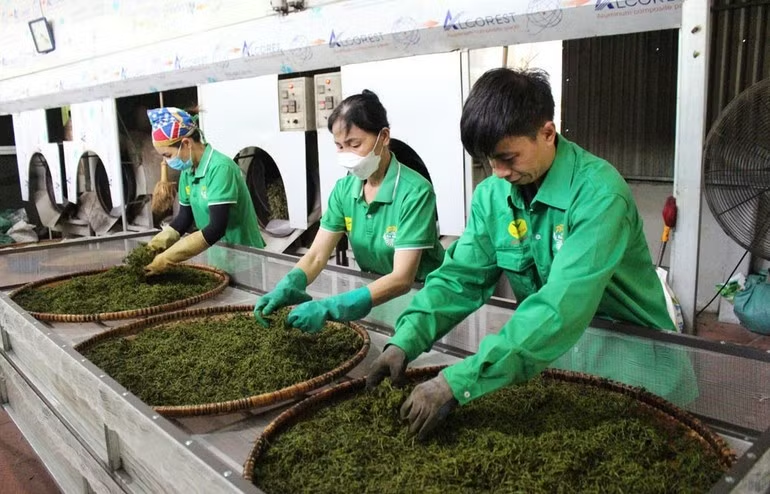
In Phu Luong District, Thai Nguyen Province, Phu Luong Agricultural Cooperative began preparations for the Lunar New Year as early as the 11th lunar month. According to Tong Van Vien, director of the cooperative, production shifts have been increased and additional modern machinery invested in to ensure sufficient supply of key products such as tea, rice, dried vermicelli, and dried pho for Tet 2026.
“Whether selling through traditional channels or online platforms, quality remains our top priority. From raw materials to production processes, everything must meet standards to earn the trust and loyalty of customers,” Vien emphasised.
The cooperative currently operates with a closed-loop, circular production model from raw material zones to processing and packaging. Notably, it produces its own organic fertiliser and controls the entire value chain to ensure sustainability and product safety.
Beyond quality improvements, the cooperative also provides stable employment for 70–100 local workers, contributing to rural economic development associated with sustainable raw material zones.
In the food processing sector, the LadolVita chocolate brand stands as another example of methodical investment by Vietnamese enterprises. After more than two years of research and product development, LadolVita has launched multiple chocolate lines manufactured directly in Viet Nam, offering diverse designs and flavours suitable for various holidays and festive occasions.
Current revenue has reached approximately 3 million USD. The products have been well received domestically and have also garnered positive feedback from international customers, opening prospects for exports in the near future.
Vietnamese goods: Competing beyond price
Vietnamese products today no longer compete solely on low prices. Many enterprises now focus on brand building, traceability, and improved packaging design.
Phu Luong Agricultural Cooperative has incorporated images of historical sites and the cultural identity of the Tay ethnic group and Thai Nguyen homeland into its packaging, aiming for each product to carry not only agricultural value but also local cultural significance. This value-added approach helps create differentiation in an increasingly competitive market.
However, alongside these bright spots, many enterprises — especially small and medium-sized ones — still face numerous challenges in their innovation journey.
Digital transformation and mindset shifts
According to Mai Thi Thuy, Chairwoman of the Ha Noi Association of Women of Small and Medium Enterprises, digital transformation is an inevitable trend. Yet for many small businesses, particularly those led by women, it remains a major challenge.
The difficulty lies not only in capital or technology but primarily in awareness and management mindset. Many businesses are accustomed to traditional methods and have yet to boldly shift to online sales or effectively leverage e-commerce platforms, despite the growing availability of information and support policies.
From a financial perspective, Tran Duc, Deputy Director in charge of corporate clients at Southeast Asia Commercial Joint Stock Bank (SeABank), noted that many international organisations have provided preferential financing packages to banks to support enterprises, including women-led businesses and those pursuing green credit orientations.

However, access to such preferential capital is not always straightforward if enterprises lack financial transparency, management skills, or timely updates on new policies.
Thus, the bottleneck does not lie entirely in policy, but rather in enterprises’ ability to absorb policy support and strengthen their internal capacities.
Domestic market: Significant room for growth
With a population exceeding 100 million and a growing middle class, Viet Nam’s domestic market still holds substantial potential. Trade promotion programmes, fairs, product exhibitions, and supply-demand matching initiatives are creating favourable conditions for Vietnamese goods to reach consumers.
The question now is how exemplary models such as Phu Luong Cooperative or LadolVita can be scaled up into a broader movement to upgrade quality and build strong brands nationwide.
How can small and medium-sized enterprises, particularly in rural areas, avoid being left behind in the wave of digital transformation? More importantly, how can the trust embodied in the slogan “Vietnamese people prioritise Vietnamese goods” evolve from a campaign message into a sustainable consumer choice grounded in quality, transparency, and genuine value addition?
Promoting the domestic market should not merely focus on short-term demand stimulus. It requires a comprehensive ecosystem — from enhancing production capacity and management innovation to facilitating access to capital and refining mechanisms and policies in a hands-on manner for small businesses.
When enterprises innovate confidently, consumers place their trust, and policies are effectively implemented, the domestic market will not only serve as a “pillar” but also become a key growth engine for Viet Nam’s economy in the new phase.