Supporting Vietnamese goods to integrate more deeply into supply chains
Through a series of communication and trade-connection activities before, during and after the fair, the Ministry of Industry and Trade aims to turn promotional outcomes at the event into sustainable linkages between enterprises, distribution systems and markets.
This “value chain” approach enables the fair not only to generate immediate revenue, but also to serve as a platform supporting businesses in market expansion, enhancing competitiveness and gradually integrating more deeply into supply chains.
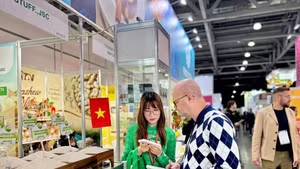
Hoang Danh Huu, founder of the MISS EDE coffee brand, said that at the fair, the MISS EDE booth showcasing Vietnamese coffee and chocolate brands is designed as an experiential space. It introduces specialty coffee and high-quality chocolate products from Dak Lak, a key raw material region of the Central Highlands, where MISS EDE is building an agricultural value chain oriented towards deep processing and international standardisation.
Throughout the fair, MISS EDE plans to serve 2,000 free cups per day of hot chocolate and Dak Lak specialty coffee to visitors. In parallel, the company will roll out special promotional programmes for the Tet shopping season from the very first day of the fair, aiming to bring internationally certified products closer to consumers in the capital city of Ha Noi and neighbouring provinces.
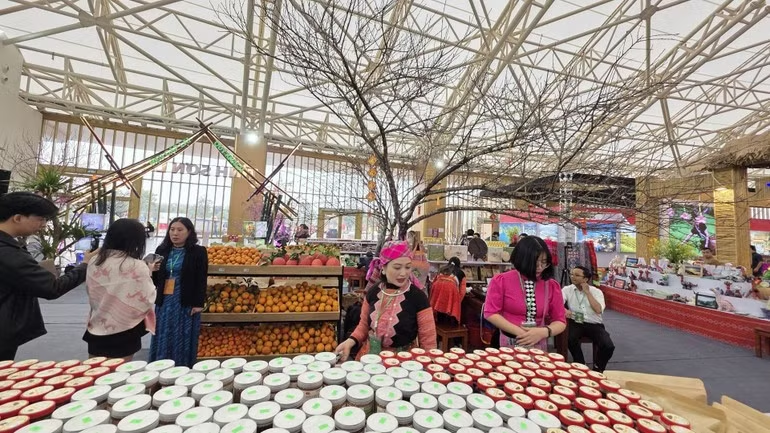
At the fair, the Lai Chau provincial booth, themed “Lai Chau – Highland spring colours, essence of the great forest”, features an exhibition space of approximately 200 square metres. Designed with four open sides, it creates a strong aesthetic focal point and a sense of continuity. The display area is divided into four thematic streams associated with the natural landscapes and springtime of the north-western highlands, including: Touching spring amidst a thousand flowers; Pale peach blossoms in the morning mist; Wild sunflowers welcoming golden sunshine; and Rhododendrons lighting up the mountains.
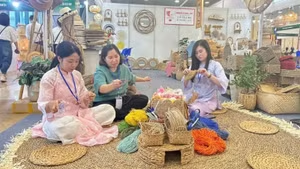
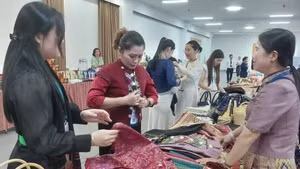
The highlight of the Lai Chau booth is the area showcasing OCOP products, key agricultural produce and traditional handicrafts of the province. Many distinctive products that have established their brands in the market — such as tea, cinnamon, macadamia nuts, Lai Chau ginseng, specialty rice, medicinal herbs, cordyceps, dried meat, as well as brocade textiles and bamboo and rattan handicrafts rich in the cultural identity of highland ethnic communities — will be widely displayed and promoted to consumers in the capital and to domestic and international visitors.
Creating consumer experiences linked to cultural identity
Alongside economic factors, Tet cultural spaces, craft villages, regional specialties and cultural industries are intentionally integrated, thereby creating consumer experiences rooted in cultural identity and enhancing the perceived value of Vietnamese products in the minds of consumers.
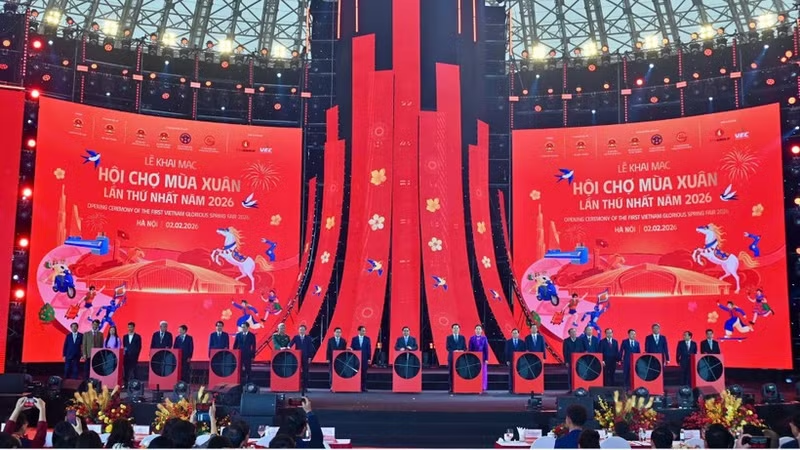
Unlike spontaneous retail activities, the Spring Fair 2026 is designed as a concentrated and well-regulated shopping space, with the participation of around 2,500 enterprises and an expected scale of 3,000 booths. All participating products have clear origins and meet quality and safety standards, with many businesses offering promotional programmes, price-stabilisation sales and Tet incentives.
Le Manh Quy, Director of Quy Hoa Trading, Service and Import–Export Co., Ltd, shared that this is his third time participating in a large-scale trade promotion event — the first being A80, the second the Autumn Fair, and now the Spring Fair. Through the previous two events, Quy Hoa golden camellia tea products have become widely known, particularly via the Autumn Fair and A80.
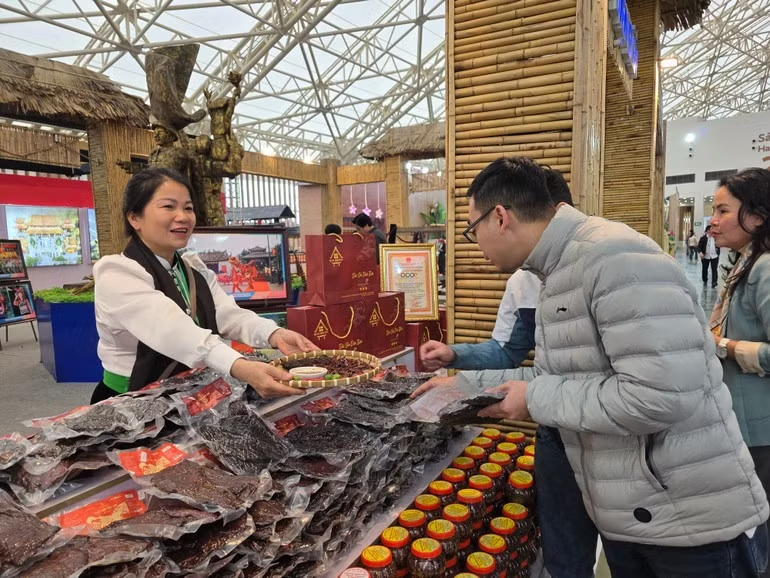
“The Spring Fair is a large-scale event and carries the spirit of a new beginning for the year, so I believe this is an excellent time for our products to continue spreading. From practical experience at previous fairs, I have seen that such promotional spaces provide agricultural enterprises like ours with opportunities to directly reach consumers, listen to genuine feedback and further improve our products,” Le Manh Quy affirmed.
Another important highlight of the fair is the reduction of intermediary stages in goods circulation. Through direct connections between producers, distributors and consumers, businesses can significantly cut operating and consignment costs, creating room to lower retail prices and enhance product competitiveness. This approach not only helps people access goods at more reasonable prices, but also contributes to strengthening market confidence at a time when purchasing power is still affected by broader economic conditions.
Overall, the Spring Fair 2026 is expected to contribute to balancing supply and demand and limiting localised price fluctuations during the Tet period, thereby supporting the Government’s objectives of market stabilisation and inflation control.