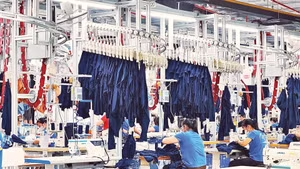
In 2025, the global economy continued to be complicated; trade tensions, geopolitical instability, and the cautious monetary policies maintained by many countries have directly impacted global production and business activities.
In this context, Viet Nam’s industrial sector faces significant pressure from trade barriers and tariffs, especially policy adjustments by the US, affecting production, exports, and the competitiveness of industrial enterprises.
Six outstanding bright spots in industrial production
The General Statistics Office assessed that the industrial production picture in 2025 has six bright spots, specifically:
First, industrial production in the fourth quarter of 2025 increased significantly and reached its highest level in many years. The Industrial Production Index (IIP) for the fourth quarter of 2025 was estimated to increase by 9.9% year-on-year, the highest fourth-quarter increase since 2018.
Specifically, the mining sector increased by 3.4% (the second highest increase since 2018, only after 2022 when oil prices rose); the manufacturing sector increased by 10.8%, equivalent to the increase in the fourth quarter of 2018 and building on the relatively strong growth of the previous year; and the electricity production and distribution sector increased by 8.0%. The IIP continues to maintain a trend of higher growth in each subsequent quarter, reflecting a clear recovery towards the end of the year.
Second, overall, in 2025, industrial production grew more positively and stably. The Industrial Production Index (IIP) for the whole year increased by 9.2% compared to the same period in 2024, higher than the 8.2% increase in 2024 and significantly exceeding the 1.3% increase in 2023. Manufacturing continued to be the main driving force, increasing by 10.5%, the highest growth rate since 2019 and building on the 9.5% growth of 2024.
Third, many key export industries maintain relatively strong growth momentum. Notably, in the food processing industry, seafood processing and preservation increased by 12%, and fruit and vegetable processing and preservation increased by 18.4%, contributing to double-digit growth for the entire sector — the highest in the past 10 years.
Fourth, new orders for businesses show signs of improvement in Q4/2025. Some 79.3% of manufacturing businesses reported an increase or stability in new orders compared to Q3/2025, indicating a more positive outlook for year-end production.
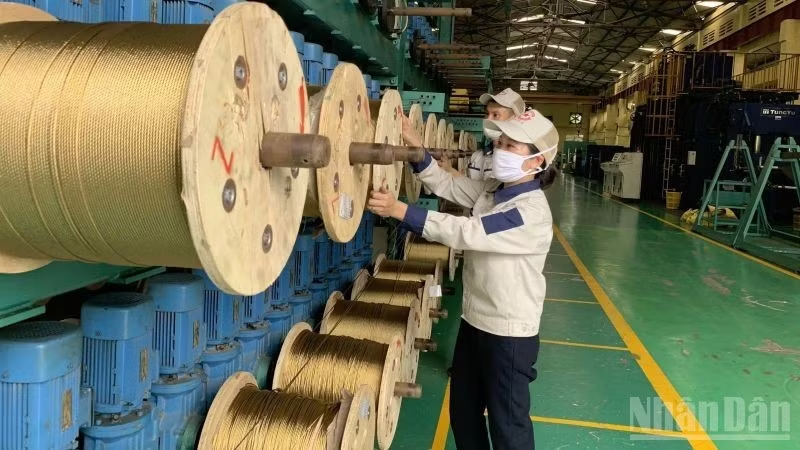
Fifth, production serving the domestic market increased significantly, especially in sectors linked to public investment. The production of materials and products for construction continued to grow strongly.
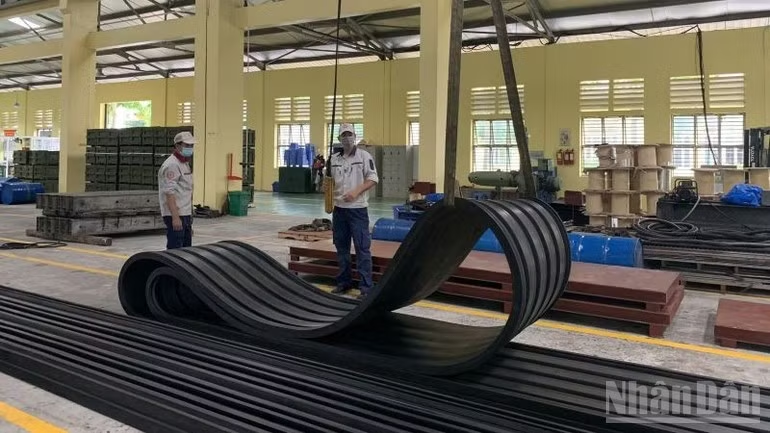
Sixth, many key industrial localities recorded significant increases in the Industrial Index of Production (IIP), creating a bright spot for the entire sector. Some localities with high growth rates include: Phu Tho (26.4%), Ninh Binh (22.8%), Bac Ninh (17.1%), Nghe An (16.5%), Thanh Hoa (15.8%), Dong Nai (15.2%), Hai Phong (15.1%), Quang Ninh and Tay Ninh (both 14.9%), and Hung Yen (12.3%).
Some notes to increase industrial production value
According to the General Statistics Office, besides the positive results, industrial production in 2025 still has some issues to consider:
First, the recovery across sectors is not uniform. Some sectors experienced low growth or decline compared to the same period last year, such as: metal ore mining decreased by 6.5%, crude oil and natural gas extraction decreased by 2.5%; and the production of pharmaceuticals, chemicals, and medicinal materials increased by only 1.1%; continue to strengthen and synchronise solutions to improve the quality of industrial production growth.
Second, high inventory levels continue to put pressure on businesses. In 2025, the manufacturing industry’s production index increased by 10.5%, while the consumption index only increased by 9.9%; the overall industry inventory index at December 31, 2025, increased by 13.1% compared to the same period of the previous year, higher than the 10.4% increase in 2024, putting pressure on cash flow and production plans.
Third, difficulties in the consumer market remained a major obstacle. Survey results showed that the three main difficulties for manufacturing businesses are: increasingly fierce domestic competition (50.5% of businesses); low domestic market demand (49.3% of businesses); and slow recovery of international market demand (29.5% of businesses).
Fourth, borrowing costs had a stronger impact in the fourth quarter of 2025. Some 22.8% of businesses reported that high borrowing interest rates affected their production and business operations in the fourth quarter of 2025.
In general, the General Statistics Office believes that industrial production in the fourth quarter and the whole of 2025 showed clearer positive signs compared to the beginning of the year, demonstrating a relatively solid recovery momentum. However, structural and market difficulties still exist, requiring the continued implementation of comprehensive support solutions to consolidate the recovery momentum and improve the quality of industrial growth in the coming period.