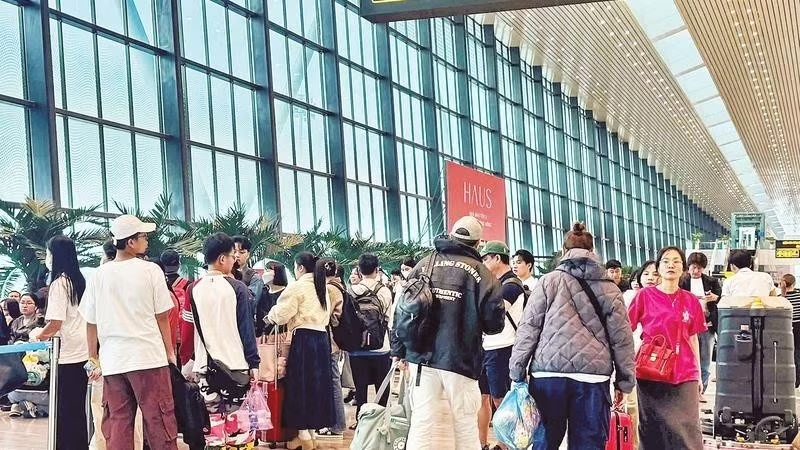
According to the operational plan, the total number of flights on the fourth day of Lunar New Year (Tet) includes 518 departures and 519 arrivals. Although the number of departures and arrivals is nearly equal, the passenger structure shows a significant imbalance: 70,903 departing passengers and 99,895 arriving in Ho Chi Minh City. Operational pressure is therefore concentrated mainly on arrivals, particularly during peak hours of daytime and evening.
Domestic passengers account for the majority, with the domestic terminals alone receiving more than 70,000 arriving passengers. Of these, Terminal T3 handles over 42,200 arrivals, while Terminal T1 receives more than 28,400. International Terminal T2 continues to operate steadily with 318 flights during the day.
Notably, this is the first year that Terminal T3 has participated in serving the Lunar New Year peak period. On February 20, Terminal T3 operates 459 flights, including 230 arrivals, serving nearly 67,000 passengers. The operation of the new terminal, together with the policy of increasing flight frequencies during late-night and early-morning, has significantly enhanced the airport’s overall operational capacity and eased pressure on Terminal T1.
Under the original plan, the airport was expected to serve an average of around 145,000 passengers per day during Tet, with a peak of about 165,000. However, the volume on February 20 surpassed the forecast peak, reflecting strong travel demand as people return to work and study after the Tet holiday.
To ensure smooth and absolutely safe operations, Tan Son Nhat International Airport has proactively coordinated with airlines and ground service providers to build detailed operational plans, allocate appropriate manpower and equipment, and strengthen supervision during peak hours to meet the sharp increase in traffic.