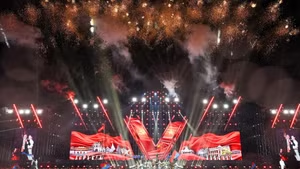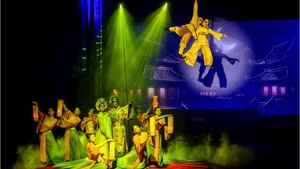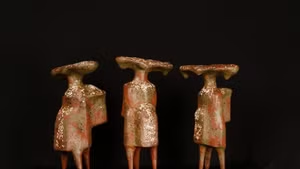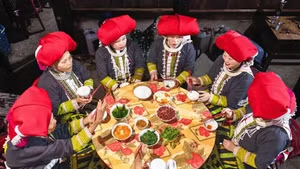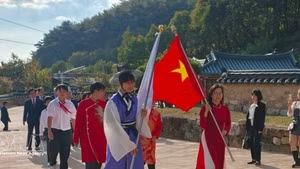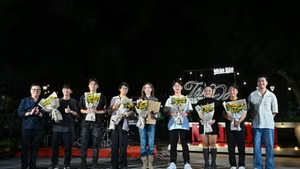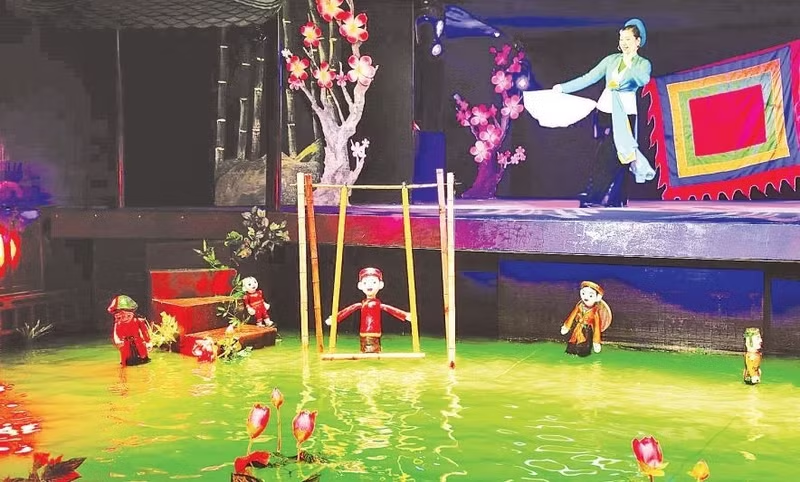
A distinctive feature of the event is that Vietnamese artists will work with their French counterparts on joint productions. The event will help promote Viet Nam’s people and image while highlighting the need for greater innovation and creativity to bring Vietnamese theatre to international audiences more regularly and sustainably.
Positive developments
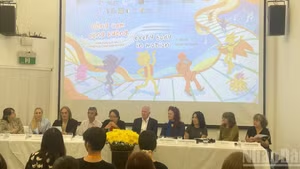
Viet Nam en Scène is jointly organised by the Ministry of Foreign Affairs, the Ministry of Culture, Sports and Tourism, and Vietnamese representative agencies in France to mark the 50th anniversary of Viet Nam’s accession to UNESCO. More than 100 artists from the Viet Nam Youth Theatre, the National Theatre of Traditional Arts of Viet Nam, the Tran Huu Trang Cai Luong Theatre, the Da Nang Traditional Arts Theatre, the Viet Nam Puppetry Theatre and the Viet Nam National Opera and Ballet, alongside French artists, will take part in the programme, entitled “From Heritage to Contemporary Art”.
What has particularly attracted the attention of theatre professionals is the way the event is being organised. In the past, Vietnamese theatre performances overseas were largely staged as part of cultural days or weeks. Theatre companies typically selected a few outstanding excerpts for overseas Vietnamese communities and invited guests. However, local audiences often found it difficult to fully understand the stories and cultural nuances behind each performance.
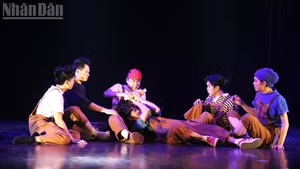
This time, “Hon Truong Ba, da hang thit” (The Soul of Truong Ba in the Butcher’s Body), by playwright Luu Quang Vu, will be staged by French director Anne Bouvier in collaboration with actors from the Viet Nam Youth Theatre. Meanwhile, the legends of Dinh Bo Linh and Truong Chi will be adapted into a contemporary musical by Vietnamese-French director Olivier Dhenin Huu and Winterreise Theatre Company.
By presenting Vietnamese stories through theatrical forms familiar to European audiences, the productions are expected to be more accessible. Vietnamese Ambassador to France Trinh Duc Hai described this as a shift from “introducing” Vietnamese culture to “creating together”.
Viet Nam en Scène follows a series of lively international exchanges involving Vietnamese theatre professionals in recent years. These include the sixth International Experimental Theatre Festival, held in Ha Noi, Hai Phong, Ninh Binh and Ho Chi Minh City in November 2025. The festival brought together more than 1,000 artists and featured 19 domestic productions and eight foreign works.
Last May, Pygmalion, staged by the Ha Noi Academy of Theatre and Cinema, won the Outstanding Production award at the eighth Asian Theatre Schools Festival in Beijing, China. The experimental cai luong production Solar Eclipse, by the Ho Chi Minh City University of Theatre and Cinema, had already won four gold awards in Nanning in late 2025. Subsequently invited specifically to the third South and Southeast Asian Theatre Festival in Yunnan, China, it received six awards, including Best Production. These achievements are encouraging for traditional theatre and demonstrate that a younger generation of artists is ready to test itself in highly competitive environments.
Taking theatre to the world is also an effective way to introduce a country and its culture in a form that resonates with audiences. Deputy Foreign Minister Ngo Le Van has described theatre as a “natural bridge” through which international audiences can appreciate the depth of Vietnamese culture. Director Olivier Dhenin Huu has expressed his hope of bringing French audiences closer to a Viet Nam of legends, memories and spiritual life, which he believes remains relatively little known in France.
Learning to reach wider audiences
International integration offers theatre professionals opportunities to learn and raise their standards. At the sixth International Experimental Theatre Festival, People's Artist Trinh Thuy Mui, Chairwoman of the Viet Nam Theatre Artists Association, said: “Vietnamese artists need to surpass themselves and learn from the finest achievements of world theatre.” Liu Chenggang, technical director of a theatre troupe from China's Shandong Province, said his team had also gained “a deeper understanding of sophisticated and incisive theatrical thinking and language” from Vietnamese productions.
Several Asian countries have successfully brought their traditional theatre to international audiences. Japan's kabuki made its overseas debut in 1928. After nearly a century of sustained international touring, the art form has become a distinctive symbol of Japanese culture. In China, an abridged version of the kunqu opera The Peony Pavilion, produced by writer Bai Xianyong in collaboration with the Suzhou Kunqu Opera Theatre, has toured the UK, the US and Greece. According to China Daily, the production had been staged more than 500 times over 20 years, attracting around 800,000 audience members, many of them young people.
Vietnamese theatre still has considerable work to do to establish itself internationally. Journalist Nguyen My Linh, production director of Viet Nam en Scène in France, acknowledged that winning over Parisian audiences would be a “major challenge”, as the city has more than 300 theatres presenting performances every day.
Director Le Quy Duong, who has worked for many years with the International Theatre Institute, believes Vietnamese theatre needs a “breakthrough” to address organisational and operational obstacles. In many countries with well-developed theatre industries, he noted, directors and actors are openly recruited for individual productions rather than relying solely on existing permanent staff.
Resolution No. 80-NQ/TW of the Politburo calls for the promotion of Viet Nam's soft power and wider international appreciation of its cultural values. For theatre, experts have identified three priorities.
First, cooperation must move beyond one-off events towards sustained partnerships. Deputy Minister of Culture, Sports and Tourism Ta Quang Dong said Viet Nam en Scène aims to establish a lasting foundation for cooperation through co-productions, artist exchanges and professional training. This approach should be extended to other international partners.
Second, production methods need to be modernised. From the script-selection stage, theatres should consider preparing versions suitable for international touring, with subtitles and high-quality recordings that can be submitted to festivals.
Third, the sector needs funding and skilled professionals. Proposed measures include establishing touring support funds, commissioning international co-productions and encouraging corporate sponsorship. It is also essential to train professionals with foreign-language skills and expertise in production, copyright negotiations and marketing.
Tuong, cheo, cai luong and water puppetry are valuable cultural assets that few other theatrical traditions can match. To turn this heritage into genuine soft power that contributes to national development, Viet Nam needs more carefully planned and adequately funded initiatives, producing compelling works capable of captivating audiences around the world.