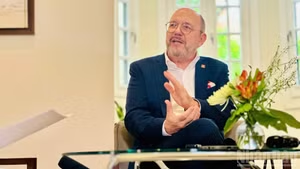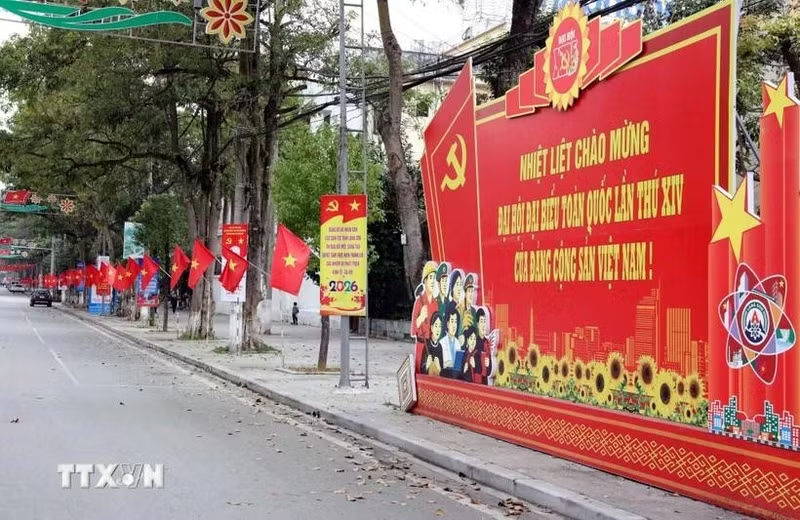
The 14th National Congress of the Communist Party of Viet Nam (CPV) will be a historic milestone, laying the groundwork for a new leap in socialism construction and economic growth in Viet Nam, said Tilvin Silva, General Secretary of Sri Lanka’s ruling Janatha Vimukthi Peramuna (People's Liberation Front – JVP).
Speaking to Viet Nam News Agency correspondents in India, the party leader stressed that the congress should be viewed within nearly a century of development of the CPV since its founding in 1930 – a journey marked by the struggle for national independence, national reunification and the building of a socialist-oriented market economy.
He praised the CPV leadership role and the ideological legacy of President Ho Chi Minh, describing them as a fundamental source of inspiration for Viet Nam’s modern development. According to Silva, the strategic decisions adopted at previous party congresses have elevated Viet Nam’s standing in Asia. In that context, the 14th congress, which sets the Party’s ideological, political and organisational directions, will continue to act as a catalyst enabling the country to adapt to a new global environment and move towards becoming a high-income country.
Referring to new priorities outlined in the congress’s draft documents, including placing environmental protection on an equal footing with socio-economic development, elevating diplomacy and international integration, and emphasising the role of culture, people and the private sector, Silva said these reflect modern and responsible development thinking. As the world grapples with the environmental consequences of rapid industrialisation, Viet Nam’s choice of growth aligned with sustainable development is both timely and appropriate, he noted.
The JVP leader said Viet Nam’s strategic goals to 2030 and vision to 2045 demonstrate strong national aspirations. By 2030, marking the Party’s centenary, it aims to become a developing country with a modern industrial base and upper-middle income, while the 2045 vision, coinciding with the centenary of the nation, targets a developed socialist state with high income.
To achieve these goals, he suggested Viet Nam maximise the role of science and technology, innovation, digital transformation and renewable energy, while improving the efficiency of productive forces and social consciousness.
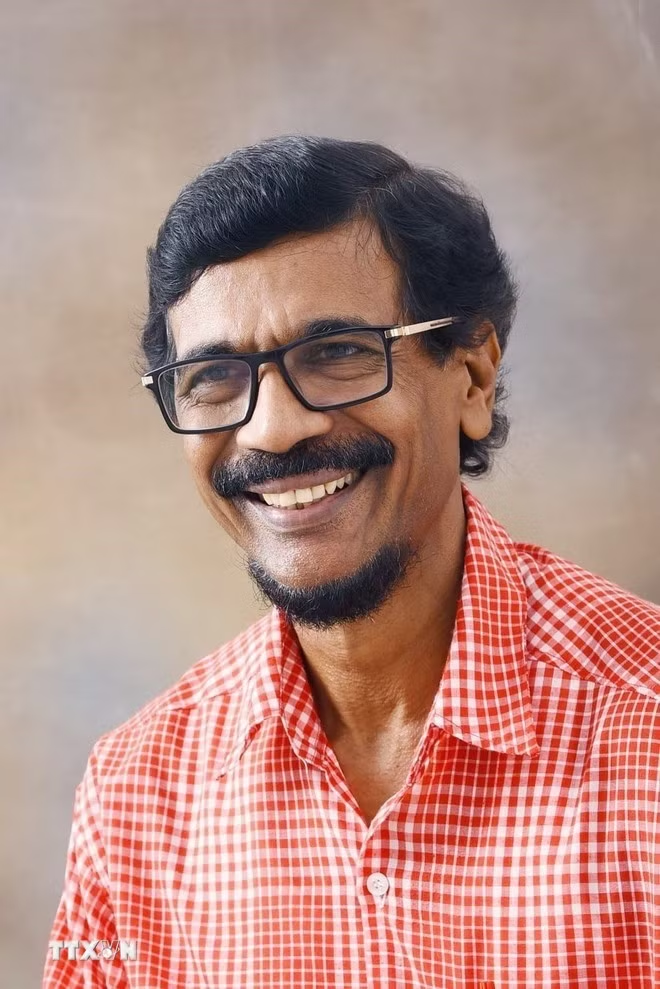
Silva also commended Viet Nam’s open and balanced foreign policy, noting that deeper international integration will create further opportunities for the Vietnamese people.
He highlighted the Party’s ability to renew itself as a key driver of its dynamism and vitality in the new era. In his view, Viet Nam’s efforts to strengthen discipline, consolidate organisation, adopt more scientific, democratic, and effective leadership methods, build a socialist rule-of-law state, and remain committed to people-centred governance will bolster public trust and make development goals more achievable.
Over the next five years, Silva recommended that Viet Nam prioritise economic growth alongside institutional improvement, environmental protection, and the maintenance of an independent, self-reliant and flexible foreign policy, closely integrated with national defence and security. At the same time, building, rectifying and modernising the Party must remain central, particularly in preventing bureaucratism and vested interests among cadres and party members.
He concluded that with a development orientation anchored in science and technology, innovation and digital transformation, the country is gradually forming new productive forces that will underpin rapid and sustainable growth.
Viet Nam’s people-centred development path is becoming a source of inspiration for many developing countries, the Sri Lankan party chief said, expressing confidence that the 14th congress will be a success, ushering in a new phase of national development.