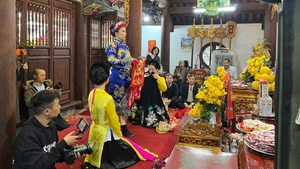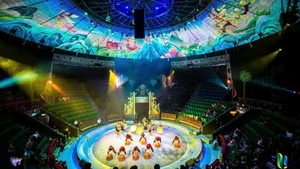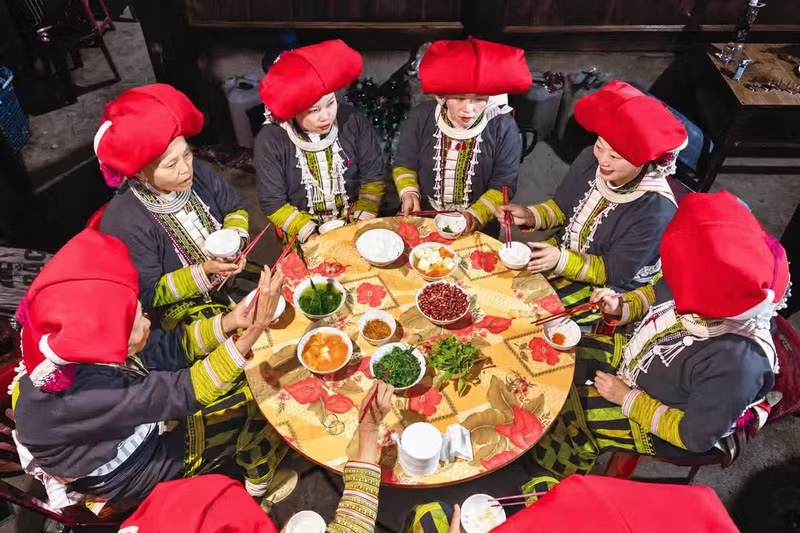
The current gaps in Viet Nam’s cultural industry do not stem from a lack of cultural resources, but rather from the absence of sufficiently robust mechanisms to transform these resources into marketable products, thereby driving growth.
Momentum from a policy foundation
In Resolution No. 33-NQ/TW, adopted on June 9, 2014, by the 9th Plenum of the 11th Party Central Committee — titled “Building and Developing Vietnamese Culture and People to Meet the Requirements of the Country’s Sustainable Development” — the Party identified the development of the cultural industry as a key priority for the first time.
In 2021, the 13th National Party Congress formally designated the cultural industry as a pillar of economic development, placing it on par with traditional industrial sectors. To operationalise this Party directive, the State has introduced various policies and strategies, affirming its commitment to establishing culture as a corenerstoen of sustainable development.
On November 14, 2025, the Government issued Decision No. 2486/QD-TTg, approving the Strategy for the Development of Viet Nam’s Cultural Industries through 2030, with a vision towards 2045. More recently, on January 7, 2026, the Politburo issued Resolution No. 80-NQ/TW on the development of Vietnamese culture. This marks a significant shift by defining culture as an endogenous resource, a spiritual driving force, and a form of national soft power, while establishing specific goals for the cultural industries.
The profound shift in the perception of the role of cultural industries — coupled with the Party and State’s policy to promote their development — is both correct and timely. This provides a vital impetus and an endogenous strength that transform culture into soft power, fostering rapid and sustainable national development across all sectors. Over the past five years, Viet Nam’s cultural industries have experienced robust growth.
The profound shift in the perception of the role of cultural industries, alongside the Party and State’s policies to advance their development, is both correct and timely.
According to the 2021–2025 review report by the Ministry of Culture, Sports and Tourism, the production value contributed by Viet Nam’s cultural industries has reached an average of 44 billion USD. The number of enterprises in this sector is growing at a rate of 7.2% annually, with the workforce expanding by 7.4% annually.
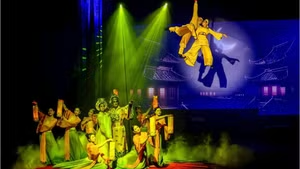
This reflects a fundamental shift in perspective: moving away from viewing culture solely as a domain for preservation towards recognising it as a pillar of socio-economic development. Six sectors currently account for over 70% of the revenue within the cultural industries: cultural tourism, cinema, performing arts, video games, advertising, and handicrafts.
Cultural tourism stands out as the leading sector, marked by a steady rise in international arrivals to Viet Nam. In 2019 — the year prior to the COVID-19 pandemic — Viet Nam welcomed over 18 million international visitors, more than 60% of whom engaged in cultural activities.
By 2023, the figure reached 12.6 million, and in 2024, it climbed to 17.6 million, generating approximately 62.5 trillion VND in revenue. For 2025, Viet Nam’s tourism sector reached a major milestone, with international arrivals hitting nearly 21.2 million (an increase of over 20.4% compared to 2024) and total tourism revenue surpassing 1 quadrillion VND.
Looking ahead to 2026, the sector aims to welcome 25 million international visitors and 150 million domestic tourists, with a projected revenue of approximately 1.13 quadrillion VND. Within this landscape, cultural tourism is expected to serve as a key driver of growth.
The film market has taken shape through the emergence of private studios, independent producers, modern cinema chains, and professional distribution campaigns, all supported by a growing habit among urban audiences to visit theatres.
The sector has seen domestic films reach record-breaking revenue milestones — surpassing 100 billion VND for titles such as “Mai,” “Detective Kien,” “The Tunnels: Sun in the Shadows,” and “Aerial Battle” — with “Red Rain” notably achieving nearly 800 billion VND. This demonstrates the capacity of both privately produced films and state-commissioned projects to successfully captivate audiences.
Deputy Minister of Culture, Sports and Tourism Ta Quang Dong remarked: “If the 40 years of Doi Moi (Renewal) represent a journey during which Vietnamese cinema has established its place within the nation’s cultural life, then the country’s new phase of development will be a period in which Vietnamese cinema strives towards greater goals: becoming a modern cultural industry with international competitiveness, while simultaneously helping to promote the image of Viet Nam to the world.”
Viet Nam’s music sector is emerging as a key industry, with the potential to promote cultural exports and boost tourism. “Concert tourism” — a model that combines attending concerts or music festivals with exploring a destination — is gaining strong momentum.
In 2023, two performances by the Republic of Korea group Blackpink at My Dinh National Stadium (Ha Noi) sparked an unprecedented “fever,” drawing over 170,000 attendees — including more than 30,000 international visitors — and generating an estimated 630 billion VND in tourism-related revenue. The domestic market is likewise undergoing a mojor shift.
Notably, concert series stemming from hit shows “Anh trai say hi” (Brothers say Hi) and “Anh trai vuot ngan chong gai” (Brothers Overcome Thousands of Thorns) have helped shape audience tastes while fostering a new generation of versatile artists with massive fanbases.
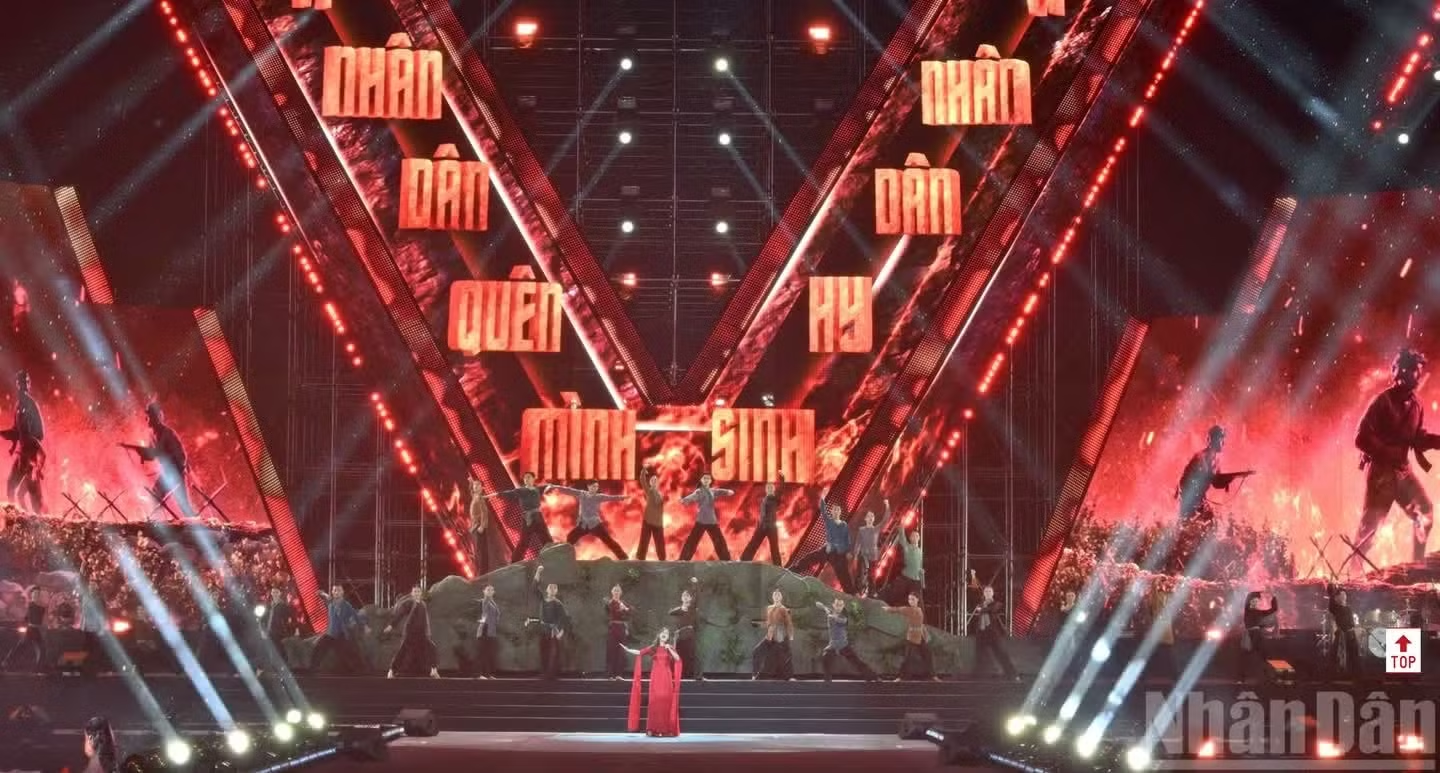
Outdoor concerts and events — both those headlined by prominent individual artists and those organised by major institutions, such as “To Quoc trong Tim” (The Fatherland in Our Hearts) by Nhan Dan Newspaper and “V Concert - Rang ro Viet Nam” (Radiant Viet Nam) by VTV — have drawn tens of thousands of attendees per night, demonstrating both strong organisational capabilities and robust demand in the domestic market.
The handicraft sector has converged with tourism, supported by the preservation of over 1,800 traditional craft villages. Many products from these villages are exported to markets including Japan, the US, and the EU, generating billions of dollars in revenue.
Furthermore, the revitalisation of traditional craft villages through experiential models has created cultural-tourism spaces that attract visitors. Meanwhile, the video game and online services sector has expanded rapidly, with Viet Nam ranking among the top five gaming markets in Southeast Asia.
Several key hubs for cultural industries have emerged, serving as catalysts for the sector. Currently, three Vietnamese cities are part of the UNESCO Creative Cities Network: Ha Noi (in the field of “Design”), Da Lat (in the field of “Music”), and Hoi An (in the field of “Crafts and Folk Art”). Other localities with unique resources — such as Hue, Da Nang, Quang Ninh, Ninh Binh, Hoi An, the Central Highlands, and the Mekong Delta — hold the potential to develop specialised cultural industry clusters, contributing to the expansion and development of a network of creative cities across the country.
The growth of cultural industries does not occur in isolation; rather, it generates a ripple effect, providing momentum for various multiple related — such as tourism, services, commerce, technology, media, advertising, real estate, urban development, and the night-time economy.
A robust creative ecosystem is needed to bridge gaps
According to the Ministry of Culture, Sports and Tourism, the cultural industries are estimated to account for approximately 4–5% of GDP during the 2018–2025 period, with a target of reaching at least 7% of GDP by 2030. Although Viet Nam possesses rich cultural resources, a young creative workforce, a market of over 100 million people, and rapid advancements in technology and the digital economy, this potential remains largely untapped.
In practice, cultural industries have faced numerous challenges: they remain small in scale and capacity, lack a focused and strategic approach, and have yet to produce a significant number of high-quality products and services capable of competing with rivals in the region and globally.
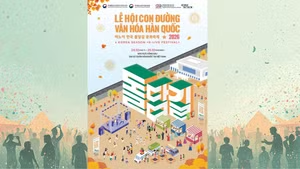
Specifically, in terms of the experience economy, it is necessary to craft an experience that transitions from merely “viewing” a cultural product to engaging with a broader range of services — linking cultural industries with tourism, gastronomy, the night-time economy, festivals, and heritage. Emphasis should be placed on leveraging the event economy through concerts, festivals, creative trade fairs, fashion weeks, and film festivals.
Furthermore, cultural exports should be promoted — extending beyond film and music to include programme formats, video games, characters, design, fashion, cuisine, digital content, and intellectual property rights. Within the digital cultural industry, there remain many untapped areas with significant potential, such as gaming, animation, interactive media, virtual production, and artificial intelligence (AI).
When culture is transformed into a commodity, there is a risk that its spiritual value may diminish; heritage could be reduced to a mere consumer product, losing its cultural depth without proper guidance.
The challenge, therefore, lies in how to generate economic value from culture — turning it into a commodity — while preserving its core identity. Developing cultural industries also requires bridging regional disparities; without targeted support, rural, remote, and mountainous areas risk falling further behind major cities and urban centres that already hold a clear advantage.
To address the bottlenecks hindering the cultural industries, efforts should focus on several key areas. First, the institutional framework must be further refined; existing regulations governing cultural industries should be reviewed to ensure consistency, minimise overlap, and foster an environment conducive to creativity, investment, production, and business operations.
Second, robust financial mechanisms must be extablished. This includes exploring models for creative investment funds, tax incentives, credit facilities, public-private partnerships, and frameworks for commissioning cultural products.
Third, intellectual property should be viewed as an economic asset; this entails not only protecting copyrights but also developing a copyright market, enabling creators and businesses to generate long-term revenue from their creative assets.
Fourth, educational reform must transcend the traditional boundaries between art and business, and between culture and technology.
Fifth, the development of infrastructure for cultural industries should be recognised as foundational to the creative economy, rather than serving cultural activities alone.
Sixth, it is essential to build a Vietnamese cultural brand, fostering international competitiveness in terms of identity, content, quality, and copyright.
Seventh, mechanisms must be established to ensure that communities — particularly those associated with heritage, craft villages, and local cultural traditions — can equitably share in these benefits
The most significant current bottleneck is the lack of a sufficiently robust creative ecosystem to connect key resources.
Associate Professor, Dr Bui Hoai Son
In reality, many still perceive culture solely as a spiritual value to be preserved, rather than as a sector capable of generating wealth, value-added, and national soft power. Without strong conviction and decisive support — ranging from policy frameworks to community engagement — it will be difficult to generate the momentum needed for this sector to achieve a breakthrough.
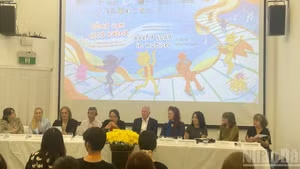
Recently, the Ministry of Culture, Sports and Tourism has drafted a Law on the Development of Cultural Industries, focusing on six key areas: the development of a cultural industry ecosystem, intellectual property, human resources, infrastructure, cultural markets, and financial policies, including investment incentives and support mechanisms.
According to Associate Professor, Dr Bui Hoai Son, Deputy Head of the Party Central Committee’s Commission for Publicity: “The greatest bottleneck at present is the lack of a sufficiently robust creative ecosystem to connect various resources. We must link creativity with capital, markets, the public, and other sectors of the economy.
Therefore, addressing the issue cannot be limited to a single stage; rather, the entire chain — encompassing institutions, investment mechanisms, infrastructure, training, human resource development, markets, and other support systems — must be addressed.
It is entirely reasonable to expect that Viet Nam could produce cultural offerings with a reach comparable to the Republic of Korea’s K-pop or the prominent cultural products of Japan and China. The key lies in establishing a creative ecosystem conducive enough for the cultural industry to truly take off.”
Resolution No. 80-NQ/TW sets a target for the cultural industries to contribute approximately 7% of the GDP by 2030, with the development of 5 to 10 national brands; by 2045, this contribution is expected to reach approximately 9% of the GDP.
Regarding funding for culture, the resolution mandates that at least 2% of the total annual state budget expenditure be allocated to the sector, with provisions for this share to increase gradually in line with practical requirements.