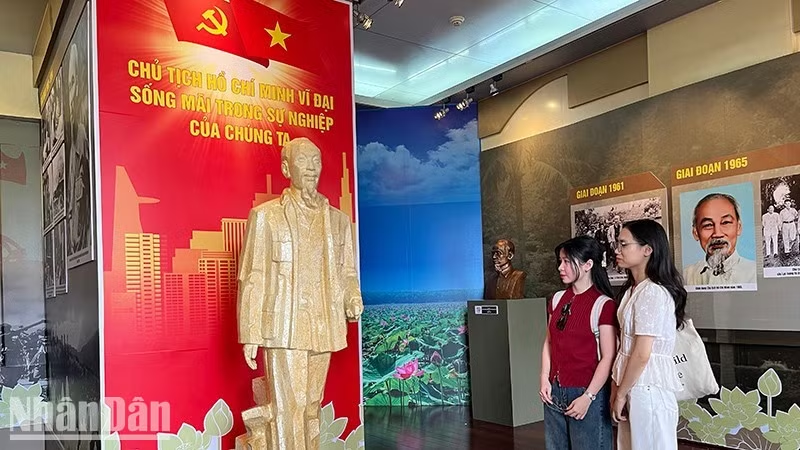
The directive states that after three years of implementing the Ho Chi Minh Cultural Space, the city has achieved significant results, gradually expanding its reach and cultivating a distinct cultural identity for Ho Chi Minh City.
Awareness among Party committees, authorities, the Viet Nam Fatherland Front, socio-political organisations, officials, Party members, and the public of the position, role, and significance of building the Ho Chi Minh Cultural Space has continued to increase, helping build consensus in leadership, direction, and implementation.
Communication and educational initiatives have been revitalised through a diverse array of formats, contributing to embedding Ho Chi Minh’s thought, ethics, and style more deeply in social life.
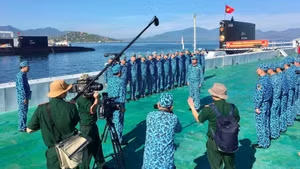
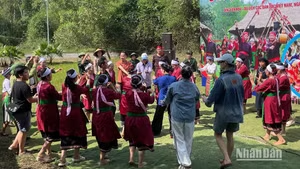
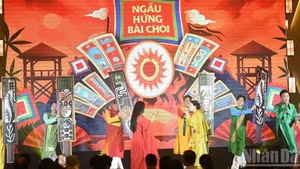
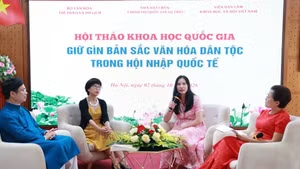
Today, thousands of Ho Chi Minh Cultural Space models have been built and implemented across the city at agencies, units, localities, schools, businesses, religious establishments, the armed forces, and residential communities, which helps to closely integrate the study and emulation of President Ho Chi Minh’s example with the cultivation of a healthy cultural environment, promoting traditional cultural values, and building Ho Chi Minh City into a civilised, modern, and compassionate city.
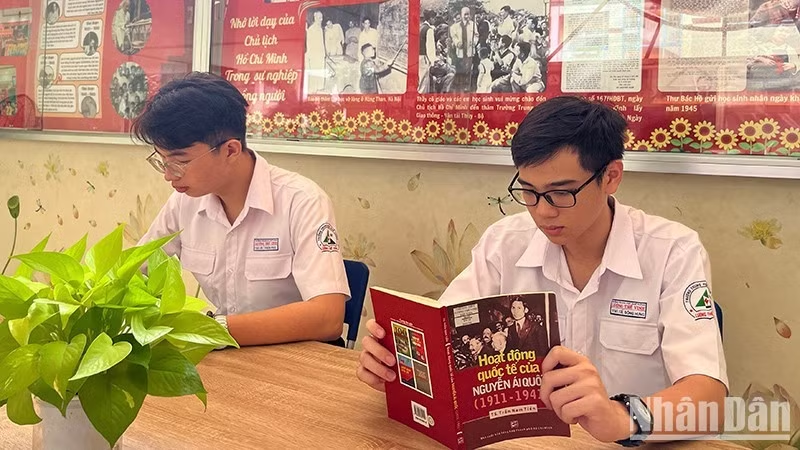
However, the directive also points out that the development of Ho Chi Minh Cultural Spaces in some places remains awkwrd and overly focused on formality. The promotion and dissemination of Ho Chi Minh’s thought, ethics, and style through cultural, educational, and community activities remain insufficiently engaging and lack depth. In some cases, these efforts are not closely linked to patriotic emulation movements and political tasks. Although technology application and digital transformation in building Ho Chi Minh Cultural Spaces feature various forms of implementation, they have yet to achieve widespread adoption. Inspection, supervision, and evaluation of implementation results lack frequency, while mechanisms for mobilising social resources continue to face many difficulties.
The Ho Chi Minh City Party Committee Standing Board noted that, in the new development phase, continuing to build and promote the value of the Ho Chi Minh Cultural Space requires a renewed mindset and innovative approaches to implementation, ensuring substantive impact, depth, broad reach, and sustainable development capabilities.
This is an important, regular, and long-term political task of the Party and the city’s political system, with Ho Chi Minh’s thought, ethics, and style as its foundation, the people of the city at its centre, and changes in the awareness, ethics, lifestyle, and conduct of officials, Party members, and the public as the measure of effectiveness.
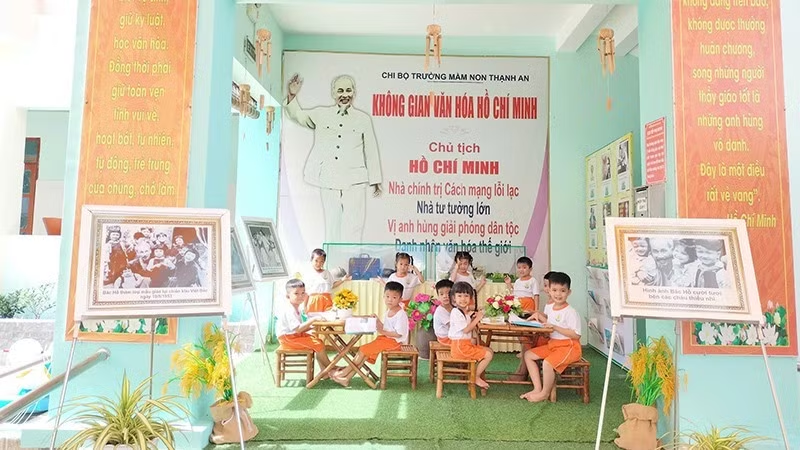
To ensure that the Ho Chi Minh Cultural Space continues to be effective and truly becomes a spiritual foundation, a driving force for development, and a distinctive feature of Ho Chi Minh City in the new era, the Ho Chi Minh City Party Committee Standing Board urges Party committees at all levels, authorities, the Viet Nam Fatherland Front, socio-political organisations, and agencies, localities, and units to renew their understanding, thinking, and approaches to building the Ho Chi Minh Cultural Space.
Accordingly, agencies must recognise that the building of the Ho Chi Minh Cultural Space is part of the broader effort to build a disciplined, safe, civilised, and harmonious society, placing people as the centre, subjects, objectives, resources, and driving force of the city’s comprehensive development. This is a regular and long-term political task for the entire political system, as well as a spiritual foundation, an endogenous resource, and a distinctive feature of the city’s development.
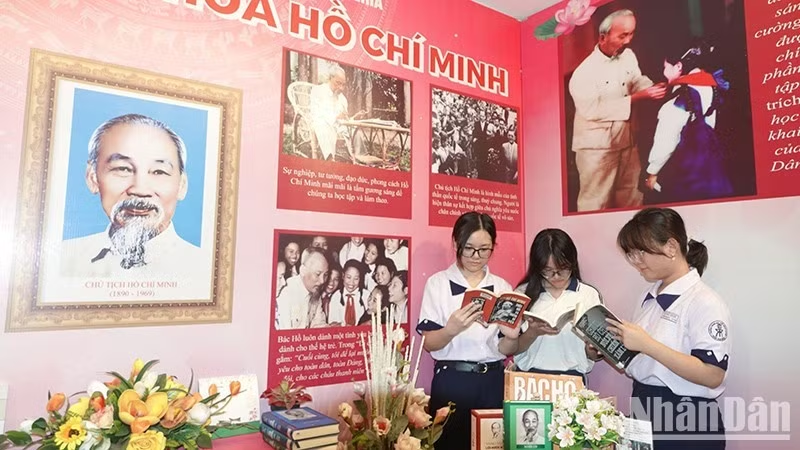
The Ho Chi Minh City Party Committee Standing Board called for a strong shift from the mindset of “building models” to promoting the values of the Ho Chi Minh Cultural Space, with the aim of creating a cultural environment, system of values, standards of conduct, and way of life that reflect the city’s distinctive identity; while enhancing the study and practice of Ho Chi Minh’s thought, ethics, methods, and style in all activities of leadership, management, production, business, study, work, and daily life.
Agencies and organisations should use the substantive effectiveness, quality, and regularity of activities, the level of participation among different groups of people, changes in awareness, behaviour, and cultural conduct, as well as sustainability and their reach within the community, as measures of the results of building and promoting the Ho Chi Minh Cultural Space. They should also focus on disseminating and promoting the values of Ho Chi Minh’s thought, ethics, and style in building Party culture, public-service culture, civic culture, corporate culture, and digital culture.
Party committees at all levels, authorities, the Viet Nam Fatherland Front, socio-political organisations, and agencies, localities, and units must renew the content and methods of communicating, educating, and spreading Ho Chi Minh’s thought, ethics, methods, and style; build Ho Chi Minh Cultural Spaces in the digital environment linked with the development of cultural industries; complete the mechanisms, policies, and mobilise resources to build and promote Ho Chi Minh Cultural Spaces; and enhance the effectiveness of leadership, management, inspection, supervision, and evaluation of implementation results.