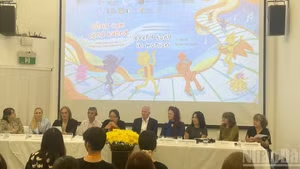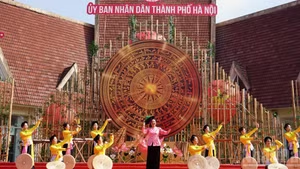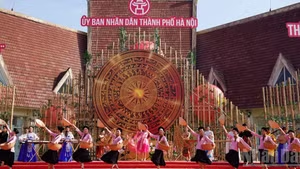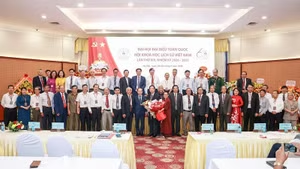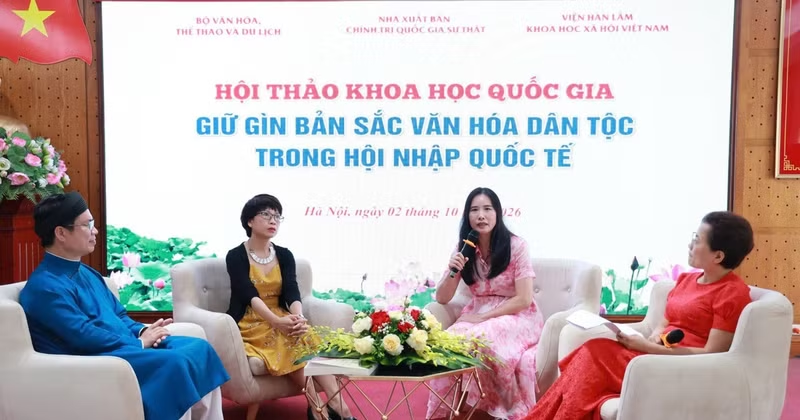
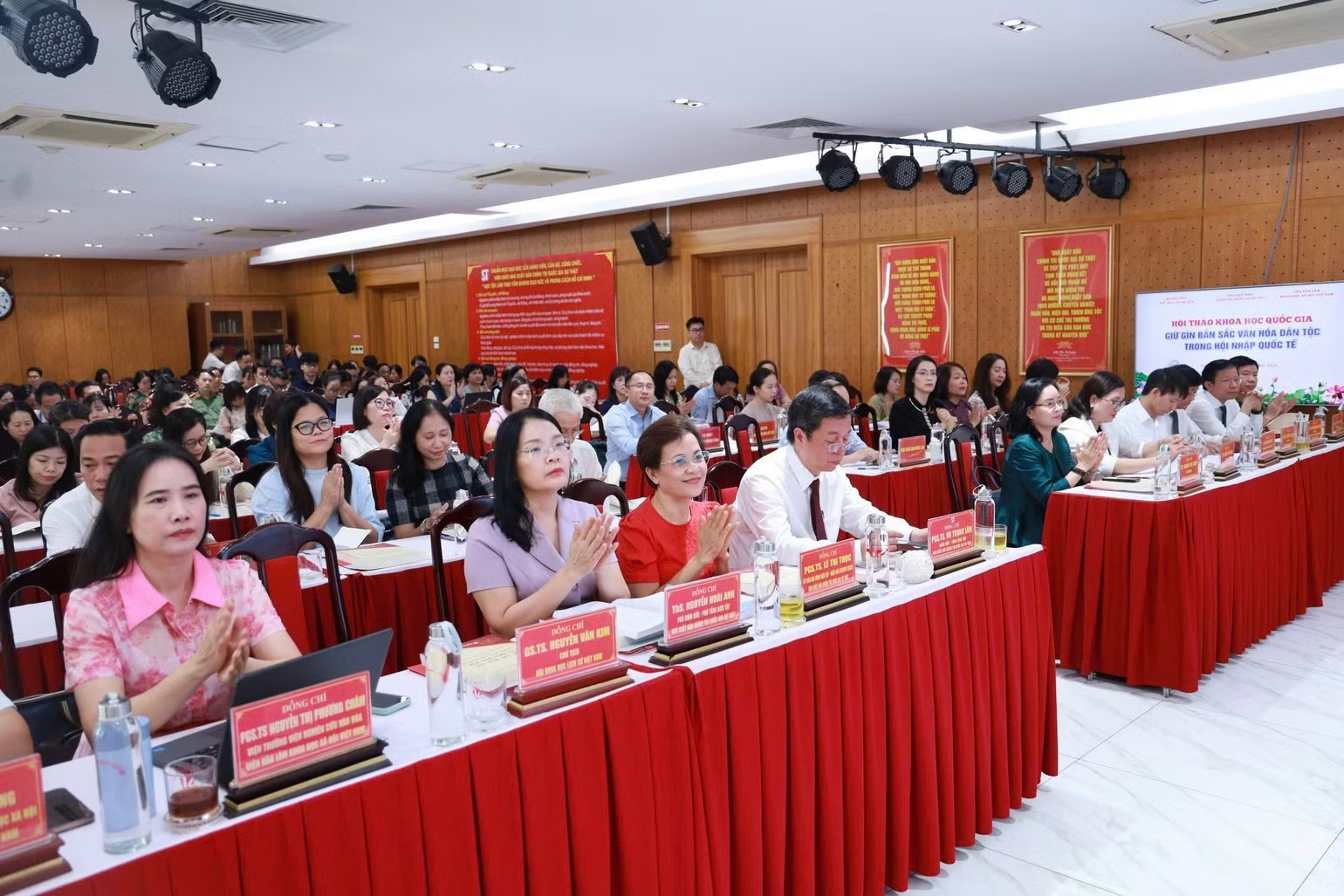
The event was organised by the Su That (Truth) National Political Publishing House in collaboration with the Ministry of Culture, Sports, and Tourism and the Viet Nam Academy of Social Sciences.
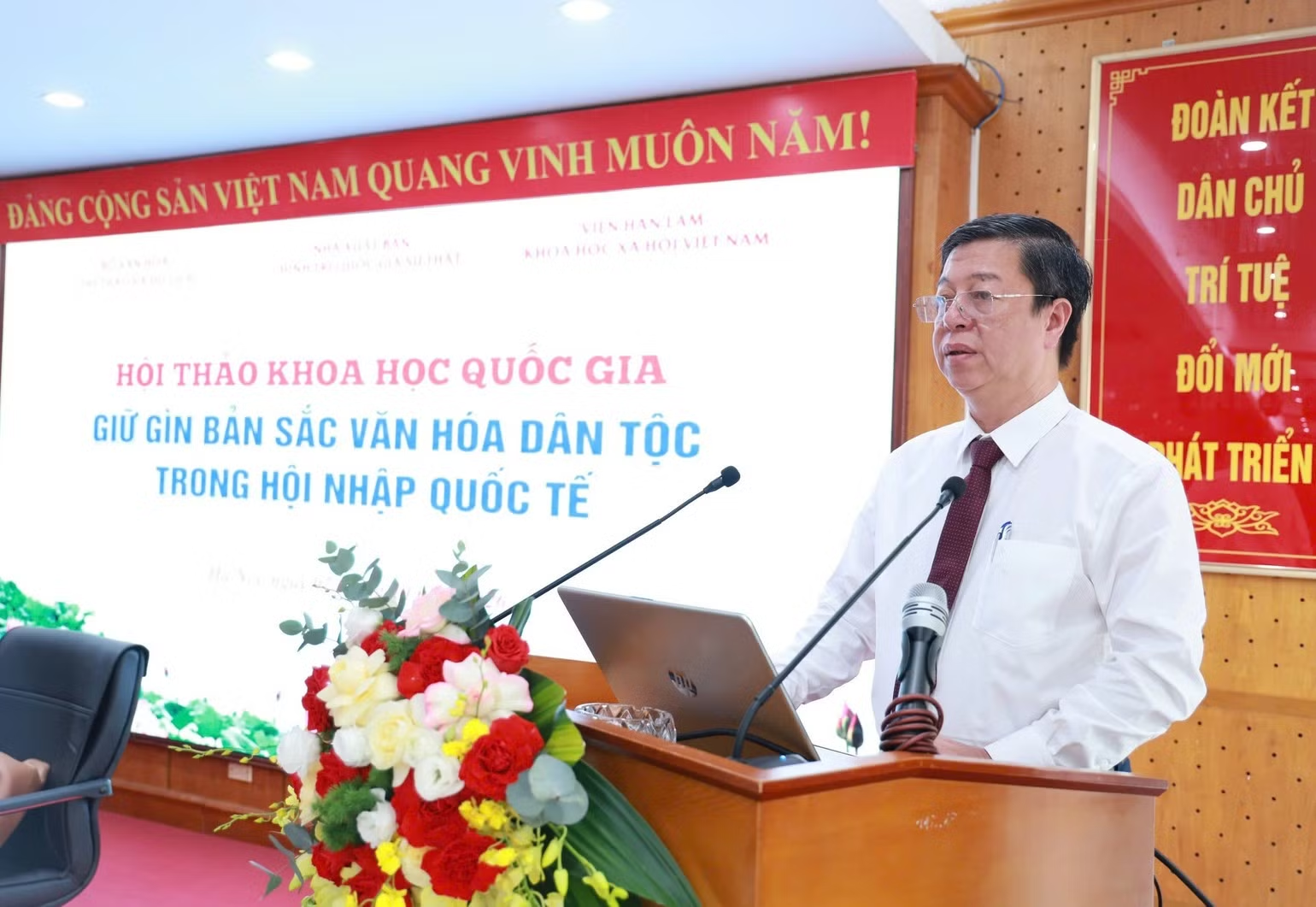
Associate Professor and Doctor Vu Trong Lam, Director and Editor-in-Chief of the Su That (Truth) National Political Publishing House; Dr Trinh Thi Thuy, Deputy Minister of Culture, Sports, and Tourism; and Dr Dinh Thi Mai, Vice President of the Viet Nam Academy of Social Sciences, co-chaired the conference.
In his opening remarks, Assoc. Prof. Dr Vu Trong Lam affirmed that cultural identity today is no longer simply a matter of preserving heritage or safeguarding traditional values, but has also become a measure of a nation's development capacity.
The challenge lies in transforming values shaped throughout history into qualities embodied by Vietnamese people today; into inspiration for creativity; into competitive cultural products; into the appeal of the country's image; and, more fundamentally, into an endogenous driving force that enables Viet Nam to develop rapidly and sustainably, embrace modernity, and retain its own identity.
Against the backdrop of rapid digital transformation, participants noted the current challenge is not merely to digitise cultural heritage, but also to build the country's digital cultural capabilities. These include the capacity to create content, tell Viet Nam's stories, protect copyright, enhance the visibility and competitiveness of Vietnamese cultural content, and respond to the risks of historical distortion, harmful content, and the dominance of cross-border platforms. Digital transformation can become a genuine driver of cultural development only when technology is guided by values and remains under human control.
Discussions at the conference highlighted five key areas for action: improving institutional frameworks to enable and unlock resources for cultural development; placing communities, artisans, and young people at the heart of preservation and creativity; developing a workforce capable of combining cultural knowledge with technology and digital skills; promoting responsible digital transformation in tandem with safeguarding digital cultural security and sovereignty; and developing high-quality Vietnamese cultural products, services, and narratives with strong competitiveness and international reach.
Presentations and discussions underscored a consistent message: preserving cultural identity does not mean keeping the past unchanged. Rather, it means ensuring that values shaped by history continue to have relevance in the present, adapt to change, and help shape the future.
When embedded in an interconnected ecosystem encompassing communities, education, science and technology, journalism and publishing, cultural industries, markets, and cultural diplomacy, cultural identity can become an endogenous resource and a tangible source of Viet Nam's soft power.