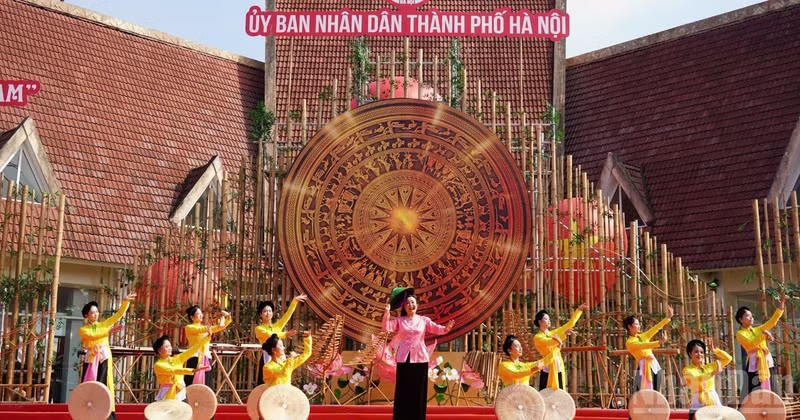
Previously, in late September 2026, an appraisal team from the Ha Noi Department of Culture, Sports, and Tourism assessed the tourism area.
Covering 1,544 hectares, the Viet Nam National Village for Ethnic Culture and Tourism boasts abundant natural and cultural tourism resources. Its natural landscape features valleys, peninsulas, greenery, and bodies of water, creating a diverse ecosystem. Greenery and water surfaces account for more than 70% of the total area, contributing to a fresh and cool environment.
Within this area, the Dong Mo Lake covers 935.31 hectares. Its vast expanse of water and rich ecosystem provide favourable conditions for developing green tourism and resort products, as well as boat and speedboat excursions, kayaking, outdoor camping, team-building activities, and sports tourism.
Cultural resources form the core value giving the Viet Nam National Village for Ethnic Culture and Tourism its distinctive character. The ethnic villages area covers approximately 196.8 hectares and is divided into four village clusters representing different regions and language groups. The distinctive architectural spaces of Viet Nam’s 54 ethnic groups have been recreated on a 1:1 scale using traditional materials and techniques, with the participation of artisans and members of ethnic communities. From the stilt houses of the Thai and Muong people and the rammed-earth houses of the Tay and Ha Nhi to the communal houses of the Gia Rai and Ba Na and the longhouses of the E De, these structures create a diverse tapestry of ethnic architecture in the heart of the capital.
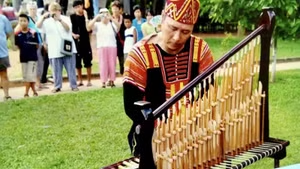
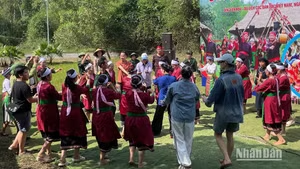
The vitality of this heritage space is also sustained by the cultural communities themselves. Around 120 people from 16 ethnic groups currently reside at the Village. Community activities, cultural performances, traditional handicrafts, and cuisine are preserved, allowing cultural values to be naturally passed down and shared.
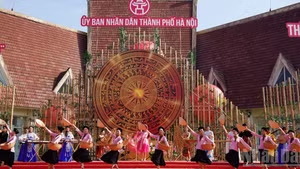
Every year, the Viet Nam National Village for Ethnic Culture and Tourism hosts around 24 festivals and traditional customs of ethnic minority groups, along with numerous cultural and artistic exchange and performance programmes, as well as dozens of exhibitions, thematic displays, and programmes promoting the culture and tourism of localities. The Village also welcomes numerous ethnic minority groups from across the country to participate in activities.
The tourism area’s infrastructure, facilities, and services meet the required standards. The village features directional signs, on-site tour guides, and 54 tour commentaries in Vietnamese and English. It also provides tourist information and assistance, as well as free documents and publications. The tourism area is conveniently accessible, with multiple bus routes connecting it to other areas, while its parking and other transport infrastructure is adequate.
Consequently, the Viet Nam National Village for Ethnic Culture and Tourism fully meets the conditions for recognition as a tourism area under the 2017 Law on Tourism, including tourism resources and clearly defined boundaries; infrastructure, facilities, and services; connections to the national transport and telecommunications infrastructure; and requirements concerning security, public order, social safety, and environmental protection.
Recognition as a municipal-level tourism area will help create favourable conditions for the Viet Nam National Village for Ethnic Culture and Tourism to streamline its management and sustainable development, making it an important tourism attraction in the capital.