Resolution No. 80-NQ/TW on the development of Vietnamese culture, which was issued by the Politburo on January 7, 2026, designates November 24 each year as Viet Nam Culture Day. The occasion aims to honour traditional cultural values, foster patriotism, solidarity and national pride, and reaffirm culture’s role as the spiritual foundation, an endogenous resource and a driving force for national development.
It also seeks to create a favourable environment, broaden access to culture, encourage creativity and improve people’s enjoyment of cultural life, while motivating intellectuals, artists and artisans to create and pass on cultural values, thereby contributing to the comprehensive development of Vietnamese people in the new period.
Following the directions of the Politburo and the Party Central Committee’s Secretariat, and in coordination with the Viet Nam Fatherland Front Central Committee, Viet Nam Culture Day on November 24 will be linked with the Great National Unity Festival on November 18 to form a series of vibrant, meaningful, practical and effective activities during a national unity culture week.
The Prime Minister requested ministers, heads of ministerial-level agencies, and secretaries and chairpersons of the People’s Committees of provinces and cities to implement assigned tasks and solutions in a resolute, coordinated and effective manner, with a focus on several key areas.
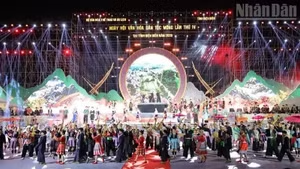
Regarding the content and format of activities, the Prime Minister called for Viet Nam Culture Day, the Great National Unity Festival and the national unity culture week to be celebrated in a solemn, widespread, diverse, lively, joyful and meaningful manner across communities, residential areas, villages and neighbourhoods nationwide.
Activities must comply with the Party’s guidelines and the State’s policies and laws, with people placed at the centre as participants, creators and beneficiaries. They should help foster patriotism, national pride, civic responsibility and the aspiration to contribute to the country, particularly among younger generations.
The organisation and implementation of activities should be strongly renewed, mobilising the participation of the entire political system and promoting the role of the Viet Nam Fatherland Front, socio-political organisations, mass organisations and respected community figures.
Greater participation by people, communities and businesses should be encouraged in association with preserving the cultural identities, customs and fine traditions of different localities and regions. Community-based experiences, cultural institutions and public spaces should also be promoted, while ensuring practical effectiveness and avoiding bureaucratisation, ostentation, wastefulness, misconduct and regulatory violations.
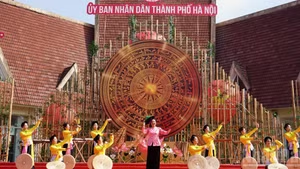
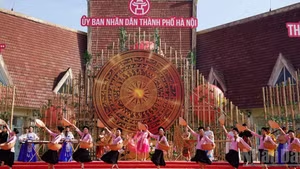
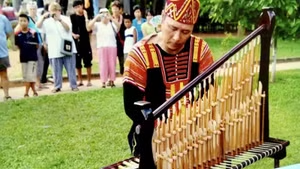
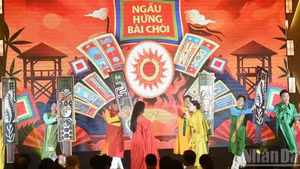
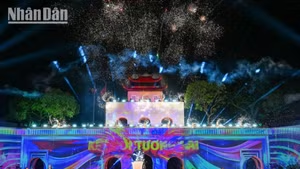
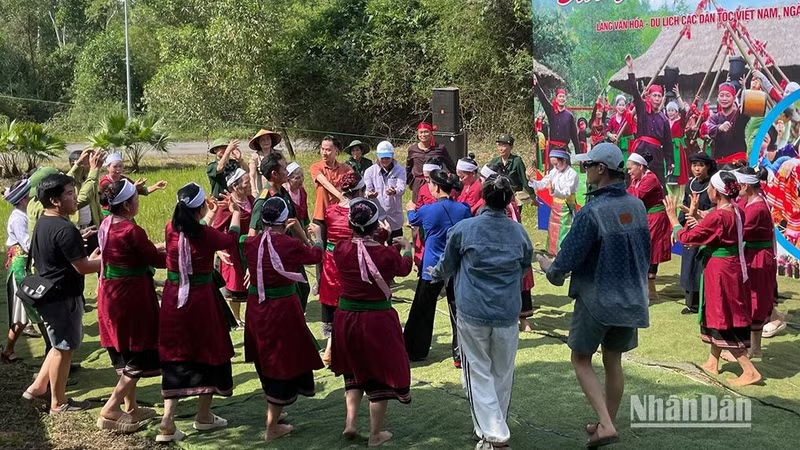
A diverse and creative range of culturally distinctive activities should be organised, including cultural and arts festivals, culinary events, performances of folk songs and dances, traditional musical instruments and costumes, folk games, traditional sports, and activities to practise and pass on traditional cultural heritage.
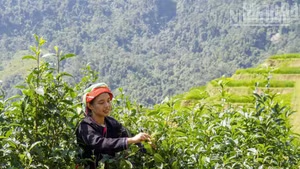
Localities and communities are also encouraged to introduce cultural products, traditional crafts, craft villages and handicrafts, while strengthening exchanges among people from different social groups, ethnic communities, generations and localities. These activities are intended to foster the spirit of great national unity, preserve fine traditions and cultural identities, and pass cultural values on to future generations, especially young people.
Cultural institutions such as museums, libraries, heritage sites, cultural houses and creative spaces should be used effectively to host displays, exhibitions, film screenings, artistic performances and exchanges between authors, artists and audiences at all levels.
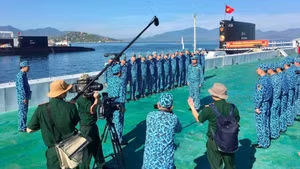
Mobile cultural activities should receive particular attention to meet the needs of people in remote, border and island areas and ethnic minority communities. Cultural exchanges should also be strengthened to promote the image of Viet Nam and its people, national cultural heritage, and traditional historical and cultural values among overseas Vietnamese communities and international friends.
Each province, city, commune and ward is required to review and select at least one representative cultural activity, product, story or space for promotion in connection with tourism promotion and the development of cultural industries. Each commune and ward should also select at least one suitable activity or model to maintain and develop beyond Viet Nam Culture Day and the national unity culture week, contributing to the development of distinctive, bright, green, clean and beautiful grassroots cultural communities.
Provincial and municipal People’s Committees are required to implement in a resolute, coordinated and effective manner the tasks assigned under the plan for Viet Nam Culture Day issued together with Prime Minister’s Decision No. 1111/QD-TTg dated June 19, 2026; Government Office Document No. 9636/VPCP-KGVX dated September 22, 2026; and the Directive. They must clearly identify key activities, responsibilities, timelines, resources and specific outputs.
Local authorities are also required to provide detailed guidance on cultural activities in communes, wards, villages, neighbourhoods, cultural institutions and public spaces, while enabling people to directly propose, organise, participate in, create and enjoy cultural activities and products.
Priority should be given to community arts, heritage transmission, reading culture, exploration of local history, the creation and promotion of cultural products, and exchanges among different social groups, ethnic communities, generations and localities. Officials should also be assigned to participate directly and actively in grassroots activities.
Each locality is to select at least one representative and distinctive cultural activity, product or space at provincial, commune, village or neighbourhood level — such as a traditional folk festival, culinary space, craft village, historical or cultural site, or pedestrian street — for promotion during Viet Nam Culture Day and the national unity culture week in association with local tourism promotion and demand stimulation. Outstanding products and innovative models will also be selected for replication in subsequent years.