Renewing artistic expression through technology
Twenty years ago, the Viet Nam Circus Federation brought the legend of Son Tinh and Thuy Tinh to the stage in a production of the same name. On its return, however, the familiar story has been reimagined through creative approaches shaped by the digital age.
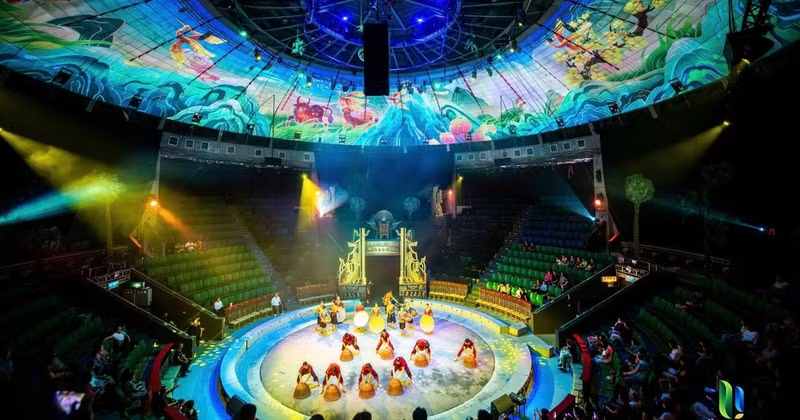
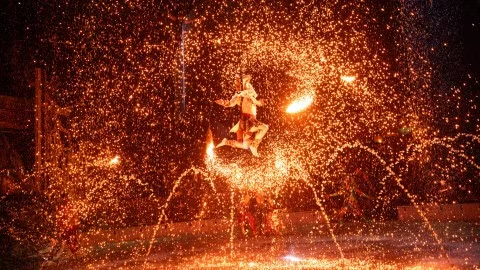
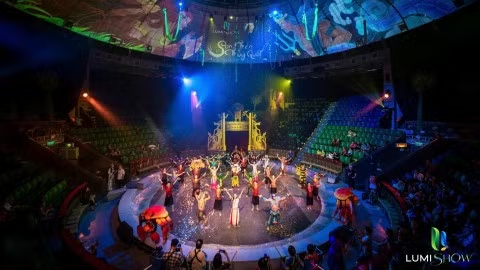
The circular stage at the Central Circus has been transformed into a water stage, equipped with a system of nearly 300 water pipes and a drainage system. Around 40 performers take to the stage, supported by technical and backstage teams, bringing the total number of people involved to more than 60.
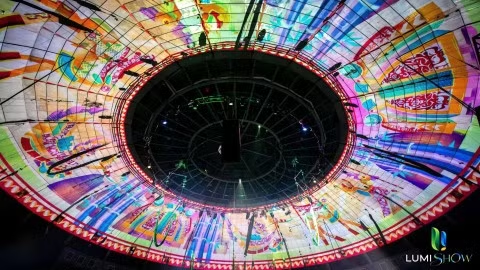
With LumiShow and VietArt responsible for producing graphic visuals, creating the digital art environment and developing a cohesive visual system throughout the production, “Mountain Gods and Water Monsters” creates a richly visual performance space. Images, lighting, water, music, and the performers’ movements all contribute to the storytelling, elevating technology from a tool for enhancing special effects to an integral part of the stage’s artistic language.
People’s Artist Tong Toan Thang, Director of the Viet Nam Circus Federation, said that for art to survive, it must be able to evolve alongside society. In circus arts, core values such as technical skill, rigorous training, precision, strength, and performers’ courage remain irreplaceable foundations. Building on these foundations, however, the stage can embrace music, dance, lighting, projection technology, and new forms of storytelling.
According to him, Vietnamese stories and cultural materials, including the legends of Thach Sanh, Son Tinh–Thuy Tinh, and Tam Cam, the image of soldiers and the lives of people in border regions, can all be told through the language of circus, using forms of expression better suited to the way audiences today engage with the arts.
“I do not want Vietnamese circus to simply follow what the rest of the world is doing. I want us to learn from the world’s professional practices while telling our own stories. This is also how Vietnamese circus can reach international audiences. Not by becoming a version of another country’s stage productions, but by developing a distinctive voice that allows audiences to recognise Vietnamese identity,” People’s Artist Tong Toan Thang emphasised.
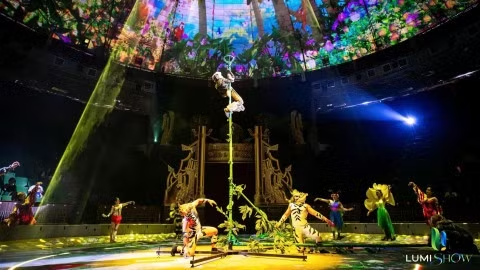
In “Mountain Gods and Water Monsters”, music also serves as a connecting element between different scenes. Modern styles such as symphonic pop, world music, and cinematic EDM are combined with the sounds of traditional Vietnamese instruments. Music, thunder, storms, wind, water, and lighting build in intensity together, creating dramatic climactic sequences.
The production’s impact, therefore, does not stem from any single technology, but from the ability to bring multiple elements together within a unified stage experience.
In particular, AI tools have been used to help the creative team develop ideas and experiment with visual concepts, ranging from mountain and forest landscapes to the open sea and moving visual sequences on stage. Suitable concepts are then selected, refined, and integrated with a 3D mapping system to meet the requirements of the script, the performance space, and the performers’ movements.
Technology, however, is not the ultimate goal of creativity. “Technology is merely a means; art, emotion, and people must remain at the centre,” People’s Artist Tong Toan Thang affirmed.
Expanding points of connection with audiences
The combination of circus arts, Vietnamese folk culture and modern technology in “Mountain Gods and Water Monsters” demonstrates a noteworthy approach to renewing traditional art forms. At a time when public tastes are changing rapidly, particularly as younger audiences become increasingly accustomed to digital imagery, interactive experiences, and multimedia products, preservation does not necessarily mean retaining existing forms of expression unchanged. Instead, it can begin with finding new ways of telling stories so that traditional values can connect with contemporary audiences.
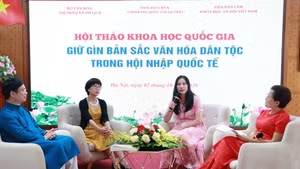
However, according to Nguyen Huy Dung, Deputy Minister of Culture, Sports and Tourism, science, technology, and digital transformation are not about competing to add new effects to the stage. More importantly, they involve changing the way art is conceived, produced, and created; using data and technology to develop new performance languages, tell artistic stories in new ways, and give artists additional creative tools.
Speaking about his vision for renewing the language of circus, People’s Artist Tong Toan Thang said he aims to develop productions featuring characters, imagery, and worlds resembling those familiar to young people through video games, which can then be reinterpreted through circus. He is also considering potential collaborations with Vietnamese game developers to create works that bring the two fields together. The aim is not to turn circus into a video game but to create a point of connection that allows young people to recognise that circus, too, can enter the worlds that interest them.
Alongside innovations in content and performance language, the Viet Nam Circus Federation is also modernising the way it reaches audiences. Its online ticketing platform allows the public to check performance schedules, choose seats independently, and make payments more conveniently. According to People’s Artist Tong Toan Thang, these practical changes help establish a more modern and seamless connection between the arts institution and the public, creating a smoother experience for audiences.
The appeal of “Mountain Gods and Water Monsters” also demonstrates the effectiveness of collaboration between a public arts institution and a digital technology company under the guidance of the Ministry of Culture, Sports and Tourism. While the arts institution contributes a team of highly skilled performers, staging expertise, and the ability to draw on cultural material, the technology company provides technical infrastructure, research and development personnel, and the capacity to experiment with new creative approaches.
Notably, technology companies are not brought in at the final stage merely to supply equipment or produce special effects. Instead, they participate from the outset, contributing to the development of ideas and scripts, artistic design, staging, and the final refinement of the work. In this model, technology specialists become members of the creative team, while technology itself becomes an integral component of the artistic language.
This model also offers a potential framework for fostering long-term partnerships between arts organisations and businesses. The state provides strategic direction, creates an enabling environment, and safeguards cultural objectives; arts organisations contribute professional expertise, artistic works, and cultural value; and businesses bring technological and financial resources, creative capabilities, and market reach.
Another priority is to develop a workforce capable of working across disciplines, with artists who understand technology and technology professionals who understand the language of art. As materials relating to heritage, performing arts, music, visual arts, and folk culture are digitised and standardised, these digital resources can also become source material for new creative work.
Originating in circus, this approach could be studied and tested in other fields, folk arts, museums, heritage sites, and other cultural settings. In addition to producing new works, such projects could help build up experience, technology, data, and human resources for future initiatives. In this way, Vietnamese cultural values would have greater opportunities to be reinterpreted, shared more widely, and brought closer to the public through the language of the modern age.