Looms carrying the memories of the village
Historical records show that brocade weaving in Lan Village dates back to around the mid-18th century and is associated with the process of reclaiming land and establishing the village. At that time, the Lan Valley consisted of fertile alluvial land. Local people grew cotton and mulberry, raised silkworms, and wove rustic fabrics for everyday use. Over more than two centuries, the craft has continued to be passed down in many families, becoming an indispensable part of the community's cultural life. In 2021, Lan Village was recognised by the Thanh Hoa Provincial People's Committee as a traditional craft village, marking an important milestone in preserving and promoting the traditional weaving craft.
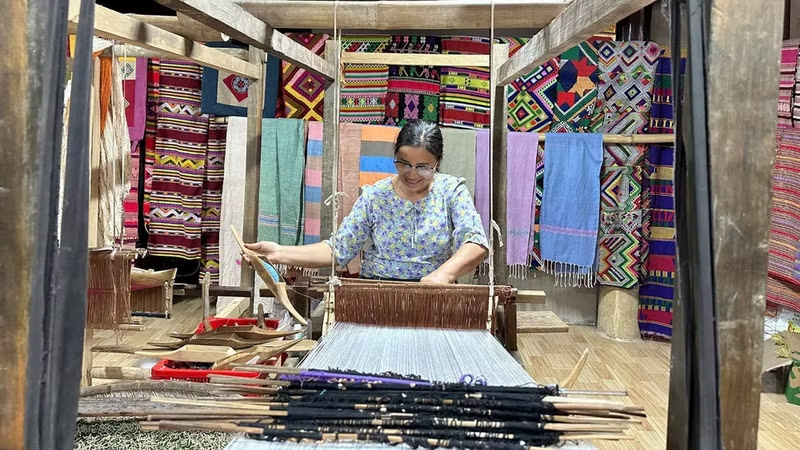
Elderly artisans say that making a piece of brocade requires not only skilful hands but also a wealth of knowledge. This includes knowledge of growing cotton, as well as techniques for fluffing and rolling cotton and spinning and twisting thread. It also involves experience in obtaining dyes from forest plants. Each material produces a different shade. A skilled weaver knows how to select and combine colours harmoniously so that they are long-lasting, visually pleasing, and in keeping with the community's aesthetic traditions.
One of the most complex stages is creating patterns. Here, each individual's technique and emotions blend into every thread. Using the warp and weft threads, Thai women skilfully create patterns of diamonds, eight-petalled flowers, birds and animals, plants, and mountains and forests. Beyond serving as eye-catching and vivid decorative motifs and lines, these patterns are also a “cultural code” of the Pu Luong Thai people, expressing their aspirations for happiness, abundance, togetherness, and harmony with nature.
In many families in Lan Village, the loom is where knowledge is passed down from one generation to the next. Girls grow up beside their grandmothers' and mothers' looms, learning to set up threads, operate the shuttle, and create patterns, before gradually developing a love for and attachment to the craft. This quiet way of passing down the craft has helped preserve a resilient cultural thread over time.
In the simple stilt house of artisan Ha Thi Nhan's family in Lan Ngoai Hamlet, the sound of weaving shuttles can still be heard every day. Alongside her, her daughter-in-law, Vi Thi Luyen, continues the family craft and strives to bring her ethnic community's products to wider markets.
Together with many other women in the village, Vi actively posts images of handwoven brocade products on Facebook and TikTok to introduce and promote them. Thanks to such efforts, brocade products from Lan Village are no longer confined to Pho Doan Market, but are carried by customers to destinations across the country and even abroad.
Ha Thi Ly, from Lan Trong Hamlet and now living with her husband in Lan Ngoai Hamlet, said she had been attached to the loom since childhood. She recalled that in the past, Thai girls aged 13 or 14 already learned from their mothers how to fluff cotton, spin thread, and weave their first patterns. According to custom, before getting married, girls had to weave their own clothes. From the headscarf to the dress worn on their wedding day, these items were considered a measure of a woman's skill, diligence, and good upbringing in the family.
Modern life has led many young people to leave the village to seek livelihoods elsewhere, causing the sound of weaving shuttles to gradually become less common. But Ly has chosen to remain with her loom while combining weaving with community-based tourism. Rather than simply reproducing the old designs taught by her mother, she modifies patterns, colours, and product sizes to better suit tourists' tastes while preserving traditional techniques and the Thai people's aesthetic values.
Today, many women in the hamlet also learn from one another to diversify their products. Alongside everyday clothing, scarves, pillowcases, and traditional blankets, they also make handbags, purses, tablecloths, interior decorations, and small, attractive souvenirs.
Some brocade products from Lan Village have been certified under the OCOP programme, opening up opportunities to access more systematic and professional distribution channels. According to the Pu Luong Commune authorities, the weaving craft currently provides an average income of around 55 million VND per person per year, helping improve local people's material and spiritual well-being.
Tourism provides momentum for the traditional craft
The recent growth of community-based tourism in Pu Luong has opened up a new development path for weaving in Lan Village. Many visitors want to see first-hand how fabrics are made, learn about dyeing and pattern-making, and try operating the shuttle, spinning thread, and fluffing cotton under the enthusiastic guidance of artisans.
To accommodate the growing number of visitors to the village, many households have proactively renovated their surroundings and access routes, tidied and improved their homes, invested in product display areas, and created spaces for visitors to experience weaving at the looms. These changes show that the people of Lan Village have adapted quickly to the new context.
However, what worries Ly and many other women in the village is how to maintain the craft sustainably. Natural raw materials such as cotton and mulberry are becoming increasingly scarce because growing them is no longer as profitable as cultivating other crops.
A single piece of brocade takes a great deal of labour to make, while its selling price does not yet reflect the time and skills invested. Some young people remain passionate and persistent about the craft, but they are still few in number. If weaving becomes an occupation pursued only by older people, its decline is difficult to avoid.
The local authorities are currently developing tourism in conjunction with poverty reduction and efforts to increase local people's incomes. The commune is focusing on promoting community-based tourism in a way that preserves Thai cultural identity and promotes traditional craft villages, while also protecting the landscape and ecological environment for sustainable development.
Bui Thi Hoa, Secretary of the Party Committee of Pu Luong Commune
Another challenge is the trend towards commercialisation as tourism develops rapidly. Imported products may enter points of sale; cultural experiences may be shortened and simplified into brief photo opportunities; and traditional patterns may be distorted if people simply pursue eye-catching, fashionable designs. In that case, the craft village may attract more visitors but gradually lose its cultural depth.
In recent years, the Pu Luong Commune authorities have paid attention to restoring and developing brocade weaving in Lan Village by linking preservation with the promotion of tourism advantages. Bui Thi Hoa, Secretary of the Party Committee of Pu Luong Commune, said the locality was currently developing tourism in conjunction with poverty reduction and efforts to increase local people's incomes. The commune is focusing on promoting community-based tourism in a way that preserves Thai cultural identity and promotes traditional craft villages, while also protecting the landscape and ecological environment for sustainable development.
In Lan Village, brocade weaving is gradually becoming a highlight of the community-based tourism model. Households are encouraged to preserve their looms, pass the craft on to younger generations, participate in training, improve designs, and expand consumer markets. On the local people's side, greater emphasis is also being placed on cooperation among households to standardise quality, maintain a good reputation for designs, materials, and prices, and gradually establish a professional space for introducing the craft.
The commune's leaders affirmed that brocade weaving not only has cultural value but also plays an important role in local socio-economic development, gradually helping local people improve their livelihoods through legitimate means, thereby contributing to stable living conditions and the maintenance of security and social order in the area.