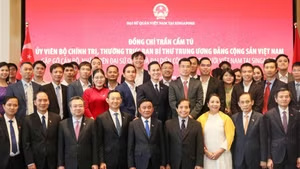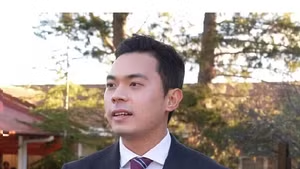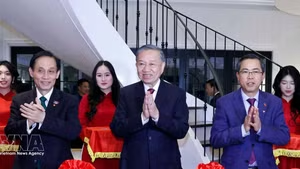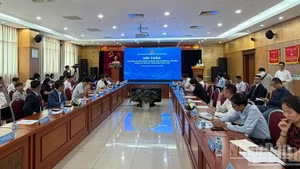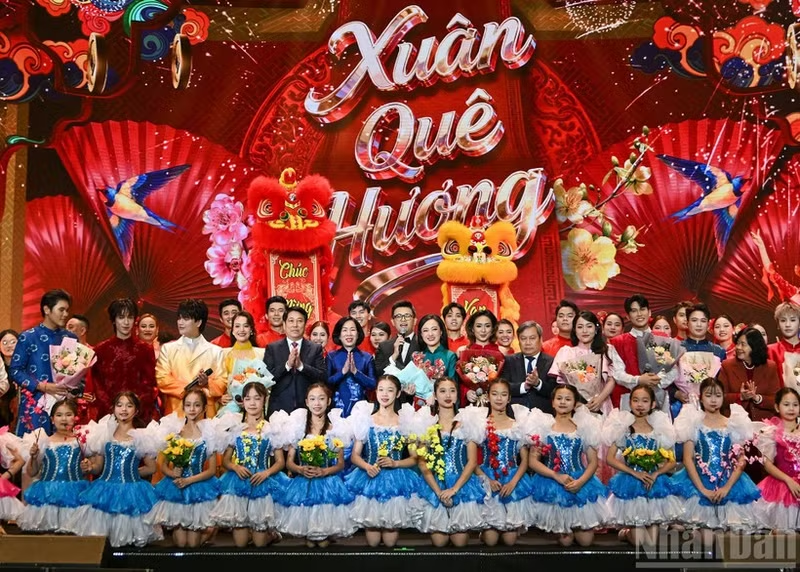
At Homeland Spring 2026, representatives of overseas Vietnamese communities from Russia, Japan, Hong Kong (China), and Switzerland shared their reflections, aspirations, and proposals aimed at unlocking the full potential of Vietnamese communities abroad.
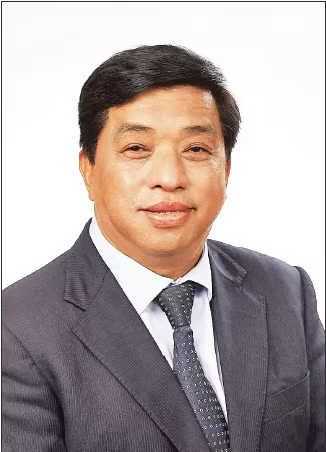
Tran Phu Thuan, overseas Vietnamese in Russia: Returning to Viet Nam on this occasion, I am truly impressed by the country’s spirit of renewal, dynamism, and strong development aspirations. Today’s Viet Nam has undergone remarkable changes — from transport infrastructure and urban development to services, the business environment, and socio-cultural life.
What moves me most is the openness, eagerness to learn, and strong determination of the younger generation. They are confident, proactive in connecting and integrating internationally, mastering technology, and ready to innovate. This demonstrates that Viet Nam is on the right path towards sustainable development and deep global integration. We feel a profound sense of pride witnessing our homeland’s growing prosperity and rising international standing.
The overseas Vietnamese community represents a vast resource in terms of intellect, experience, finance, and international networks. To effectively harness this resource, I propose continuing to build favourable mechanisms to connect overseas Vietnamese with the homeland, particularly in science and technology, education, culture, the arts, and the economy; and creating a transparent, stable, and open environment so that overseas Vietnamese can confidently invest, cooperate, and transfer knowledge and experience back home.
In addition, more forums, exchange programmes, and thematic seminars should be organised to enable overseas Vietnamese to share initiatives and contribute ideas for national development.
Finally, I hope that the State and local authorities will continue to pay attention to and listen to the concerns and aspirations of overseas Vietnamese, so that we always feel valued, part of the great national unity bloc, and able to accompany and contribute to the homeland in the long term.

Le Thuong, overseas Vietnamese in Japan: As the country enters a new era, we overseas Vietnamese are delighted to contribute, however modestly, to our homeland. We will continue striving to promote and spread the image of a beautiful Viet Nam within host communities and among international friends.
We are working hard to establish a Vietnamese Cultural Centre in Japan. The Vietnamese community in Japan now numbers over half a million people, largely young workers and students. The second and third generations have a strong desire to learn about Vietnamese culture and history.
Through cultural promotion and activities that highlight the beauty of our traditions, we hope to foster patriotism and encourage younger generations to live and work in accordance with local laws, thereby enhancing the image of Vietnamese people internationally, particularly in Japan.
Given that the Vietnamese community in Japan is relatively young, one of the challenges facing the project is limited funding. We hope the Vietnamese Government will give greater attention to initiatives aimed at establishing Vietnamese cultural centres abroad. We are also focusing on plans to host and organise overseas Vietnamese language proficiency examinations.

Doan Quynh Linh, overseas Vietnamese in Hong Kong (China): For overseas Vietnamese, one of the most notable and substantive reforms in Viet Nam in recent years concerns housing and real estate policy. This change carries significant meaning, enabling overseas Vietnamese to settle and invest long-term in Viet Nam, strengthening trust, and encouraging sustained attachment to the homeland.
Beyond investment, various policies have also been introduced to attract intellectual resources from overseas experts and scholars. Increasingly, overseas Vietnamese wish to return and contribute, particularly in finance, technology, logistics, education, and innovation — sectors the country urgently needs at this stage.
To create more favourable conditions for overseas Vietnamese contributions, I would like to propose several points.
First, overseas Vietnamese still encounter certain administrative difficulties, such as visa procedures, visa exemptions, and verification of Vietnamese origin. There is a need for appropriate policies to simplify procedures related to residency, employment, and labour for returning overseas Vietnamese, while facilitating those with professional expertise and experience who wish to make long-term contributions.
Second, housing and real estate policies should continue to be refined in a stable, transparent, and consistent manner, enabling overseas Vietnamese to settle and invest with confidence.
Third, I propose that the Ministry of Science and Technology further consider and facilitate pilot projects by overseas Vietnamese in new business and technological models in Viet Nam, such as blockchain, artificial intelligence (AI), and other innovative technological solutions.
The overseas Vietnamese community has always wished to contribute to the homeland while contributing to host societies, building a positive image of Vietnamese people internationally, and accompanying the country on its new journey.

Nguyen Thu Trang, overseas Vietnamese in Switzerland: Homeland Spring is a special programme reflecting the consistent attention of the Party, State, and the Viet Nam Fatherland Front towards overseas Vietnamese communities. For those living far from home like us, Homeland Spring is not only a reunion but also a reminder that the homeland always watches over, listens to, and values the contributions of overseas Vietnamese, wherever they may reside. Despite living and working abroad, love for the homeland and the aspiration to contribute to Viet Nam remain the enduring bonds connecting overseas Vietnamese with the country.
With many years of experience in international finance and economics, I observe that financial resources within the overseas Vietnamese community are considerable. Given suitable, transparent, and effective mechanisms, these resources could be better channelled towards national development goals — from production and business investment and enterprise development to social, educational, and sustainable development projects.
As Viet Nam accelerates deep international integration, digital transformation, and the development of a green and knowledge-based economy, I believe it is essential to create additional mechanisms, forums, and effective coordination channels for overseas Vietnamese to participate and contribute.