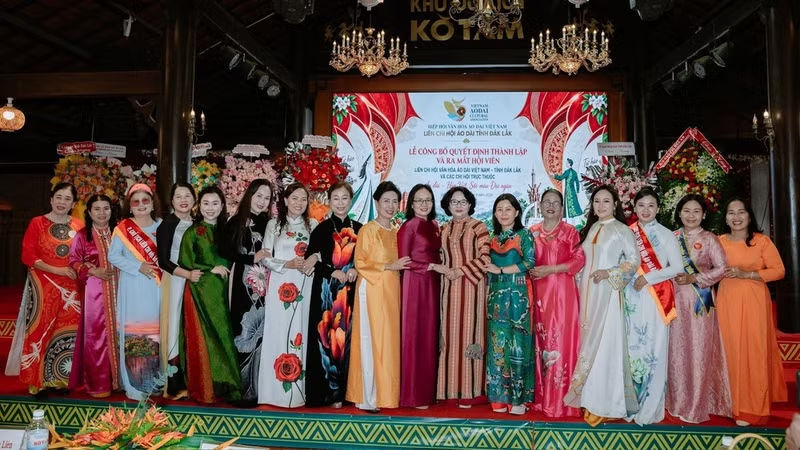
Affirming the value of the ao dai heritage
In the process of preserving and promoting traditional culture, the Ao dai is increasingly recognised not only as clothing but also as a cultural symbol capable of adapting to modern life. The establishment of the Viet Nam Ao Dai Cultural Association’s Dak Lak Provincial Branch Association is therefore significant in expanding the space for ao dai activities; while also creating conditions for this attire to engage with the distinctive cultural values of the Central Highlands, from brocade materials and handicrafts to gong art and community life.
Under Decision No. 38/QD-HHVHADVN dated September 12, 2026 of the Viet Nam Ao Dai Cultural Association, the Viet Nam Ao Dai Cultural Association’s Dak Lak Provincial Branch Association was established under the association, with 12 affiliated chapters operating across different areas, fields and communities of the province. The headquarters of the Branch Association is located in Tan An Ward, Dak Lak Province.
On the same day, the Viet Nam Ao Dai Cultural Association issued Decision No. 39/QD-HHVHADVN recognising the Advisory Board and Executive Board of the Viet Nam Ao Dai Cultural Association’s Dak Lak Provincial Branch Association for the 2025-2030 term. The Executive Board is responsible for managing members and organising the implementation of the Association’s resolutions and work programmes; while also gathering and conveying members’ aspirations and recommendations to the association’s leadership.
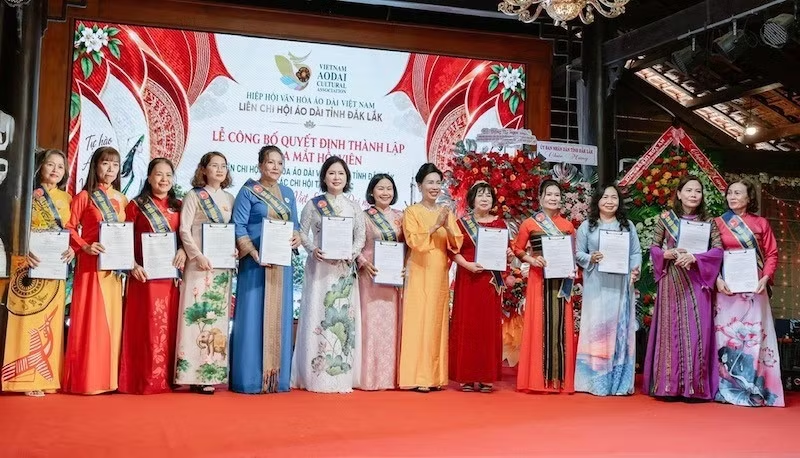
Speaking at the launch ceremony of the Viet Nam Ao Dai Cultural Association’s Dak Lak Provincial Branch Association, Dr Dang Thi Bich Lien, former Deputy Minister of Culture, Sports and Tourism and Chairwoman of the Viet Nam Ao Dai Cultural Association, shared: “The ao dai is not only an item of clothing but has become part of the memories, beauty, soul and national identity of the Vietnamese people. Therefore, preserving and promoting the value of the ao dai also contributes to preserving Vietnamese cultural values in modern life.”
Dang Thi Bich Lien also expressed her hope that the establishment of the Branch Association would not only aim to expand the ao dai-wearing movement, but more importantly, find ways for the ao dai to engage in dialogue with local culture, towards raising awareness of the garment’s cultural value, encouraging research and creative activities, and connecting communities.
Dak Lak is a land where many layers of culture coexist, with a heritage system associated with village spaces, longhouses, festivals, weaving, embroidery, handicrafts and indigenous knowledge. These are also materials that can add depth to ao dai activities if approached in the spirit of respecting their original values.
With nearly 1,600 members, the Branch Association has a social foundation for implementing activities across the province. Nguyen Thi Dung, Chairwoman of the Viet Nam Ao Dai Cultural Association’s Dak Lak Provincial Branch Association, places emphasis on bringing members together, spreading love for the ao dai and gradually incorporating Dak Lak’s distinctive cultural values into the activities of the Branch Association.
One notable message at the launch ceremony of the Branch Association was the role of each member in becoming an “Ao Dai Cultural Ambassador”, not only by regularly wearing the ao dai but also by understanding the history, meaning and value of the garment; respecting the cultures of different ethnic groups; and having the ability to introduce the stories behind cultural materials, patterns and products.
Khuc Thi Dau, Vice Chairwoman of the Viet Nam Ao Dai Cultural Association, shared: “The ao dai carries cultural beauty and heritage and fully enhances the gentleness and femininity of Vietnamese women. In each locality, the ao dai will carry its own cultural stories, and I believe that the Branch Association in Dak Lak will perform its role of connecting cultures and strongly promoting heritage and culture with its own regional identity.”
Inspiring creativity from the materials of the highlands
Brocade is one of the materials with great potential to create a local identity for the ao dai. The patterns and colours on each product do not merely have decorative value but are associated with conceptions of nature, people, family and community; alongside weaving, embroidery, dyeing and material-processing techniques passed down through generations of artisans.
Chairwoman of the Viet Nam Ao Dai Cultural Association Dang Thi Bich Lien suggested designs inspired by the red of basalt soil, the green of forests and sea, the yellow of highland sunshine and the deep black of festival nights; as well as brocade patterns, mountains and forests and village spaces. However, the combination needs to be harmonious, respect original values and avoid turning cultural symbols into merely decorative details.
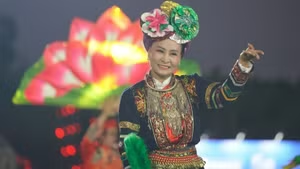
Alongside fashion, the ao dai can be incorporated into performance programmes combining folk music, traditional dance and performing arts of the Central Highlands. According to Dang Thi Bich Lien, gong music can not only serve as background music but can also provide the rhythm for the runway walk, creating a new approach to ao dai culture.
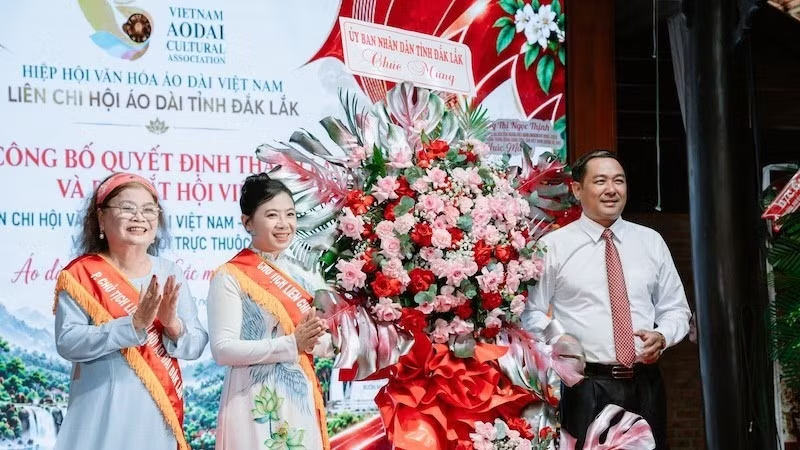
Sharing views on the significance of promoting cultural values during the process of local development, Y Nhuan Bya, Vice Chairman of the Dak Lak Provincial People’s Committee, said that the ao dai could become a point of connection between Vietnamese culture in general and Central Highlands culture in particular, between tradition and modernity, and between the Kinh community and the ethnic communities living in the province.
Nguyen Thi Hong Thai, Member of the Central Committee of the Viet Nam Women’s Union, Vice Chairwoman of the Viet Nam Fatherland Front Committee of Dak Lak Province and Chairwoman of the Dak Lak Women’s Union, said that the establishment of the Branch Association was significant in promoting the role of women in preserving and spreading cultural values. The ao dai is not only present on festive occasions, at festivals or formal events, but can also become a means for women to tell stories about their homeland, community and cultural identity.
At community level, the establishment of the Branch Association also creates more opportunities for women to participate in preserving and promoting culture in many roles: design, garment-making, weaving, embroidery, preserving patterns, organising cultural activities and introducing local products.
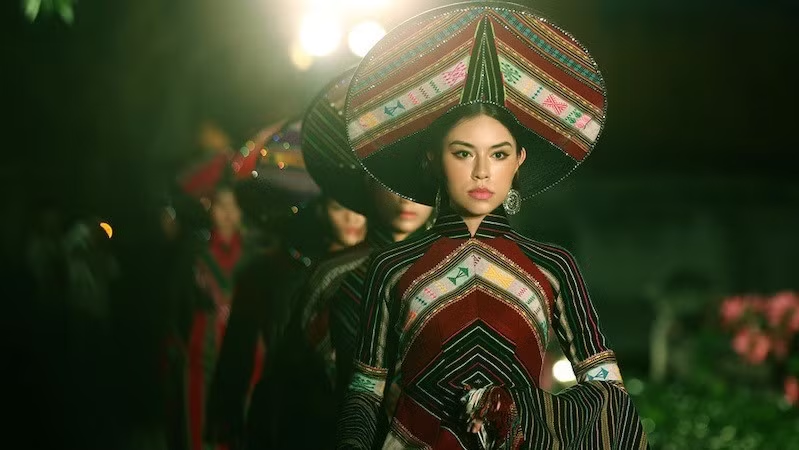
The Viet Nam Ao Dai Cultural Association identifies its local branch associations and chapters as “colour palettes and materials” connected with the association to bring the ao dai closer to the people and communities; while also integrating the distinctive cultural values of each region into the broader current of Vietnamese ao dai culture, preserving long-standing cultural essence as well as promoting it to international friends.
Representatives of the Viet Nam Ao Dai Cultural Association’s Dak Lak Provincial Branch Association said that in the coming period they would implement activities such as researching, collecting and introducing the history of the ao dai; experiential activities for younger generations; performance programmes combining the ao dai with local cultural materials; connecting artisans and designers with communities; and activities bringing the ao dai into cultural and educational events and everyday life.
This could be a promising direction for the ao dai to become a bridge between the cultures of different regions. From Ha Noi, Hue and Ho Chi Minh City to the Central Highlands, each locality can contribute a distinct colour and story, enriching the image of the Vietnamese ao dai through the language of contemporary fashion and art.