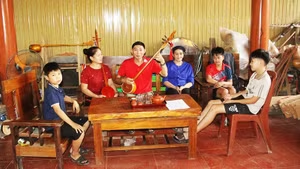
They are the true lifeblood helping to conserve and promote the traditional cultural values of ethnic minority groups amid the risk of erosion in modern life.
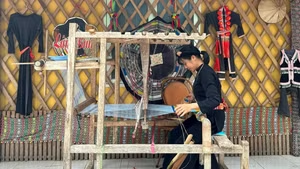
For more than 30 years, living in a small house in N’Jieng Village, Dong Gia Nghia Ward, artisan H’Binh has tirelessly preserved and passed down the Ma people’s traditional brocade weaving.
For her, the gentle sway of the loom and the rhythmic clatter of the shuttle have become an inseparable part of daily life, like a constant companion in the journey to preserve and promote her people’s cultural values.
From hand-spun threads dyed with forest leaves, turmeric roots, and tree bark, H’Binh diligently weaves patterns imbued with the spirit of the mountains and forests.
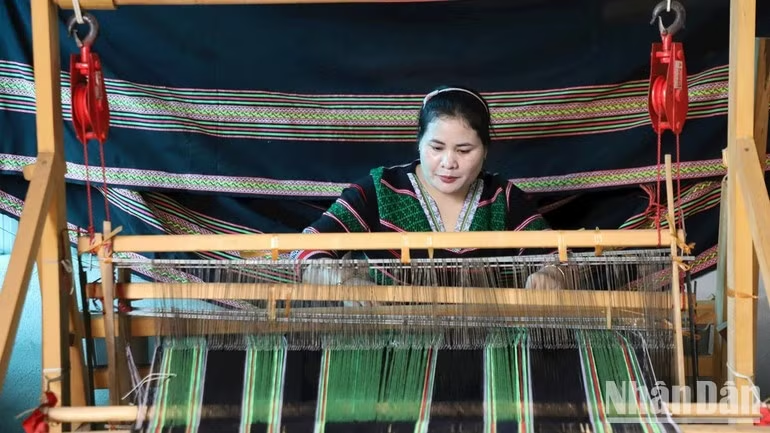
For the Ma people, brocade is not merely a household product but a language of culture. Each motif and colour palette carries stories of nature, humanity, and spiritual life.
From the age of ten, H’Binh was nurtured by her mother, H’Bach, who instilled in her a love for brocade and taught her every step of the craft, from selecting threads and blending colours to creating signature motifs and ensuring that each piece of cloth has a “soul”. This natural bond fostered her enduring passion for the traditional craft.
There was a time when cheap and convenient industrial brocade overshadowed handwoven products. Many young women lost interest in the loom, which placed the traditional craft at risk of fading away.
Refusing to let her ancestors’ heritage be forgotten, H’Binh took the initiative to bring together women in the village, gradually reviving the craft. In 2018, she and seven other women founded the Dak Nia Brocade Weaving Cooperative Group, opening a new pathway that links preservation with livelihood development.
In addition to safeguarding the craft, H’Binh brought Ma brocade beyond the confines of her village. From local cultural festivals to online platforms, traditional Ma brocade products have gradually found a foothold in the market. Handwoven brocade featuring ancient motifs now appears in clothing, interior décor, and souvenirs, and has even reached international markets.
For more than a year now, the cooperative’s brocade products have been commissioned by a business for export to Japan, opening a promising new direction.
Today, weaving provides stable employment for 20 cooperative members, helping many women in the village earn additional income and deepen their connection with their ethnic cultural heritage.
In Pi Nao Village, Nhan Co Commune, the sound of gongs has become a powerful symbol of community cohesion among the Mnong people. This achievement is the result of many years of dedication by artisan Y Lanh, who worked tirelessly to revive the gong cultural space that had once fallen into decline.
According to Y Lanh, an ancient set of gongs made from black copper is worth as much as a large water buffalo. About 20 years ago, ancient gong sets in the village were gradually sold off, while those who knew how to play them grew old and passed away, causing the sound of gongs to fade from festive occasions.
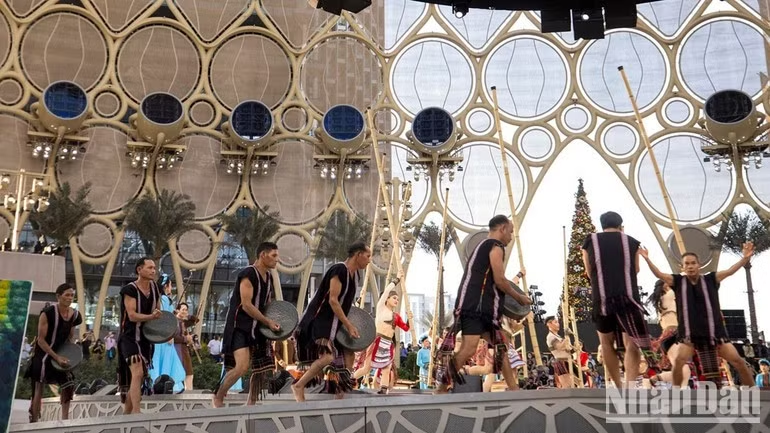
As ancient gongs disappeared and skilled players became scarce, Y Lanh, together with village elders and artisans, resolved to gather young people and restore the village’s gong ensemble.
Regular practice sessions were held, where generations relearned the ancient rhythms and gained an understanding of the meaning of each gong piece in traditional rituals. Gradually, the gong sounds returned to festivals, becoming a shared source of pride for the community.
From an initial gong team of ten members serving internal activities, Pi Nao Village has today emerged as a cultural highlight. Over the past five years, its gong ensemble has had the honour of representing ethnic communities in western Lam Dong at cultural events at home and abroad.
These tours not only bring joy to the artisans but also help introduce the Central Highlands’ gong cultural space to international audiences. For Y Lanh, every public performance is another affirmation of the enduring value of his people’s culture.
Alongside the Ma and Mnong people, in the border area of Dak Will, the Thai people are also actively preserving and spreading the brocade weaving craft thanks to the dedication of artisan Lo Thi Hoa.
From a young age, she learned the traditional craft from her grandmother and mother. By the age of 12, she had mastered spinning, dyeing, and weaving the distinctive ancient motifs of her people.
For her, brocade weaving is not merely a labour skill but a repository of folk knowledge that embodies the soul and cultural identity of the Thai people.
In 1989, when migrating from Thanh Hoa to settle in a new land, she brought with her the precious legacy of Thai traditional craft knowledge. Despite many hardships, she persevered in maintaining the craft, growing her own materials, weaving fabric for daily use, and gradually expanding production.
In 2009, recognising the risk of decline, she proactively opened training classes for local women, viewing this as the most practical way to preserve the heritage.
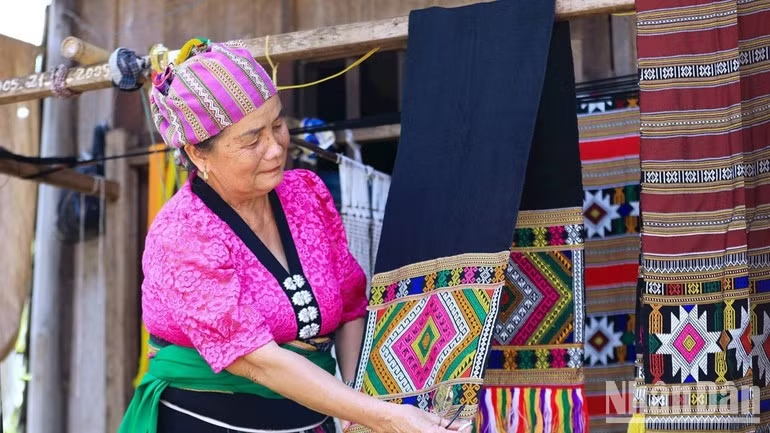
Over the years, hundreds of trainees from different ethnic groups have learned the craft from her. Beyond techniques, she imparts a love for culture and a deep respect for traditional values. The brocade products created by her and her students retain traditional features while incorporating creative adaptations suited to modern life, thereby enhancing their economic value.
In recognition of her persistent efforts to preserve and promote cultural identity, in 2019 the state president awarded her the title of “Meritorious Artisan” in the field of intangible cultural heritage.
This honour is not only a fitting reward for Lo Thi Hoa’s enduring contributions, but also an affirmation of the vital role artisans play in safeguarding intangible cultural heritage.
For her, the title serves as motivation to continue sowing the seeds of traditional crafts among younger generations.
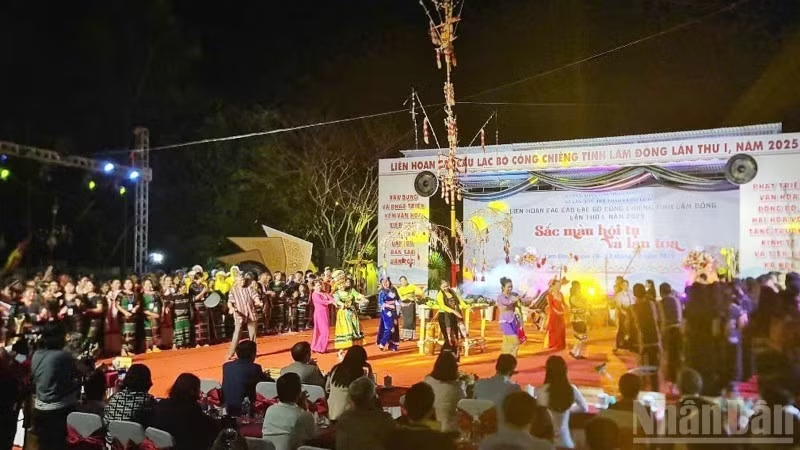
According to Le Thi Truc Linh, Deputy Director of the Lam Dong Department of Culture, Sports and Tourism, the province currently has 89 artisans in the field of intangible cultural heritage who have been honoured, including six People’s Artisans and 83 Meritorious Artisans.
These artisans play a particularly important role in preserving ethnic cultural identity and making tangible contributions to local socio-economic development. They embody folk knowledge and refined skills passed down through generations, safeguarding and transmitting unique values while serving as core agents in promoting and enhancing the cultural identity of ethnic communities for future generations.
In a new phase of development marked by integration, artisans stand as symbols of cultural resilience and vitality within each ethnic community.
What artisans share in common is a strong sense of responsibility towards their communities. They do not keep culture to themselves, but actively pass it on and spread it in many ways. As a result, heritage is not only preserved but continues to live in contemporary life.
They are the bridge between past and present, between tradition and the future. Thanks to them, culture is not merely conserved but continually transmitted and spread, becoming an inner source of strength for sustainable development in the Central Highlands.