The Argentine leader affirmed the need to thoroughly reform the economy with “shock therapy” in the context of the very high inflation and budget deficit of the third-largest economy in Latin America.
Argentina fell into a serious economic crisis in 2018 and had to seek support from the IMF. In the second half of 2023 alone, Argentina needed advances worth 10.6 billion USD to increase Central Bank reserves and fiscal consolidation as required by the IMF.
Meanwhile, the recent severe drought has cost the South American country about 20 billion USD. As one of the world's leading grain producers, Argentina faces a series of economic difficulties, such as an inflation rate of nearly 150% and a poverty rate exceeding 40% of the population.
Faced with macroeconomic instability, the administration of President Javier Milei announced a series of emergency economic measures, focusing on cutting public spending and preventing the risk of “hyperinflation”. Prominent initiatives include devaluing the local currency peso, by more than 50% and introducing the Necessity and Urgency Decree (DNU), with a series of “austerity” measures to minimise the deficit of the state budget and a strong promotion of privatisation.
Measures include reducing subsidies for the energy and transport sectors, limiting budget allocation from the Central Government to localities to the minimum level, cancelling infrastructure projects that have not yet started construction and moving towards eliminating export taxes.
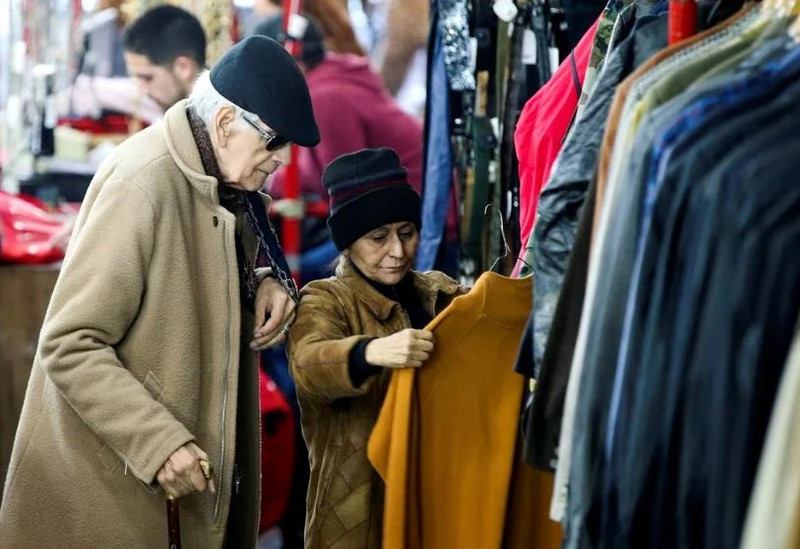
According to the Argentine Government, applying the above measures may make the economic situation worse, especially inflation, but it is necessary to "save" the economy. New economic measures immediately caused prices to escalate rapidly in the last days of 2023, significantly affecting people’s lives.
The National Congress of Argentina has convened an extraordinary session from December 26, 2023, to review and discuss DNU policies and is expected to last until January 31, 2024. Currently, several provincial governors have filed lawsuits with the Supreme Court, arguing that the Government's operation of the country with the DNU is an unconstitutional act.
Meanwhile, according to a draft law submitted to the National Congress for approval, the Government will have the “prerogative” to make economic, financial, security and social policies until the end of 2025 to govern the country, and this right can be extended for another two years.
President Milei has stated that the new law will give the executive agency the necessary supreme power to act in the current emergency, avoiding the country falling into economic disaster, in addition to promoting reforms thoroughly on trade, tax, production, society, security, education and operations at all levels of government.
However, many opposition party lawmakers believed that the Government's drafting of a bill giving this agency the supreme authority to run the country was an unconstitutional act. President Milei, leader of the former right-wing La Libertad Avanza (LLA), is in the minority in the National Congress. With only 38 out of 257 House seats and 7 out of 72 Senate seats, the LLA urgently needs the support of both houses of the National Congress to pass reform policies proposed by the Government. President Milei called on parliamentarians to pass a reform policy package that can create profound changes for the country, preventing the economy from falling into a state of “unprecedented disaster in history”.
In his 2024 New Year message, acknowledging that Argentina’s current dire situation will remain harsh in the coming months, President Milei called on the people to support and promote the adoption of the Government's reform measures.