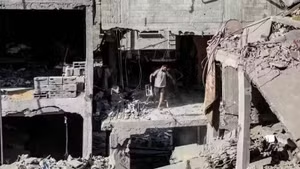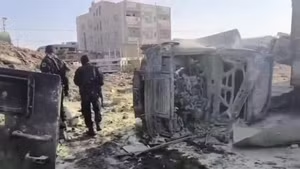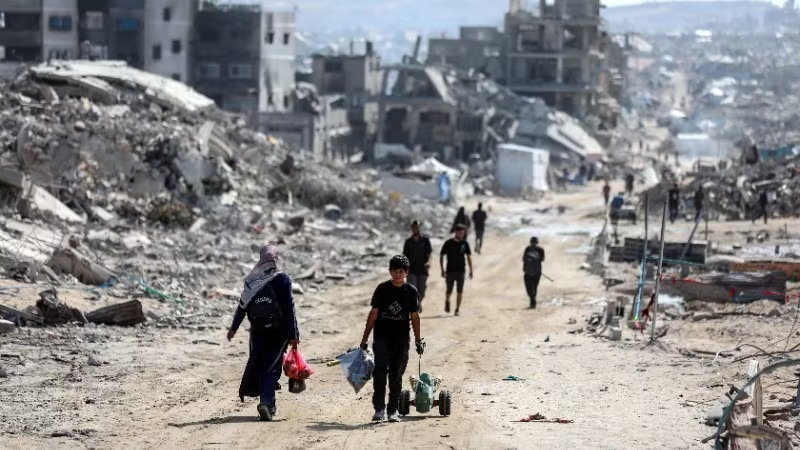
Although the ceasefire agreement reached between Israel and Hamas in October 2025 was initially seen as a positive step towards lasting peace, it has so far failed to meet expectations. A series of tit-for-tat attacks and persistent allegations of ceasefire violations have followed.
In just over the past month, more than 350 civilians in Gaza have lost their lives. With casualty figures rising sharply, the current ceasefire resembles a fragile thread linking Israel and Hamas, increasingly strained by the conflicting positions of both sides.
The ceasefire forms part of the US’s proposed peace plan for Gaza. The second phase of this plan addresses highly sensitive issues, including the disarmament of Hamas, the complete withdrawal of Israeli forces from Gaza, and the deployment of an international stabilisation force.
In mid-November, the United Nations Security Council passed a resolution establishing an International Stabilisation Force (ISF) in Gaza to protect civilians, open aid corridors, and lay the groundwork for reconstruction. The ISF is tasked with permanently disarming non-state armed groups.
With casualty figures rising sharply, the current ceasefire resembles a fragile thread linking Israel and Hamas, increasingly strained by the conflicting positions of both sides.
Nevertheless, questions have arisen regarding the force’s operational scale and its mechanisms of intervention should the parties breach the agreement. Deploying the ISF in Gaza is considered more complex than peacekeeping missions elsewhere, given that the war in this narrow strip of land has yet to fully conclude.
The resolution has elicited mixed reactions from Hamas and Israel. The Islamic Resistance Movement rejected it, arguing that assigning the international force tasks inside Gaza, including disarmament, strips it of neutrality and makes it a party to the conflict.
Israel, meanwhile, has indicated conditional acceptance, insisting that any international force must ensure the complete elimination of Hamas’s military and governing influence.
These statements reveal that both sides remain unwilling to make concessions.
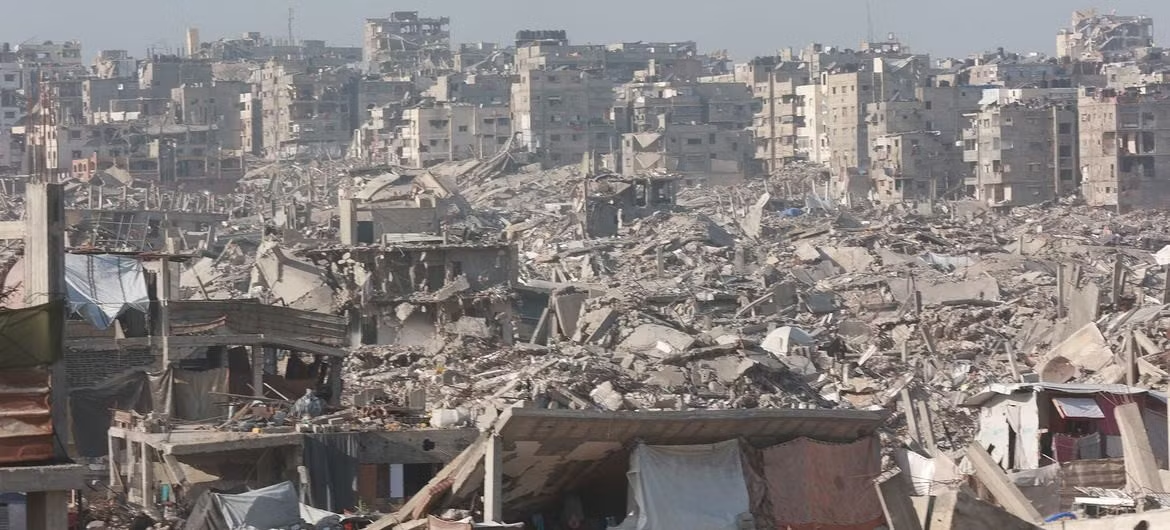
Negotiations between Israel and Hamas are unlikely to succeed easily, given the deep-seated clashes in their core interests, which demand immense patience. Yet the severe humanitarian crisis unfolding in Gaza allows no room for protracted talks.
Ilan Goldenberg, a former senior White House adviser, has observed that a dangerous aspect of the negotiations is the cycle in which both sides “agree in principle” but then engage in prolonged haggling over details, delaying agreements, and allowing the war to continue.
The United Nations Children’s Fund (UNICEF) has warned that, on average, two Palestinian children have been killed each day since the pause in hostilities was announced.
Estimates suggest that the cost of reconstructing Gaza will exceed 70 billion USD and could take decades for the area to return to welfare levels seen before October 2023.
One prerequisite for sustainable peace in Gaza is respect for and strict adherence to the ceasefire, aimed at safeguarding civilian lives — a commitment that remains unfulfilled.
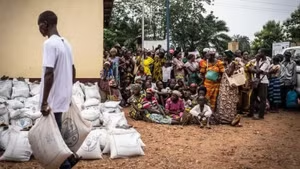
At present, many residents are living in tattered tents, facing acute shortages of food, fuel, and medicine as a harsh winter approaches.
More than two years of conflict have brought relentless suffering, exceeding the endurance of the people in this land strip, which has endured continuous bombardment.
The current impasse in the peace process reflects the conflict’s inherent complexities, marked by political calculations, a lack of goodwill, and mutual distrust.
One prerequisite for sustainable peace in Gaza is respect for and strict adherence to the ceasefire, aimed at safeguarding civilian lives — a commitment that remains unfulfilled.
Initiatives seeking peace have ignited hopes of resolution, but without readiness to compromise, the process is unlikely to escape the cycle of violence.