Profound changes across Africa in recent years have shifted global perceptions of the continent. No longer seen as the “forgotten continent” on the geopolitical map, Africa is increasingly recognised for its abundant mineral resources, potential for clean energy development, youthful workforce, and, above all, as a focal point in the strategic competition among major powers.
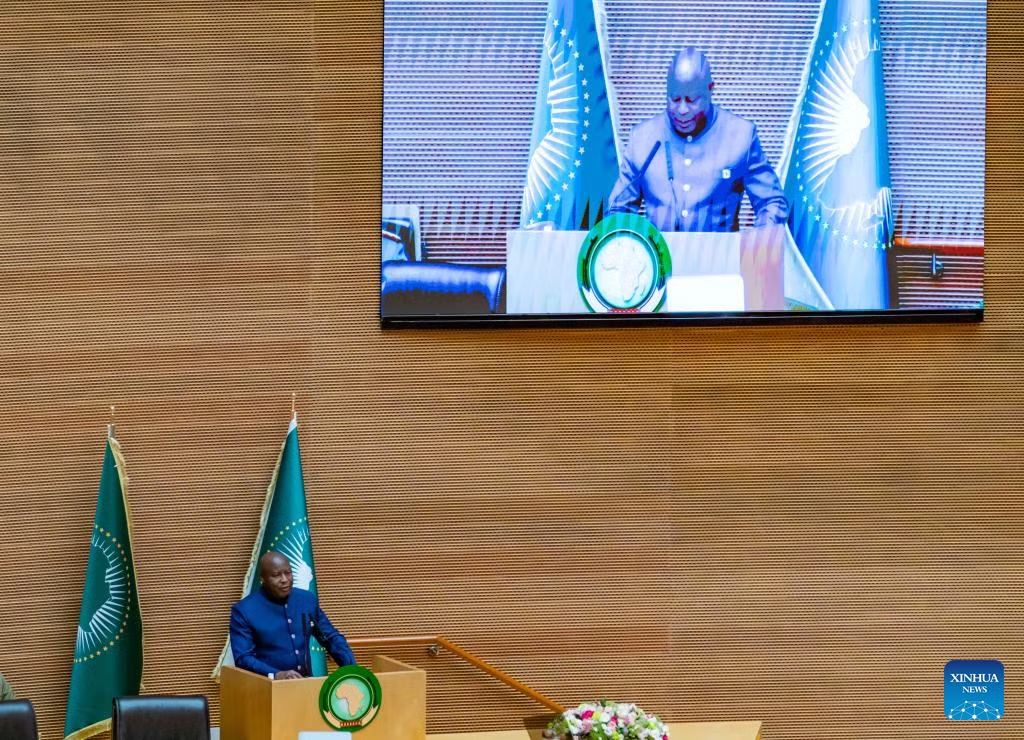
In this context, Burundi’s AU Chairmanship might appear less daunting. Yet, alongside high expectations, President Evariste Ndayishimiye’s inaugural speech was marked by concern as he emphasised that Burundi is taking the lead at a time when this continent of more than 1.4 billion people faces a multitude of challenges.
Analysts argue that the new AU Chairperson’s concerns are entirely justified. Despite notable achievements, Africa has yet to overcome its “chronic ailments”, which have long impeded development.
Among these, security remains the foremost challenge. For many years, peace—the prerequisite for progress — has been absent in numerous African nations.
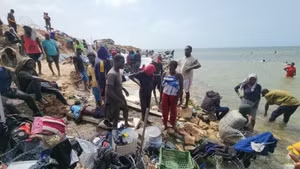
The continent accounts for up to 40% of the world’s conflicts, spanning Sudan and the Democratic Republic of Congo to the Sahel and the Horn of Africa. A common feature of Africa’s conflict zones is that they rarely erupt suddenly; instead, they smoulder, persist, spread widely, and leave devastating consequences.
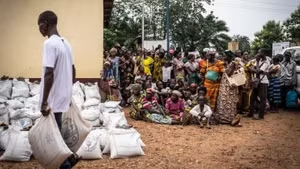
Since 2016, wars have claimed millions of lives, displaced nearly 46 million people, and driven 120 million across 26 countries into hunger and poverty. Efforts to “silence the guns” remain urgent yet formidable, posing a major challenge for Burundi in its new leadership role.
Public debt is another pressing issue. Despite economic strengths such as a youthful population and abundant natural resources, Africa carries a colossal debt burden of 1.8 trillion USD, equivalent to nearly 70% of its GDP. This mounting debt seriously threatens long-term growth, development, and social stability.
In reality, more than half of Africa’s population lives in countries where debt repayments exceed social spending. Rising debt servicing costs drain resources from vital sectors such as education, healthcare, and infrastructure, undermining economic and social development plans.
In a recent report, the International Monetary Fund (IMF) noted that Africa could soon become the world’s new growth engine. The continent is projected to lead globally in the number of high-growth economies in 2026, with many countries expected to achieve growth rates of 6% or higher.
Whenever decisions about Africa and the world are on the table, Africa must be at the table.
United Nations Secretary-General Antonio Guterres
On the international stage, Africa is gradually asserting its position, with the AU becoming a permanent member of the Group of Twenty (G20). Alongside the G20, Africa is striving for a stronger voice in global institutions. This effort has received widespread support, with many insisting that Africa must participate in decision-making processes concerning itself to ensure self-determination and effective policies for development and security.
Speaking at the 39th AU Summit in Ethiopia, United Nations Secretary-General Antonio Guterres affirmed: “Whenever decisions about Africa and the world are on the table, Africa must be at the table.” That support provides momentum and serves as a crucial lever for the continent to continue strengthening its global standing.
Africa stands at a critical crossroads, where challenges and opportunities coexist. As AU Chairperson for 2026, Burundi’s President Evariste Ndayishimiye has pledged to work with member states to overcome obstacles, seize opportunities, and pursue long-term development goals while amplifying Africa’s voice on the international stage.