Hungary has vetoed the European Union’s (EU) proposal for a 20th package of sanctions against Russia, as well as a new 90 billion EUR (106 billion USD) loan that the EU aimed to favourably provide to Ukraine. Budapest’s tough stance highlighted the ongoing rifts within the EU on the fourth anniversary of the Russia-Ukraine conflict.
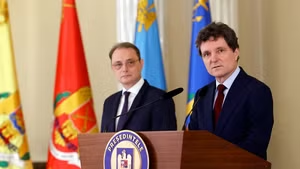
Speaking at a meeting of the EU Council of Foreign Ministers in Brussels, Hungarian Foreign Minister Peter Szijjarto affirmed that Budapest does not support the new sanctions package against Moscow, nor does it approve a large-scale military loan for Kyiv.
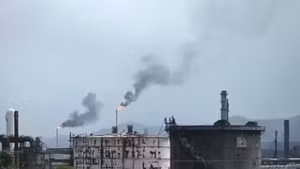
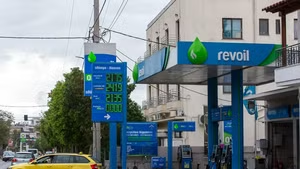
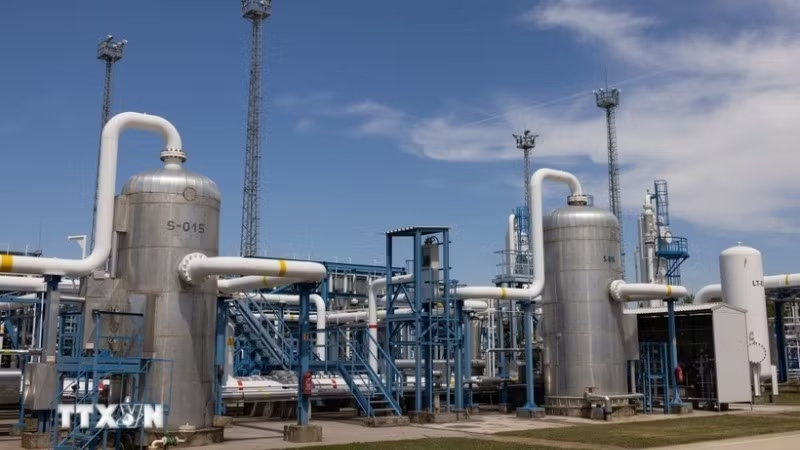
Budapest has recently expressed continuous displeasure over Ukraine’s “shutdown” of Russia’s Druzhba oil pipeline, preventing supply to Central Europe. This is a crucial crude oil supply route for Hungary and Slovakia, which were temporarily exempted from EU sanctions banning oil imports from Russia to allow landlocked Central European countries time to find alternative sources.
Although Kyiv explained that the suspension of oil transit via the Druzhba route was due to objective technical reasons and force majeure, Budapest insists that Ukraine deliberately shut the valve for political reasons. Minister Szijjarto emphasised that the supply disruption threatens Hungary’s energy security, accusing Ukraine of using the issue to exert pressure for Kyiv’s political motives. Budapest even retaliated by halting diesel supplies to Ukraine, a source that accounts for up to 10% of Kyiv’s diesel needs.
Alongside Hungary, Slovakia also added fuel to the fire by announcing it would cut off electricity supply to Ukraine. Bratislava’s move puts Kyiv in a precarious situation, as Ukraine is already facing a severe electricity shortage for production and heating during the cold winter months. Slovakia also warned of further harsh retaliatory measures, including a potential reversal of plans to hinder Ukraine’s EU accession process, despite Bratislava's previous strong support for Kyiv.
In addition, Slovak Prime Minister Robert Fico offered Ukraine a clear bargaining chip: electricity would be restored if Kyiv resumed operations of the Druzhba oil pipeline.
The unexpected moves by Hungary and Slovakia immediately drew reactions from many EU member states. German Foreign Minister Johann Wadephul expressed surprise at the stance of Budapest and Bratislava, stating he would try to persuade the two Central European nations to reconsider their position.
EU High Representative for Foreign Affairs and Security Policy Kaja Kallas acknowledged that the chances of reaching a consensus on sanctions against Russia were slim given the vetoes from Hungary and Slovakia but affirmed that the European “common home” would not give up.
European Commission Spokesperson Paula Pinho stressed that commitments made at the leadership level must be respected.
The EU’s 20th package of sanctions against Russia, which seemed poised for approval, has encountered significant obstacles.
Internal EU conflicts are not unprecedented, nor are they a new issue for international observers. Some typical cracks within this alliance include: the implementation of the Brexit agreement, the handling and reception of illegal migrants, the lack of coordination in opening borders following the COVID-19 pandemic, and the differing views of Germany and France on many internal and external issues.
Since the conflict in Ukraine erupted in 2022, the infighting among EU countries on common issues as well as the individual interests of each member state has become even more apparent. However, analysts believe that this rift will close if the interests of Hungary and Slovakia are met.