The event is considered an important historic milestone, opening a new phase of deeper cooperation between the health agencies of these two continents in addressing global health challenges.
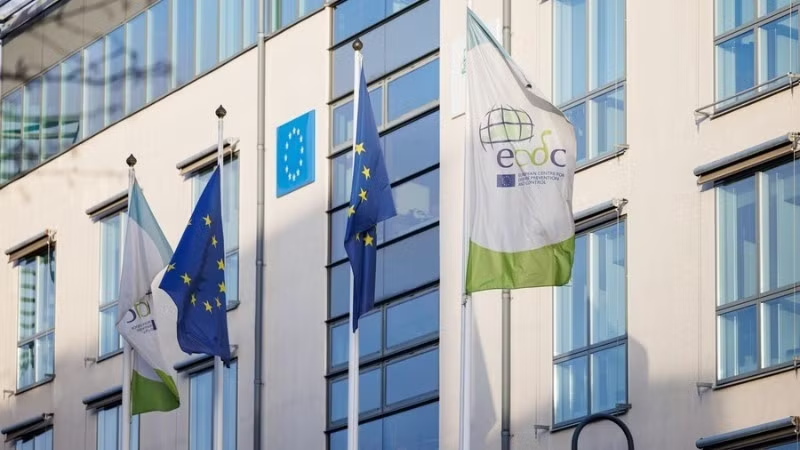
The agreement was signed in Addis Ababa, Ethiopia, between ECDC Director Pamela Rendi Wagner and Africa CDC Director-General Jean Kaseya. Speaking at the signing ceremony, representatives of both organisations emphasised that regional health security is becoming increasingly interconnected. Challenges such as infectious diseases, antimicrobial resistance (AMR), or emerging health threats all require close coordination among countries. The memorandum of understanding marks an important step forward for the health security of Europe, Africa, and the whole world while creating a foundation for more effective cooperation in the coming time.
Cooperation relations between ECDC and Africa CDC have been built over more than a decade through technical support programmes and professional exchanges. The signing of the memorandum of understanding formalises that cooperation, establishing a legal framework and expanding the cooperation scope in key areas of public health to strengthen health security on both continents.
Under the agreement, the two agencies will enhance cooperation in disease surveillance, risk assessment, preparedness, and emergency response over the next five years. Joint activities will also include monitoring emerging or re-emerging health threats, controlling vaccine-preventable diseases, and strengthening efforts to combat antimicrobial resistance (AMR) — one of the most serious health challenges today.
The two sides will cooperate closely in sharing epidemiological data, building forecasting models, implementing training programmes and developing public health workforce capacity to help countries improve early detection and respond more effectively to health crises. A new action programme will begin in May, within the framework of the “Team Europe” initiative, focusing on combating AMR and promoting the One Health approach, which consider human, animal, and environmental health as closely interconnected factors.
Europe’s health cooperation with Africa is not only humanitarian but also aimed at protecting the security and stability of the continent itself. In return, African countries will gain access to technology and vaccines, enhance local expertise capacity, and build self-reliant health systems — creating mutual benefits for both sides.
Prolonged epidemics often lead to economic downturns and political instability in African countries. On-site healthcare support helps maintain social stability, thereby reducing uncontrolled migration flows toward European borders. A healthier Africa will also protect raw material supply chains, ensuring that trade flows to Europe are not disrupted by lockdowns or health sanctions.
Africa is currently a focal point of geopolitical competition among major powers. Through projects such as “Team Europe”, the European Union (EU) seeks to demonstrate that it is a reliable and sustainable partner that respects Africa’s health sovereignty, rather than offering short-term assistance models. Cooperation also helps harmonise health standards, quarantine procedures, and pharmaceutical regulations between the two continents, creating favourable conditions for European pharmaceutical businesses to enter African markets.
Europe also needs cooperation from Africa to establish a unified AMR surveillance system, control the misuse of antibiotics on the continent, and prevent drug-resistant superbugs from spreading globally through travel and trade, thereby protecting the effectiveness of existing antibiotics worldwide.
Experts note that in an increasingly globalised world, such cooperative initiatives will play a crucial role in strengthening the global health security system. When health agencies in regions coordinate more closely in sharing information, analysing risks, and organising responses, the ability to protect communities from future disease threats will also be significantly enhanced.