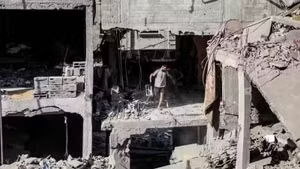
The number of armed conflicts globally has risen sharply to levels not seen since the end of the Second World War, driving global military spending to a record high of nearly 2.9 trillion USD.
Meanwhile, funding for international aid has fallen sharply, leaving millions trapped in chronic hunger and putting many sustainable development goals at risk of going unmet.
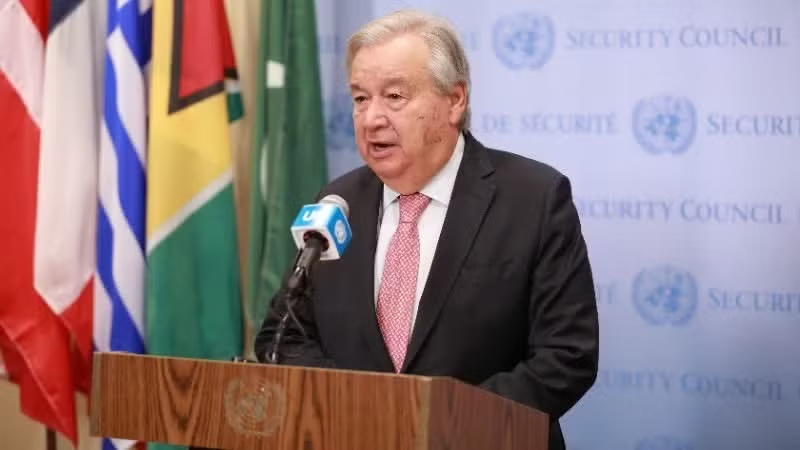
In a recent message urging nations to pursue disarmament and nuclear non-proliferation, United Nations Secretary-General António Guterres warned that humanity’s dream of peace is in peril.
The UN chief’s warning was not without cause. The threat posed by nuclear weapons has grown to alarming levels, while small arms and light weapons continue to proliferate unchecked. Compounding these dangers, new technologies such as artificial intelligence are amplifying the destructive capacity of modern conflicts.
According to a recently published report by the Stockholm International Peace Research Institute (SIPRI), global military expenditure has risen for 11 consecutive years, reaching nearly 2.9 trillion USD in 2025, equivalent to 2.5% of global GDP and a 41% increase in just a decade.
These stark figures reflect a worrying reality: the global security landscape is becoming increasingly complex, while multilateral arms control and disarmament mechanisms are coming under mounting strain.
Armed conflicts, escalating tensions, and a trend towards rearmament are among the main factors driving up defence spending, particularly in Europe and the Middle East.
Experts predict that defence spending among Gulf countries could rise by as much as 20% over the next three years, as the region’s volatile security environment compels governments to increase investment in defence capabilities.
According to the United Nations, spending on war now far exceeds funding for sustainable development and peacebuilding. The world needs around 93 billion USD per year to eradicate global hunger by 2030, and 370 billion USD per year to provide basic healthcare for all people in low- and lower-middle-income countries.
These sums are modest compared with the 2.9 trillion USD spent on the military in 2025, yet their significance is immense. They represent an opportunity for millions to escape hunger, for children in poor countries to attend school and be fully vaccinated, and they are a key to ensuring the United Nations Sustainable Development Goals (SDGs) are met by 2030.
The choice between guns and bread is a difficult one, particularly as the global geopolitical environment grows more complex and security risks continue to rise.
However, under current circumstances, the answer does not lie in forcing countries to choose one over the other, but rather in allocating resources wisely to address a wide range of challenges, including poverty, climate change, and disease.
United Nations Secretary-General António Guterres stressed that the time has come for nations to invest in building peace rather than in waging war. Only then can the world maintain a stable security environment and move steadily towards a sustainable future.