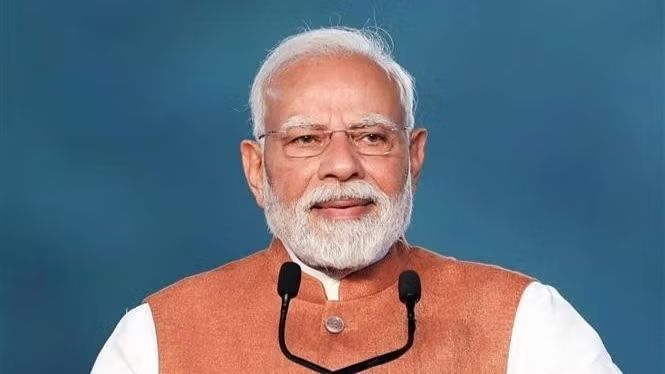
Indian Prime Minister Narendra Modi’s tour of several countries in the Middle East and Europe clearly reflects this strategy, aimed at effectively responding to shocks in the global oil market.
Within just six days, from May 15 to 20, Modi is scheduled to visit five countries: the United Arab Emirates (UAE), the Netherlands, Sweden, Norway, and Italy.
The Indian leader’s energy diplomacy policy is being pursued amid escalating conflict in the Middle East and congestion in the strategic Strait of Hormuz, both of which have driven global energy prices sharply higher and placed significant pressure on India’s economy.
Strengthening energy cooperation with other countries is a key focus of Modi’s trip. The UAE in particular is an important partner, supplying New Delhi with large volumes of crude oil, liquefied natural gas, and liquefied petroleum gas.
Europe, meanwhile, has yet to fully recover from the energy crisis triggered by the conflict in Ukraine and is now facing further difficulties stemming from tensions in the Middle East. This situation has compelled European countries to accelerate their transition to renewable energy as part of a broader strategy to ensure energy security.
With their rapid expansion of renewable energy, European nations are experienced partners for India in its transition towards clean energy.
India has strong reasons to urgently advance its energy diplomacy efforts. As it imports nearly 85 per cent of its crude oil demand, equivalent to around 4.2 million barrels per day, the South Asian country is particularly vulnerable to energy-related disruptions.
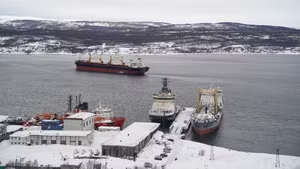
India’s economy has already been visibly affected by the escalation of conflict in the Middle East. More than half of the country’s crude oil imports pass through the Strait of Hormuz, which is increasingly becoming a strategic pressure point in geopolitical confrontations. Any disruption in the area would directly affect New Delhi’s import routes.
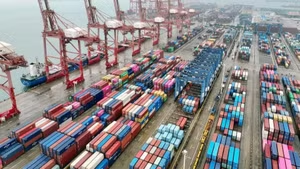
Beyond the Strait of Hormuz, recent attacks in the Red Sea and debates over transit charges in the Strait of Malacca have highlighted a growing reality: maritime routes are no longer solely linked to trade but are gradually becoming strategic levers in matters of security and energy. This has heightened concerns over continued instability in global energy flow in the near future.
The shock of rising oil prices risks developing into a broader economic crisis in India. According to Devarsh Vakil, a research analyst at HDFC Securities in Mumbai, soaring oil prices, and global instability are placing severe pressure on India’s foreign exchange reserves.
India’s aviation sector has been heavily affected due to flight routes facing disruptions, travel times lengthening, and fuel costs rising sharply. Several airlines have been forced to impose fuel surcharges on both domestic and international flights. In the agricultural sector, imported fertiliser prices have also surged due to supply chain disruptions.
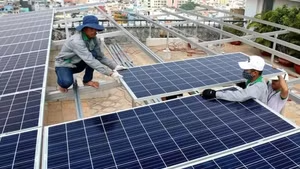
Nevertheless, amid India’s difficult energy outlook, one positive trend has emerged: the energy crisis is acting as a catalyst for a faster transition towards renewable energy.
India has increased solar power’s share of total electricity generation to 9 per cent, a sharp rise from just 0.5 per cent a decade ago. The country is also working closely with the European Union on green energy development. Meanwhile, the Indian Government has urged citizens to reduce fuel consumption and curb non-essential spending in foreign currencies in order to protect foreign exchange reserves.
In a world where energy is increasingly becoming a political bargaining tool and a crucial factor in international trade relations, India’s efforts to strengthen its energy diplomacy policy are helping to create a protective buffer against global volatility. Rather than competing in a short-term race for energy supplies, countries cooperating to tackle shared challenges together will help build a more sustainable energy future for all.