Party General Secretary and State President To Lam emphasised: “In the new era, great national unity is not only a spiritual tradition, but also a national development capacity; a strength to unlock resources, unleash creativity, create social consensus, and protect the Fatherland early and from afar.”
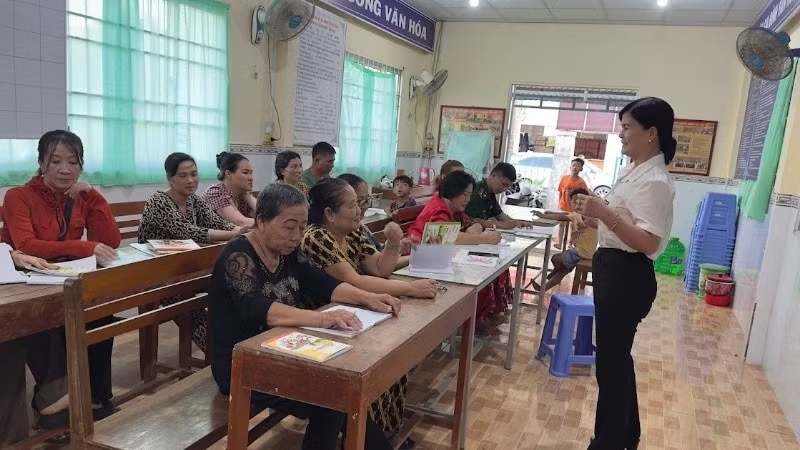
On weekday evenings, the small road along the canal leading to the Cultural House of Hamlet 7 in Cai Doi Vam Commune, Ca Mau Province, becomes lively with the sound of motorbikes and people calling to one another. After market work and household chores have eased, the special learners of the literacy class gradually arrive. Most are over 60 or 70 years old; their hair is flecked with time, their hands calloused from a lifetime more familiar with fishing nets and hoes than with pens. They sit beside square-lined notebooks, slowly shaping each letter, trying to make up for a dream left unfinished decades ago.
Trembling first letters in the twilight years
Tran Thi Sen, over 70, is one of the oldest learners in the class. War, turmoil, and poverty forced her dream of going to school to be put aside from childhood. Growing up, the demands of earning a living, then caring for her husband and raising her children, carried her through year after year, making literacy increasingly remote. For many years, whenever she needed to sign papers or read a signboard, she had to ask others, with a sense of embarrassment.
When officials of the Commune Women’s Union, together with officers and soldiers of the Cai Doi Vam Border Guard Station, came to her home to encourage her to attend, Sen was still hesitant. She feared she was too old, slow to remember, and stiff-handed, and that she would appear clumsy in class. Then she told herself that she had spent her whole life disadvantaged by illiteracy; now that someone had come to her home to invite her to learn, how could she let the opportunity pass?
After a few sessions, she was able to write her own name. The letters were uneven and the strokes still shaky, but she kept that notebook page with great care. She proudly said that from now on, when commune officials give her documents and ask for her signature, she can sign by herself and no longer needs to ask anyone. For those accustomed to reading and writing, a signature may be only a formality, but for Sen, it is deeply meaningful because it is the first time she can personally affirm her own name and rights.

Sitting next to Sen is Nguyen Thi Huyen, 68. After many years of hardship selling goods and working for hire, what she feared most was dealing with paperwork because she could not read what others had written, nor did she know what she had to fill in. After many rounds of encouragement from Women’s Union officials and border guards, she finally found the courage to sign up. Now she can read a few words and write a few letters. The joy may be hard to describe, but it gives her the motivation to come to class each day.
In the same class as Sen is Duong Thuy Lieu, who washes dishes for hire. When she was young, she could not go to school because her family was poor. What troubled her most was that when her children asked about letters, she, as a mother, did not know how to answer. As such, when Women’s Union officials came to encourage her, she agreed immediately.
In this special class, no one laughs when someone spells slowly, writes incorrectly, or forgets a letter learned the day before. Every bit of progress, whether recognising a syllable or doing a calculation correctly, becomes a shared joy for both teacher and learners.
A class of devoted hearts
The journey of sowing literacy in the coastal area of Cai Doi Vam began in 2015. By the end of 2025, Dao Thi Thanh An, then Vice Chairwoman of the Women’s Union of Cai Doi Vam Commune and a person long associated with local Women’s Union work, had helped successfully organise 12 classes, enabling more than 100 people to access literacy. An is now Chairwoman of the Red Cross Society of Cai Doi Vam Commune and Secretary of the Party Cell of Go Cong Hamlet, Cai Doi Vam Commune. The numbers are not large, but they carry profound meaning for the local people.
Learners come from diverse backgrounds: older people, poor women, informal workers, and Khmer and Hoa ethnic residents who once had no opportunity to attend school. The classes are held in the evening because only then do local residents temporarily finish their personal and family work.
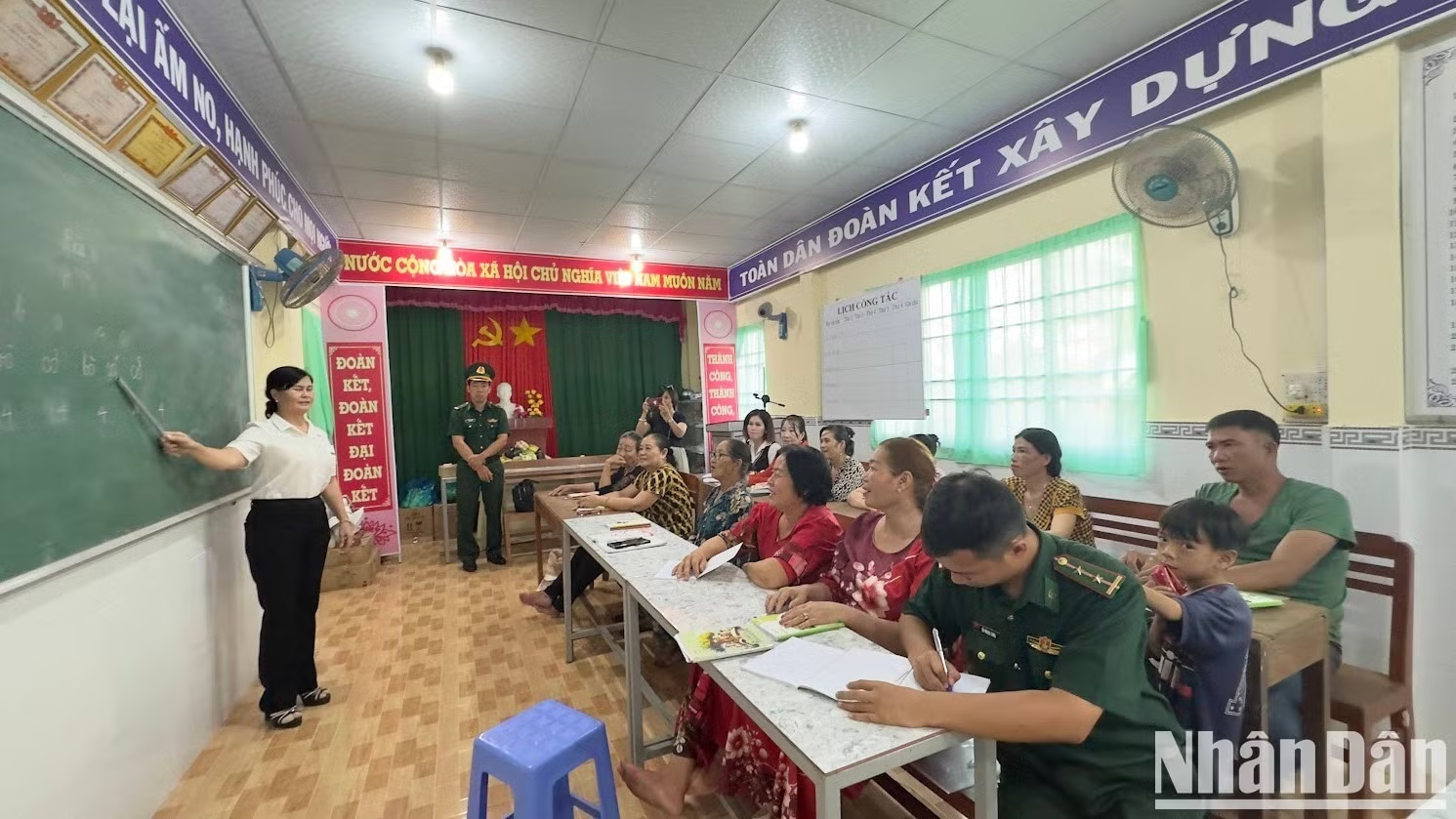
But opening a class does not mean keeping learners. An remembers one course in which 32 people initially registered, but by the second session only three remained. Some learners felt embarrassed after neighbours teased them for “going to school at such an old age”; others dropped out because of work or having to look after grandchildren. Behind each empty seat was a circumstance, an inferiority complex, or a burden of livelihood.
An keeps one principle: even if only one person comes, she teaches. Closing a class even once could cause someone who is trying to overcome self-consciousness to lose yet another measure of courage. Therefore, the classroom lights have continued to shine regularly. Women’s Union officials keep visiting households to talk, while encouraging children and grandchildren to share housework so that their grandparents and parents have time to attend class.
The hardest part is not necessarily a lack of boards or notebooks but helping older people believe that they can still learn. “Teacher An” designs the lessons to be close to daily life: recognising letters; practising writing names; doing addition and subtraction; reading price lists, signs, and medicine labels; and gradually becoming familiar with smartphones. This practical teaching method helps learners remember more easily.
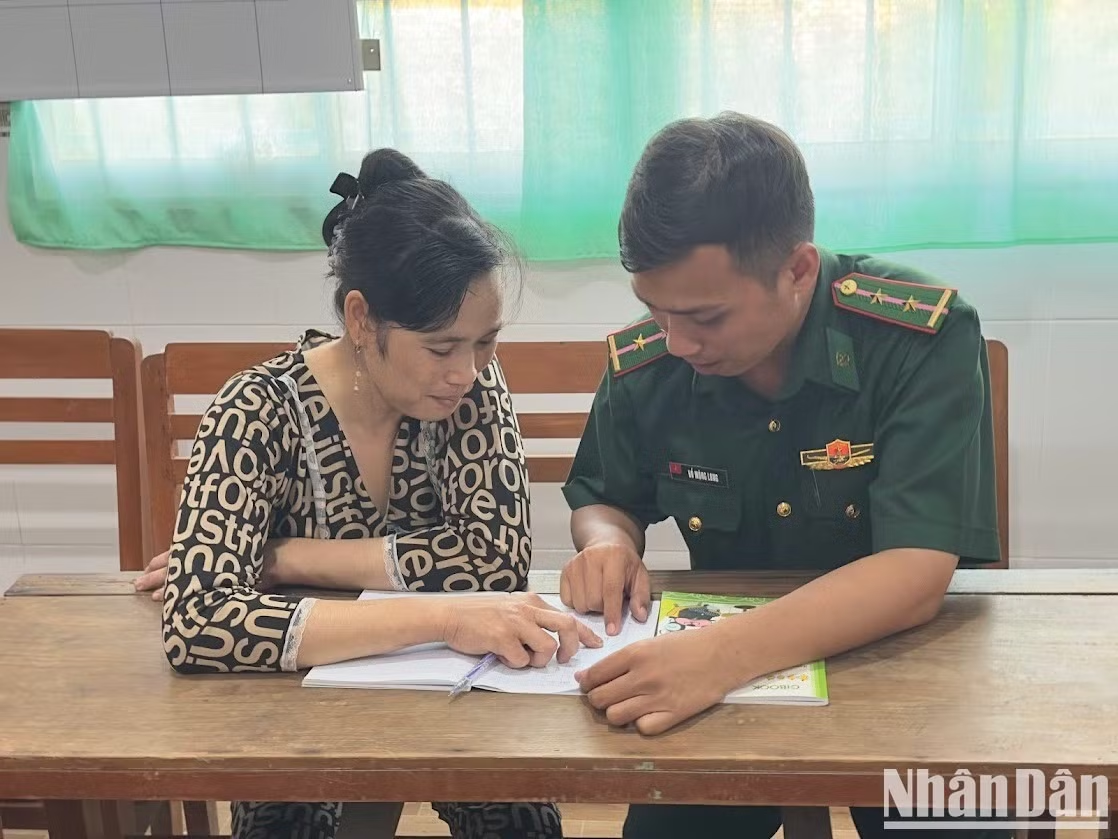
Standing side by side with Women’s Union officials are officers and soldiers of the Cai Doi Vam Border Guard Station. For each class, the unit sends one or two people to assist. Although not trained in pedagogy, Lieutenant Ho Mong Long is enthusiastic and patient, guiding learners by holding their hands through each pen stroke, repeating pronunciations, and helping them distinguish easily confused letters. Whenever a learner writes a word correctly or solves a calculation, joy illuminates the faces of both teacher and learner.
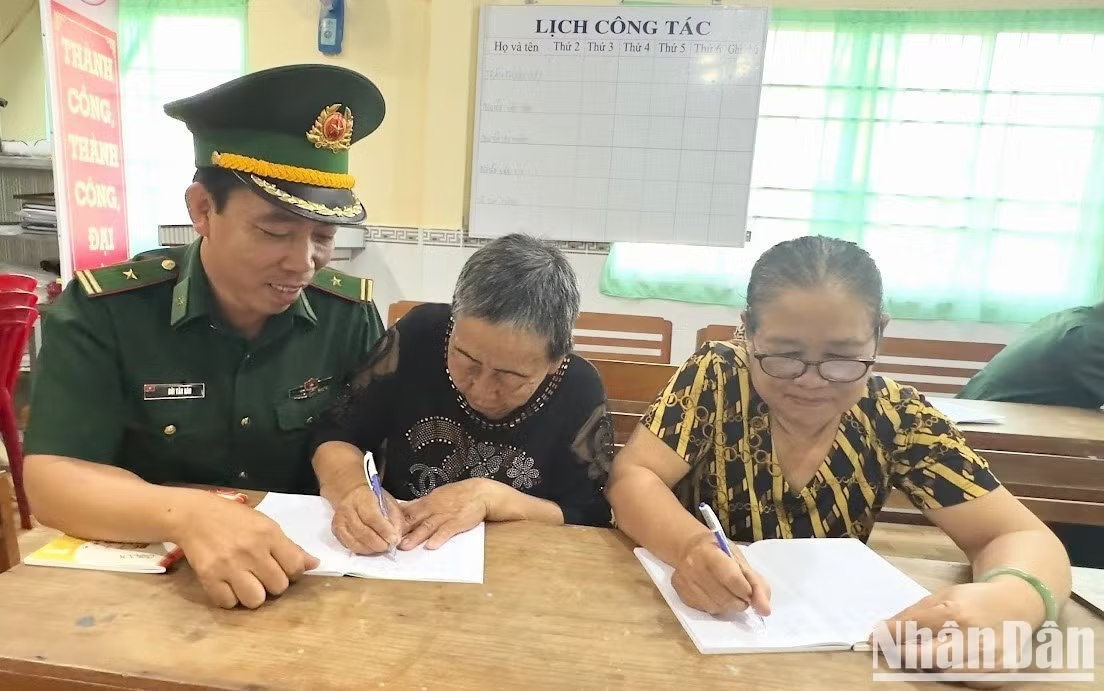
Major Bui Van Hao, Political Commissar of the Cai Doi Vam Border Guard Station, and his comrades both encourage local people to attend classes and integrate knowledge on maintaining security and order, complying with the law, and combating illegal, unreported, and unregulated fishing.
The local authorities and Party Cell of Hamlet 7 also join hands by arranging the venue and facilities. The Cultural House of Hamlet 7, normally a place for meetings, becomes a warm classroom every evening when the lights are turned on. The Party cell secretary and hamlet head also join in the mobilisation.
Thanks to this, the class is no longer the work of the Women’s Union or the Border Guard Station alone, but a shared task of the whole community. It has become a typical model of the movements “Border Guards Accompany Women in Border Areas” and “All People Unite to Build a Cultural Life” in the south-western waters of the Fatherland. More broadly, it is also the way a major policy is realised through very small and concrete actions at the grassroots, where every person, regardless of age or circumstance, is not left behind.
At the end of the class, Sen and other learners carefully fold their notebooks, keeping the page on which they have just written their names. Outside, night has fallen. Everyone says goodbye and returns to daily concerns. Tomorrow, life may still carry many burdens and worries, but they have shed some of their self-doubt and taken one more step forward.

Literacy so no one stands outside life’s movement
For learners in the literacy class in Hamlet 7, literacy first helps them handle tasks for which they had long depended on others: reading signboards, recognising medicine names, calculating payments, finding house numbers, and signing documents. More importantly, being able to do these seemingly simple things by themselves restores their confidence and sense of control over their own lives.
As digital transformation spreads ever more deeply, the meaning of the class is further affirmed. Many public services, transactions, and information on policies, healthcare, and production are gradually moving to the digital environment. Even though smartphones are now present in most households, people who cannot read are very likely to be left on the margins. Teaching older people to read and write therefore not only makes up for a deficiency of the past but also gives them a foothold to enter modern life.
The spirit of “leaving no one behind” is expressed in a simple yet moving way right in the classroom. Those who know more teach those who know less. Younger people teach older people. One person learning a few more letters may not immediately change the appearance of a rural area, but it changes that person’s own life, helping each individual become more confident, better understand policies, know how to protect their rights, and remind their children and grandchildren to obey the law.
The documents of the 14th National Party Congress define great national unity as the foundation for gathering and maximising the strength of the people, while emphasising the requirement to ensure fairness and equality so that every citizen can access opportunities and enjoy the fruits of development. Viewed from the classroom in Cai Doi Vam, “access to opportunities” begins with the most basic thing: being able to learn to read and write and being given the means to step through the door of knowledge by oneself.
Nearly eight decades later, the small class in Cai Doi Vam continues the spirit of the Popular Education movement in a new context: eliminating illiteracy in association with legal knowledge, life skills, and the ability to adapt to digital transformation.
President Ho Chi Minh once taught: “In the sky, nothing is more precious than the people. In the world, nothing is stronger than the united force of the people.” In Hamlet 7, that teaching is expressed through the meeting between the legitimate needs of the people and the responsibility of grassroots workers. The people are not only recipients of support but also the subjects of the learning journey: overcoming self-consciousness, arranging their lives, encouraging one another to attend class, and bringing the knowledge they acquire back to contribute to their families and hamlets.
“In the new era, great national unity is not only a spiritual tradition, but also a national development capacity; a strength to unlock resources, unleash creativity, create social consensus, and protect the Fatherland early and from afar.”
Party General Secretary and State President To Lam
Speaking at the 11th National Congress of the Viet Nam Fatherland Front on May 12, 2026, Party General Secretary and State President To Lam affirmed: “Great national unity is a precious tradition, a strategic line of the Party, and the source of Viet Nam’s strength.”

The letters in Cai Doi Vam have connected unfinished dreams with opportunities for disadvantaged and older people; connected local residents with knowledge, law, and digital life; and connected Women’s Union workers, border guards, and grassroots officials with people in the coastal area. From these simple connections, the spirit of great unity is nurtured every day, quietly but firmly.