A life of revolutionary dedication and moral example
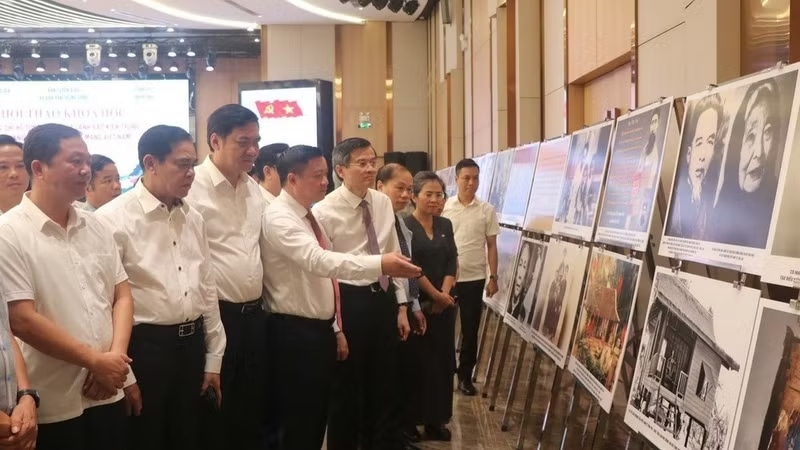
Comrade Ho Tung Mau, born Ho Ba Cu on June 15, 1896 in Quynh Doi village, Quynh Luu district, Nghe An Province (now Quynh Anh Commune), came from a family steeped in patriotism and revolutionary tradition. In April 1920, he went abroad to engage in revolutionary activities. By 1924, he had joined the Communist Youth organisation and became one of the outstanding students and trusted collaborators of Nguyen Ai Quoc, later known as Ho Chi Minh.
He actively organised political training classes, popularised Marxism–Leninism, and played a pivotal role in expanding the membership of the Viet Nam Revolutionary Youth League.
In 1929, he was elected a full member of the Central Committee of the Viet Nam Revolutionary Youth League. Later that year he joined the Communist Party of Annam and campaigned vigorously for the unification of communist organisations into a single party.
In 1931, he was arrested by the French colonial authorities and sentenced to life imprisonment. Even in captivity, he upheld the integrity of a communist, became a focal point for solidarity among political prisoners, educated revolutionary ideals, and led numerous struggles against the harsh conditions of colonial detention.
Comrade Ho Tung Mau's revolutionary journey exemplified the moral qualities of a genuine communist, who sacrificed and strove for independence, freedom, prosperity and happiness of the people.
After his release in 1941, he resumed revolutionary activities and helped prepare forces for the General Uprising to seize power.
In his various posts, Comrade Ho Tung Mau demonstrated the qualities of a talented leader with close ties to the grassroots, a strong commitment to Party-building, government consolidation and strengthening the armed forces. On December 18, 1949, he was appointed Viet Nam’s first Government Inspector General. On July 23, 1951, he bravely sacrificed his life while on a working visit to Inter-region IV.
At 55 years of age, with more than 30 years of revolutionary service, he devoted his life to national liberation, Party-building and State development. His revolutionary journey exemplified the moral qualities of a genuine communist, who sacrificed and strove for independence, freedom, prosperity and happiness of the people. His contributions were recognised by the Party and State with prestigious awards, including the Gold Star Order and the Ho Chi Minh Order.
From revolutionary legacy to modern development
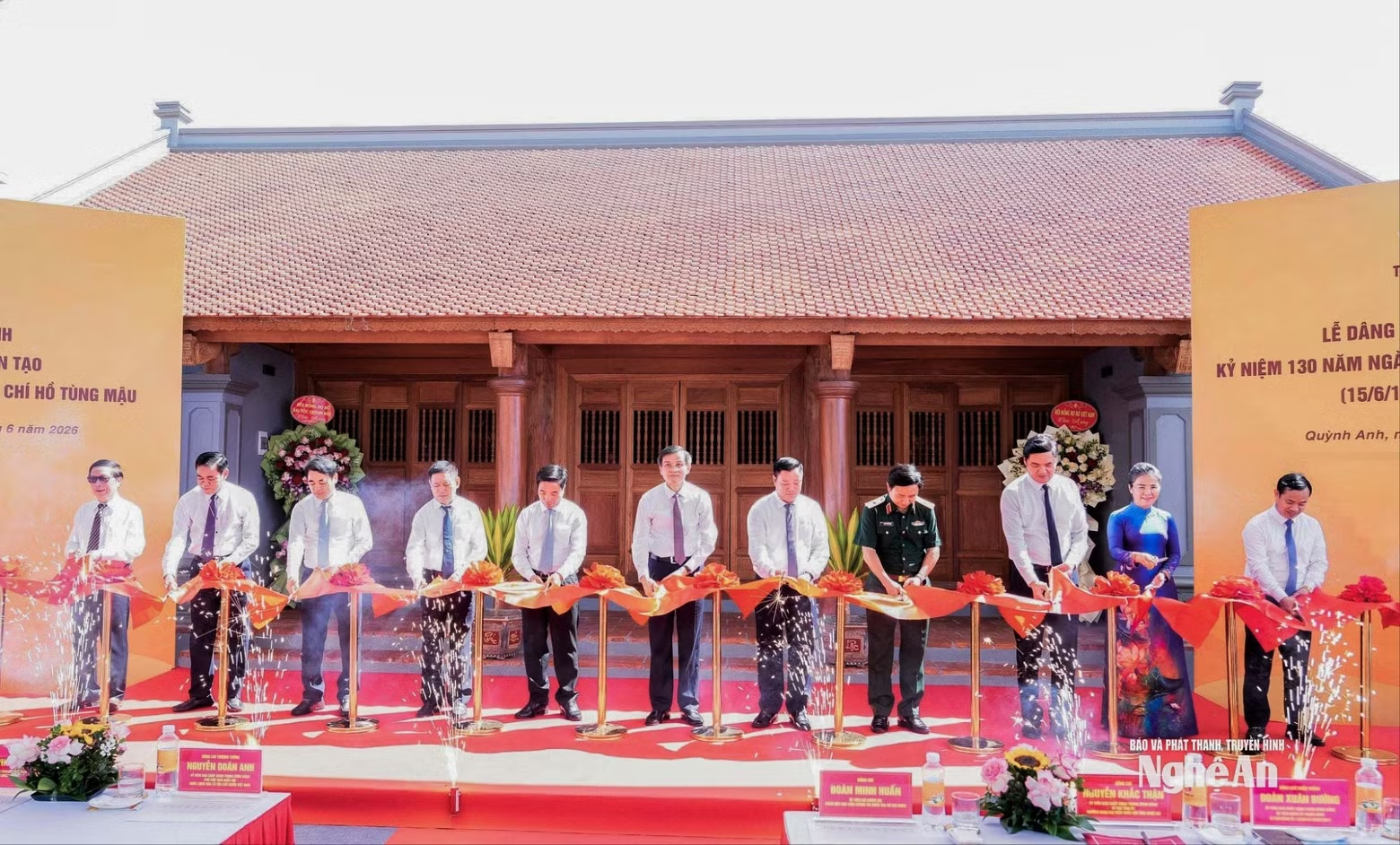
Today, Quynh Anh Commune, Comrade Ho Tung Mau’s hometown, is witnessing remarkable changes in the daily lives of its people.
Within this flow of renewal, the legacies left by Comrade Ho Tung Mau have been preserved and passed down through generations, realised in aspirations for economic growth, new-style rural development, administrative reform and digital transformation.
Formed through the merger of Minh Luong, Quynh Thanh, Quynh Yen, Quynh Bang and Quynh Doi communes, Quynh Anh now covers nearly 40 sq. km with a population of over 60,000. It is one of the largest vegetable-producing communes in Nghe An Province. After one year operating a two-tier local government model, the commune has recorded many positive results. Economic growth has been sustained at over 9%, while fiscal revenue in 2025 reached 173% of the plan.
In the first six months of 2026, total production value exceeded 1.75 trillion VND; per capita income in 2025 was estimated at 64.9 million VND.
Alongside economic progress, cultural and social sectors have also advanced. Nguyen Van Thuong, Secretary of the Party Committee of Quynh Anh Commune, said that for the 2025–2030 term the locality is focusing on developing riverway and sea-based economies, as well as commercial and service centres.
Lessons of patriotism, resilience in adversity and dedication have truly become a source of motivation for the local Party Committee, authorities and people to contribute further to their homeland’s development.
The commune is mobilising maximum resources to build modern, synchronous infrastructure and strengthen regional connectivity; prioritising transport networks, schools, bus stations, markets and clean water; promoting industrial development, forming small and medium industrial clusters, and creating favourable conditions for businesses and entrepreneurship.
To achieve these goals, the local Party Committee has identified three breakthrough tasks: renewing and intensifying leadership; implementing fundamental measures to create development momentum; and improving Party-building and leadership capacity of Party organisations.
The values left by Comrade Ho Tung Mau are not only evident in socio-economic life but also in education. Schools continue to instil revolutionary tradition, patriotism and responsibility in young people.
Teachers and pupils of Ho Tung Mau Primary and Secondary School have achieved remarkable academic results. According to Principal Ho Thi Nhu, for every teacher and pupil, studying and working under a school named after Comrade Ho Tung Mau is both a source of pride and a motivation to strive.
Quynh Anh Commune is changing daily through tangible achievements in socio-economic development, rural modernisation and improved livelihoods. These are the fruits of renewal and a continuation of the spiritual values left by Comrade Ho Tung Mau. Lessons of patriotism, resilience in adversity and dedication have truly become a source of motivation for the local Party Committee, authorities and people to contribute further to their homeland’s development.