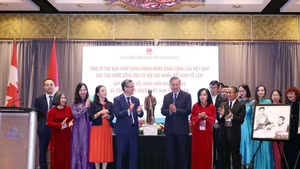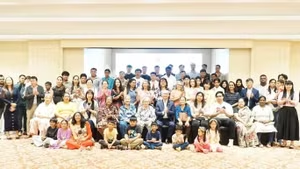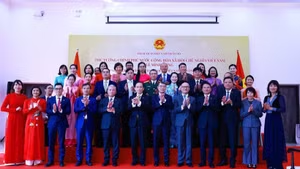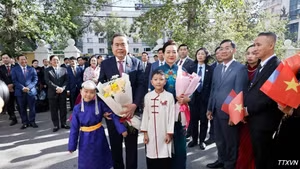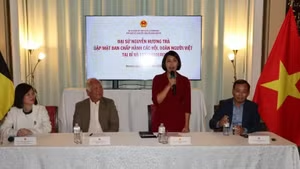
As an initiative founded and operated by the Russian-Viet Nam Cooperation Development Promotion Fund “Tradition and Friendship”, the Network aims to connect experts, scientists, businesses, and Vietnamese people with ties to the Russian Federation, as well as Russians, thereby enabling intellectual resources to participate more directly in research, development, and technology transfer programmes.
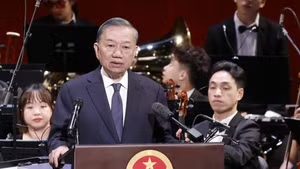
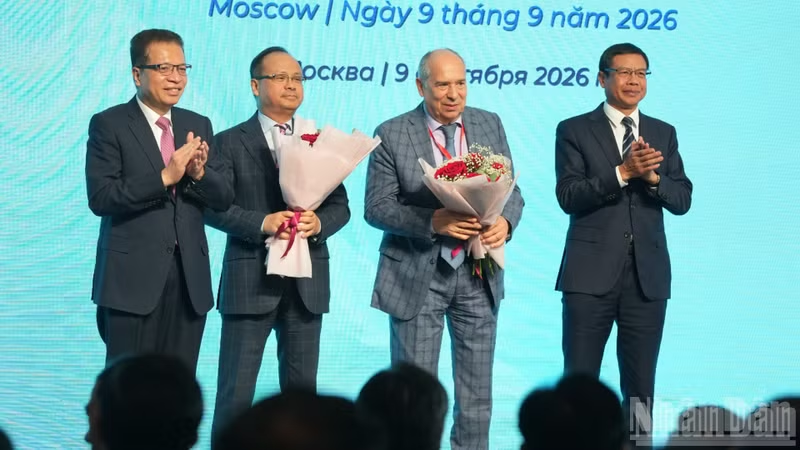
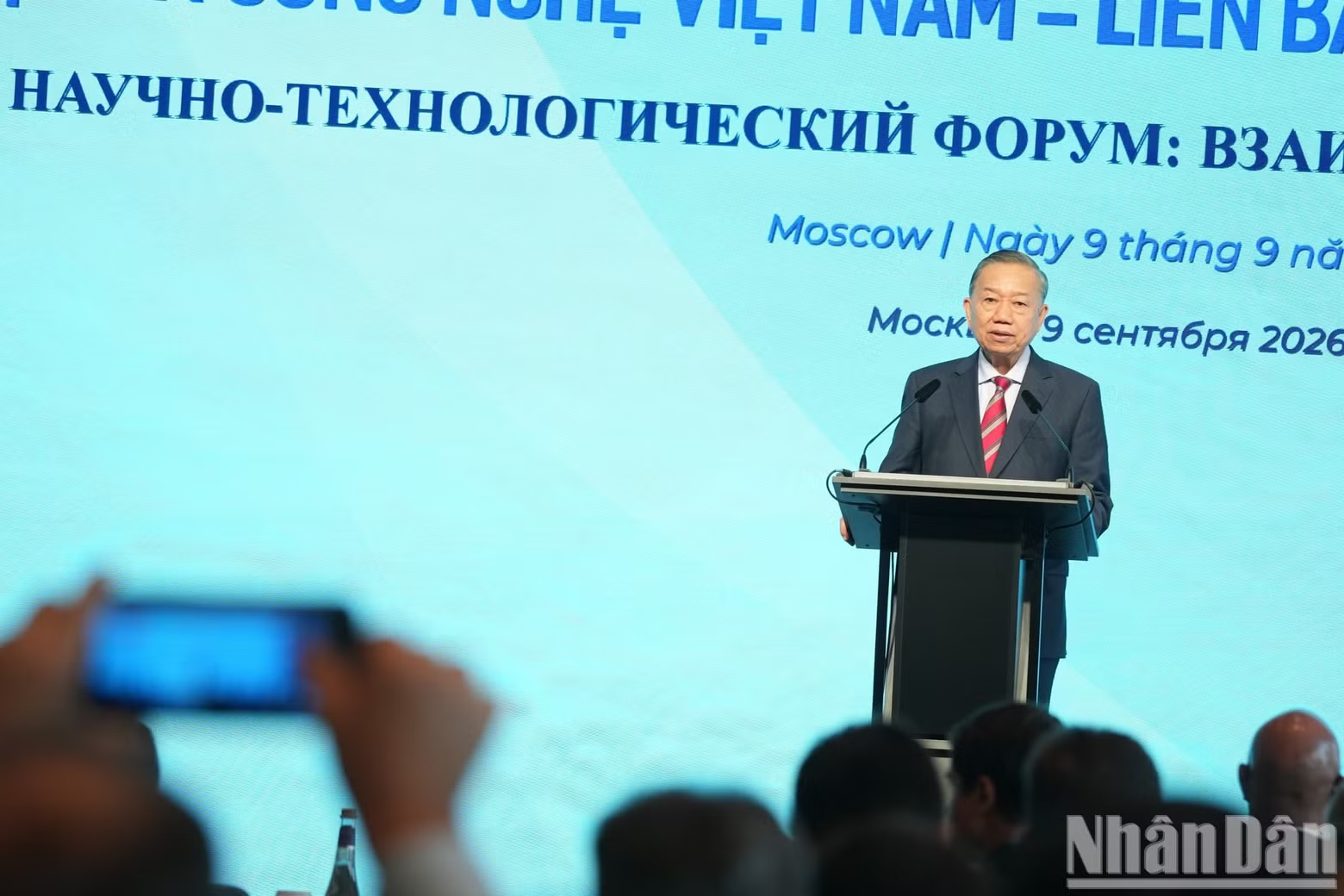
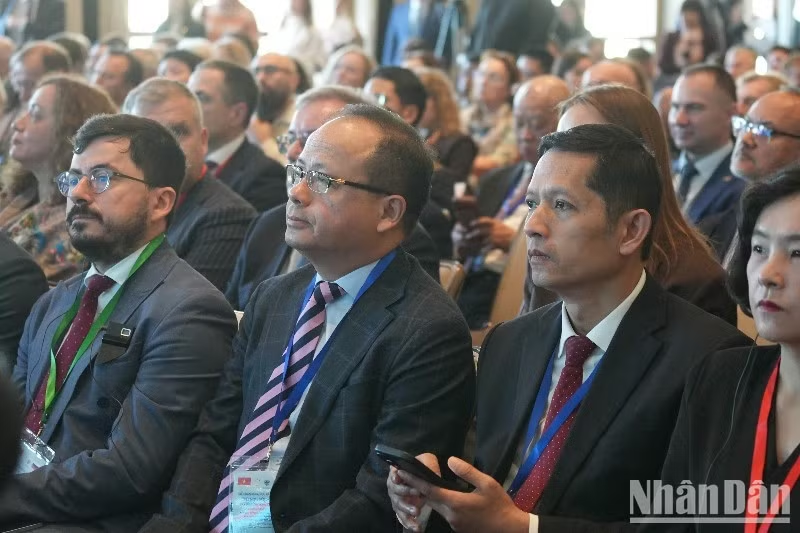
The Network was launched in the presence of General Secretary and President To Lam and a high-level Vietnamese delegation within the framework of the Viet Nam-Russian Federation Science and Technology Forum, themed “Connecting Strategic Technologies”, held on September 9.
A new connecting platform
Following the successful launch programme, speaking to a reporter from Nhan Dan Newspaper permanently based in Russia, Do Xuan Hoang, Chairman of the “Tradition and Friendship” Fund, stressed that Viet Nam-Russian Federation relations had been built and nurtured over many generations, with human resources, particularly the intellectuals who have studied, conducted research, and worked in Russia, constituting a valuable asset.
Against this backdrop, the Vietnamese-Russian Knowledge Network was established with the desire to create a regular space connecting scientists, experts, businesses, and organisations from the two countries, thereby bringing knowledge closer to practical needs.
“We hope this network will become an open space, supporting technology transfer and development, connecting intelligence and capital with ideas as well as experts with practical needs, and contributing to the formation of a new generation of cooperation based on knowledge, creativity, and specific projects,” Do Xuan Hoang said.
The Network focuses on areas such as materials science and high technology; artificial intelligence and digital transformation; energy and environmental technology; biotechnology, healthcare, and pharmaceuticals; mining and metallurgy technology, as well as a number of other fields of science and technology and the social sciences and humanities.
Notably, the Network does not only aim to bring together experts but also sets the goal of connecting research resources with specific challenges faced by businesses and localities. Accordingly, joint research groups can be established on the basis of practical needs, together with resource support mechanisms for implementation and bringing research results into application.
Academician Alexander Nekipelov of the Russian Academy of Sciences and Director of the Moscow School of Economics at Moscow State University spoke highly of the Vietnamese-Russian Knowledge Network, while expressing his pleasure at the “new vitality” in relations between Viet Nam and Russia.
According to the academician, friendly relations between Viet Nam and Russia have a very positive history. At present, these relations are developing not only in traditional sectors and fields but also expanding into industry and new areas. The two countries are discussing projects in the nuclear industry and other issues.
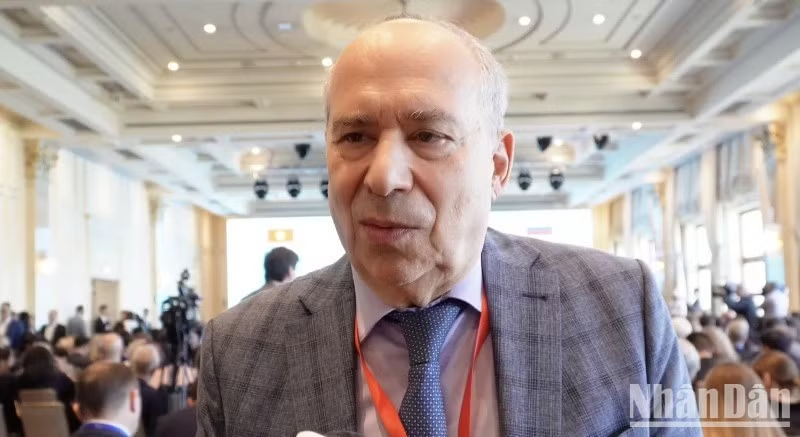
“As someone who was born and spent most of his life during the Soviet period, I am very pleased with the development of relations between the two countries. As a researcher, I certainly very much look forward to the development of relations between Vietnamese and Russian scientists in all fields,” the academician said.
From intellectual resources to specific projects
According to Dr Nguyen Quoc Hung, Director of the “Tradition and Friendship” Fund and Chairman of the Network Coordination Council, the establishment of the Network stemmed from the need to build a regular connection mechanism, thereby bringing together and making better use of the resources of Vietnamese and Russian experts and scientists.
The Network is expected to operate along four main directions: maintaining a community of experts and businesses through the Network’s portal; organising conferences and scientific discussions; supporting the formation of joint research groups and knowledge transfer; and connecting research topics according to the needs of state agencies, localities, and businesses.
According to Nguyen Quoc Hung, this approach aims to enable the intellectual resources of the Vietnamese community in Russia to participate more deeply in the country’s development process, in line with the spirit of Politburo Resolution No. 23-NQ/TW on work concerning overseas Vietnamese people in the new situation.
Immediately after the Network was launched, representatives of many universities and research institutions in Russia expressed their interest and desire to establish connections.
From the perspective of the Vietnamese community in Russia, experts noted that the younger generation of Vietnamese people has particular advantages: they are trained in Russia’s scientific environment, understand the cultures and languages of both countries, and are increasingly capable of responding to Viet Nam’s new requirements. Connecting this force with domestic research groups, businesses, and agencies is expected to open new avenues for scientific and technological cooperation between the two countries.
Previously, at the Viet Nam-Russian Federation Science and Technology Forum, General Secretary and President To Lam stressed that scientific and technological cooperation between Viet Nam and the Russian Federation in the coming period required new thinking, new approaches, and higher goals; it should not stop at expert exchanges and personnel training but should aim at jointly mastering technologies, creating products, and jointly participating in the market.
Emphasising that the greatest asset of the relations between the two countries was not only the projects already built but also the people, General Secretary and President To Lam called on the two sides to expand training programmes in strategic technology fields; strengthen exchanges of young scientists, postgraduate researchers, and engineers; and create conditions for young research groups from the two countries to jointly carry out science and technology tasks.
According to Nguyen Quoc Hung, in this context, the establishment of the Vietnamese-Russian Knowledge Network can be considered a step towards creating an additional channel through which the intellectual resources of the two countries can be connected more regularly, thereby turning personal relationships, research ideas, and cooperation potential into specific programmes and projects.
To ensure that knowledge “does not remain on paper”, the Network aims to address this through the model of “commissioned research” combined with “financial sponsorship”. Members and partners of the Network are not only experts and scientists but also technology businesses.
The Network receives practical problems from businesses and localities in Viet Nam and directly transfers them to joint research groups in priority fields. Once a commissioned research task is placed, the scientific product will immediately have a destination for application and commercialisation.
A practical and significant initiative
The launch of the Vietnamese-Russian Knowledge Network was described by Vietnamese Ambassador to Russia Dang Minh Khoi as a highly practical initiative, of particular significance both in terms of timing and strategic importance. It is not merely an individual initiative but an inevitable result of the tradition of intellectual cooperation built up over many generations.
During the 1950-1991 period, the former Soviet Union received and trained nearly 50,000 Vietnamese citizens, including around 30,000 university-level students, nearly 3,000 Candidates of Sciences, and 200 Doctors of Sciences, most of whom were in the basic engineering and science disciplines. This was the foundation for the formation of Viet Nam’s intellectual and leading engineering cadres.
The ambassador also said that Viet Nam-Russian Federation relations had been nurtured over many generations, with people, especially the Vietnamese scientists, experts, and entrepreneurs who had studied, conducted research, and worked in Russia, constituting a valuable asset. The Vietnamese-Russian Knowledge Network has been designed to continue and elevate that tradition under new conditions.
The ambassador stressed that the launch of the Network during the Viet Nam-Russia Year of Science and Education 2026 further affirmed that this was a strategic step, contributing to the concretisation of Politburo Resolution No. 57-NQ/TW on breakthroughs in the development of science and technology, innovation and national digital transformation; while also contributing to the realisation of Politburo Resolution No. 06-NQ/TW on foreign policy.
This is also consistent with Politburo Resolution No. 59-NQ/TW on international integration in the new situation, which identifies international integration in science and technology as a top priority spearhead for anticipating the global flow of knowledge, and Politburo Resolution No. 23-NQ/TW on promoting the resources of the overseas Vietnamese community, under which the Network will contribute to better mobilising the intellectual resources of the Vietnamese diaspora, while creating additional space for scientists, experts, and businesses of the two countries to connect, share knowledge and ideas, and seek specific cooperation opportunities.
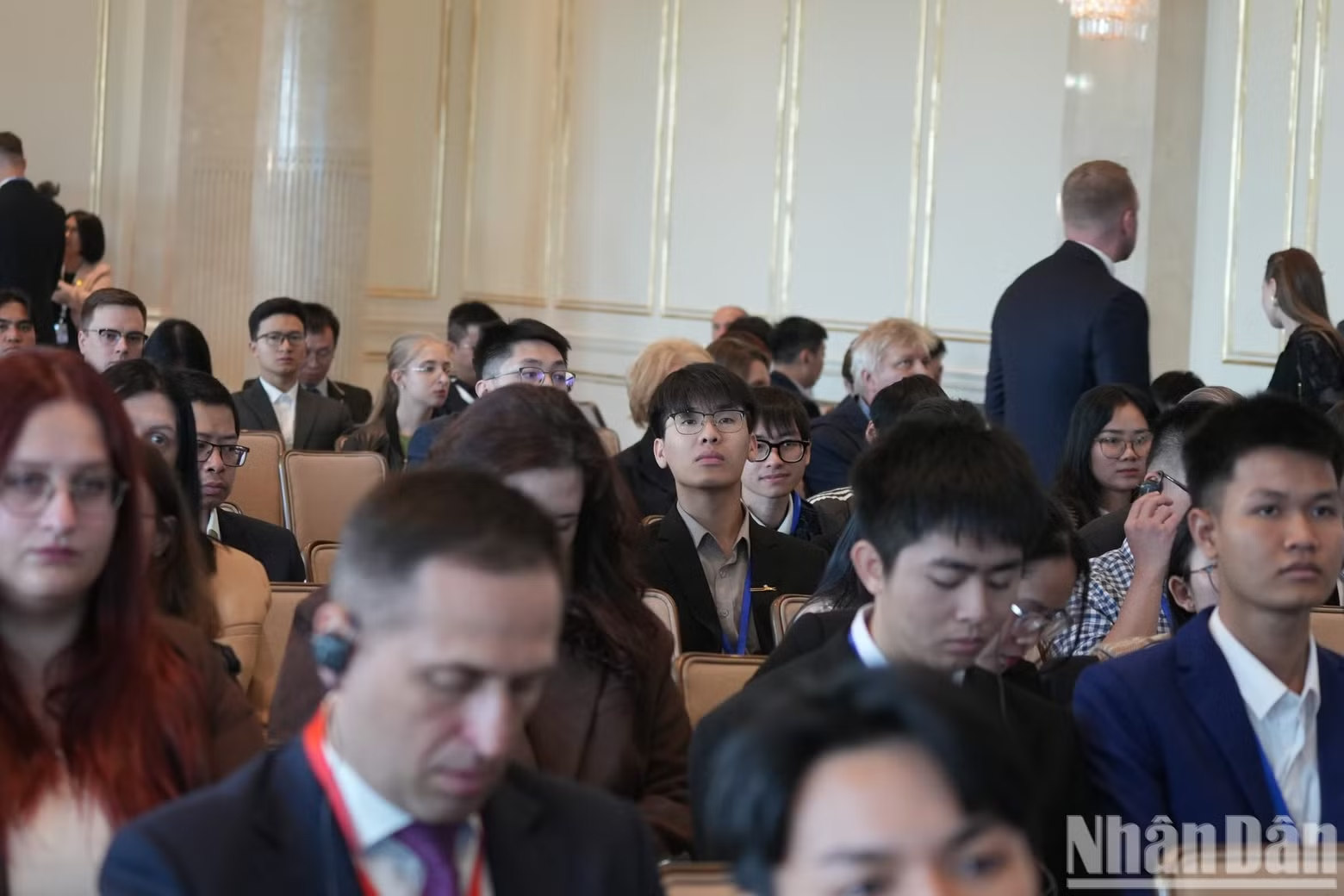
At present, the Vietnamese community in Russia possesses a significant intellectual force, with more than 3,000 Vietnamese students are studying in Russia, around 44% of whom are in science and technology disciplines. Under these circumstances, the ambassador believes that the younger generation of Vietnamese people in Russia is precisely the force with particular advantages to participate in joint research groups, if they are connected properly and regularly through the Network.
For a knowledge network to truly produce results, the most important thing is to link connections with specific practical needs and challenges. According to the ambassador, the Network’s model of “commissioned research task – joint research group – financial sponsorship – commercialisation” is intended to ensure that research results do not stop at scientific papers but are geared towards products that can be applied and brought to market. In particular, business participation is a very important factor.
Ambassador Dang Minh Khoi also hopes that in the coming years, the Network will establish a substantive, sustainable Vietnamese-Russian knowledge connection mechanism capable of producing specific results, with a portfolio of joint research groups operating regularly, along with cooperation programmes and projects involving scientists, experts, and businesses from both countries, some of which may create products and technological solutions of practical value.
In particular, the Network is expected to attract the growing participation of young scientists from both countries and create at least several model projects on “jointly mastering technology”, from research to products and markets, to serve as models for replication; and become a long-term bridge between the intellectual resources of the Vietnamese community in Russia and Viet Nam’s development needs.
From an institutional perspective, the ambassador also expects the Network to soon be recognised as an official cooperation channel within the framework of the Viet Nam-Russia Intergovernmental Committee, creating a legal basis and stable resources for its long-term operation. The Embassy of Viet Nam in Russia stands ready to accompany and support the Network in its role as a bridge connecting scientists, experts, and businesses of the two countries, as well as to work closely with relevant Vietnamese and Russian agencies to resolve any difficulties arising during implementation.