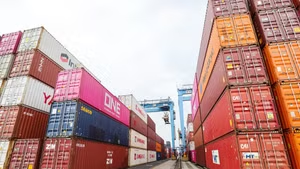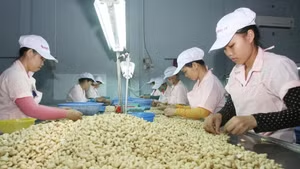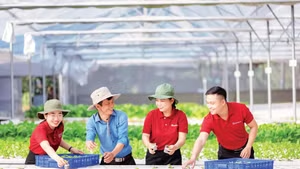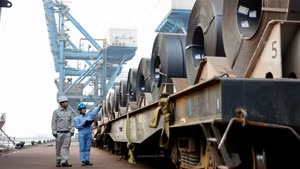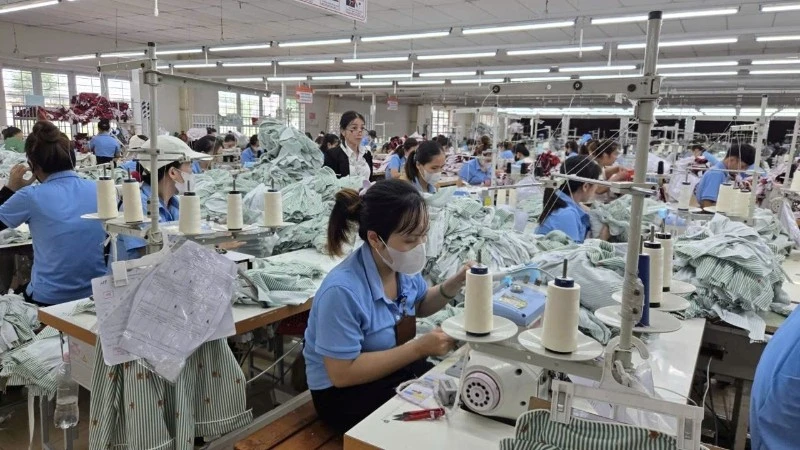
These opportunities arise from Viet Nam’s strategic position, abundant human resources, and participation in a system of new-generation free trade agreements (FTAs) such as the CPTPP, EVFTA, and RCEP.
At the same time, profound changes in global supply chains have begun to take shape since the Covid-19 pandemic, as the need to diversify production and prioritise sustainable development has increased. Enterprises worldwide are seeking more flexible production locations, aiming to reduce risks and align with green trends. With advantages such as reasonable labour costs, a strategic geographical location, a stable political environment, and investment-friendly support policies, Viet Nam is currently regarded as a bright spot, emerging as a leading destination with strong investment prospects and high levels of business confidence among international enterprises.
According to data from the General Statistics Office, foreign direct investment (FDI) inflow into Viet Nam has been growing since 2020, concentrating on high-tech sectors such as electronics, semiconductors, and automobiles. Major corporations such as Samsung, Intel, and Foxconn have continuously expanded their factories and are actively seeking local suppliers to build more sustainable supply chains. This not only boosts investment and exports but also brings benefits in technology transfer, creates thousands of quality jobs, and helps enhance Viet Nam’s position within regional and global production networks.
However, according to Tran Thi Thanh Tam, Director of the Centre for Small and Medium Enterprise Support under the Viet Nam Chamber of Commerce and Industry (VCCI), opportunities always go hand in hand with challenges. Competitive pressure from other countries is increasing as they accelerate investment in supporting industries, while domestic enterprises still lack strong linkages and face limitations in high-quality human resources, technological capacity, labour productivity, the ability to fulfil large and long-term orders, and compliance with technical standards, quality management, green development, and sustainability requirements. These factors have caused many domestic enterprises to remain dependent on external sources of raw and auxiliary materials, preventing them from becoming key links in the global production network.
At present, the world is changing the rules of the game from cost and inventory optimisation towards prioritising supply chain security, autonomy, and resilience to risks. Therefore, Dr Trinh Quoc Vinh of the Institute for Industrial Strategy and Policy Research believes that Vietnamese enterprises must adapt quickly to not be left behind. In addition, the green supply chain trend is becoming a mandatory requirement, demanding that enterprises reduce emissions, actively use renewable energy, and comply with strict labour standards. This is particularly pressing as technical barriers such as the EU’s Carbon Border Adjustment Mechanism (CBAM) and the US Clean Competition Act are forcing Vietnamese exporters in aluminium, steel, and textiles to transform their technologies immediately or risk being excluded from global supply chains.
To support Vietnamese enterprises in enhancing competitiveness and strengthening their ability to participate in global supply chains, Dr Trinh Quoc Vinh suggests that the state should continue to introduce policies with concrete solutions to renew mindsets, helping enterprises quickly shift from a processing-oriented role to proactive value creation, and to develop leading enterprises capable of steering value chains. Although Viet Nam achieved export turnover of 406 billion USD in 2024, ranking among the world’s top 20, domestic value added remains very low (only about 20–25%) and is largely based on processing and assembly. In addition, solutions are needed to support enterprises in mastering technology through piloting innovation support funds, encouraging mergers and acquisitions to acquire core technologies from abroad, and further enhancing implementation capacity by promoting research into export credit agency models, thereby addressing the problem of “capital shortages” for enterprises seeking to expand globally.
However, support policies should only be seen as a launch pad, making it essential for enterprises themselves to proactively change by focusing on the technical value of products, creating high value-added products and building long-term competitive advantages. This includes strengthening participation in supply chain linkages with FDI enterprises to help smaller firms improve technical capabilities and efficiency, reduce raw material costs, enhance sustainable competitiveness, and gain access to international standards. This approach also helps narrow technology gaps and expand production capacity for small and medium-sized enterprises.
At the same time, greater attention must be paid to investing in high-quality human resources through continuous training, and by linking higher education with enterprises to build a workforce well-versed in digital transformation and the green economy. Standards, quality, and modern technology will form a sustainable foundation enabling enterprises to enhance competitiveness — helping not only to retain existing orders but also serving as the “key” to deeper participation and long-term resilience within global supply chains.