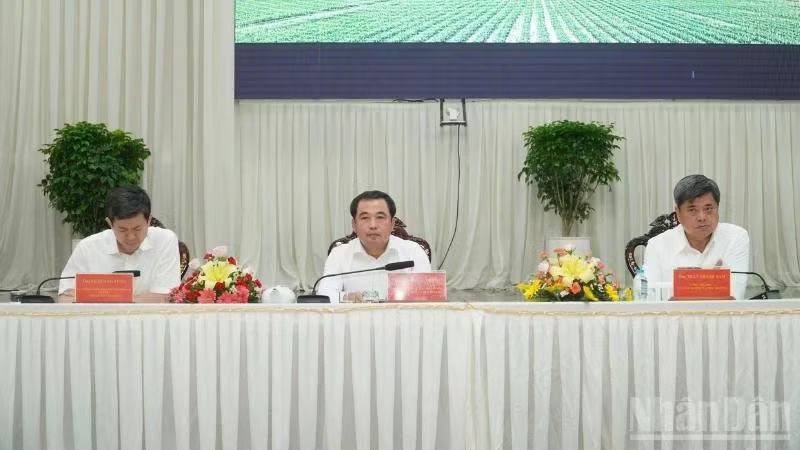
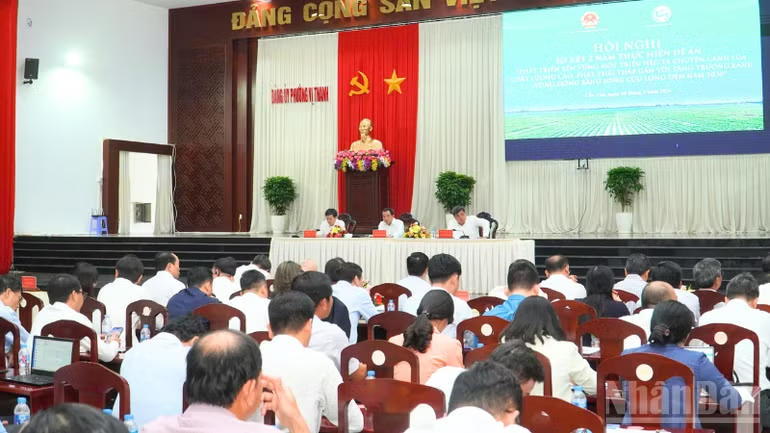
According to the report presented at the conference, after more than two years of implementation, the project has achieved many positive results. The cultivated area of specialised high-quality, low-emission rice fields has reached 354,839 hectares, compared with the target of 180,000 hectares, equivalent to 197% of the planned figure.
The implementation process has gradually helped transform farmers’ production mindset towards reducing emissions, increasing value and protecting the environment. Many sustainable farming practices have been increasingly adopted, such as advanced irrigation water management, rational fertiliser use and post-harvest straw treatment.
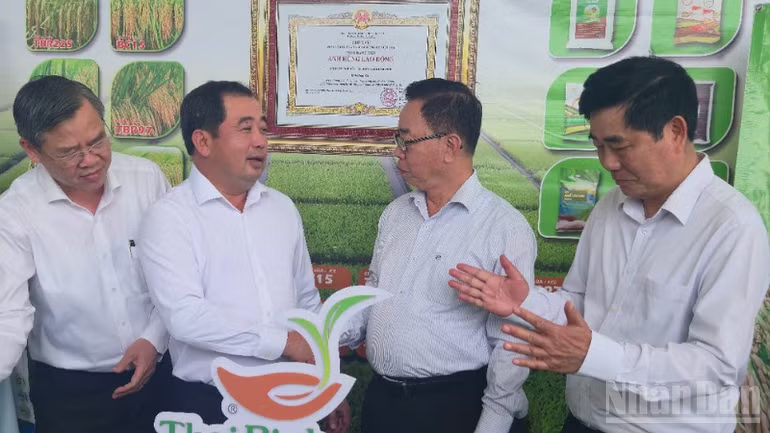
At pilot models applying technical processes for high-quality, low-emission rice production guided by the ministry, many impressive results have been recorded.
As a result, farmers’ profits have increased by around 6 million VND per hectare per crop. Notably, the application of sustainable farming practices has also helped reduce emissions by 3–4 tonnes of carbon dioxide per hectare per crop, contributing positively to the goal of green agricultural development and greenhouse gas emission reduction.
In addition, businesses and cooperatives have shown increasing interest in production linkages, improving product quality and building a sustainable rice value chain. Many cooperative models involving farmers, cooperatives and enterprises have been formed, helping enhance the value of Vietnamese rice and moving towards building the national rice brand in the international market.
International organisations and development partners have also actively accompanied Viet Nam in implementing the project. Through various cooperation programmes, these partners have provided support in terms of technical assistance, credit, training and market development, thereby promoting the transition towards sustainable rice production.
Speaking at the conference, Politburo member and Minister of Agriculture and Environment Tran Duc Thang highly appreciated the results achieved after more than two years of implementing the Project.
According to the minister, the initial outcomes have affirmed the correctness and necessity of the policy to develop specialised high-quality, low-emission rice cultivation areas in the Mekong Delta.
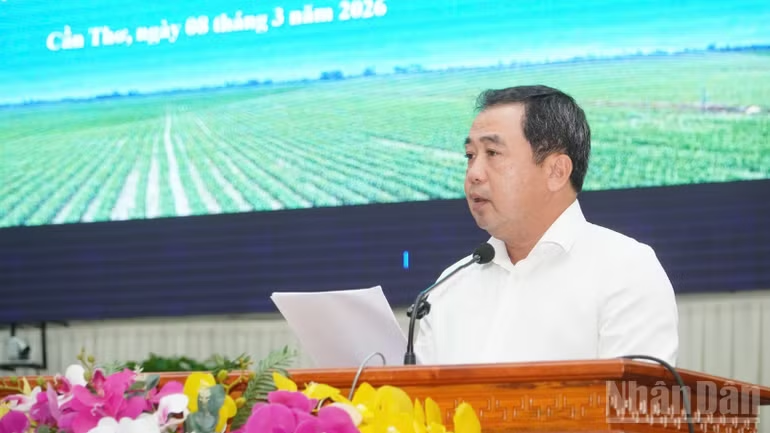
Minister Tran Duc Thang emphasised that the project is not merely a production development programme but also an important step in the process of restructuring the rice sector in the Mekong Delta. The long-term objective is to build a green and sustainable agricultural sector, enhance product value and improve farmers’ incomes.
To ensure the project continues to deliver results in the coming period, Minister Tran Duc Thang called on participants to focus discussions on several key issues aimed at removing bottlenecks and promoting the expansion of the production model.