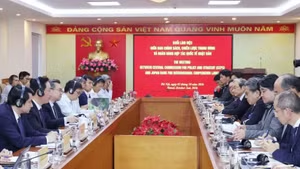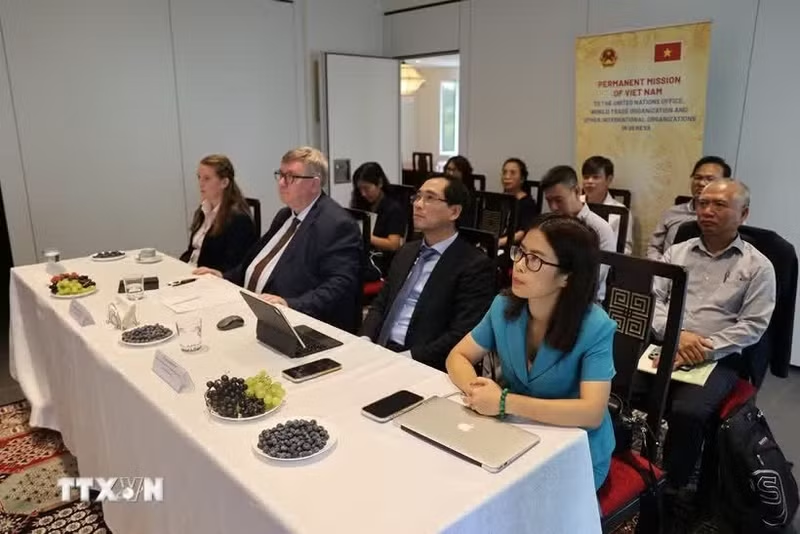
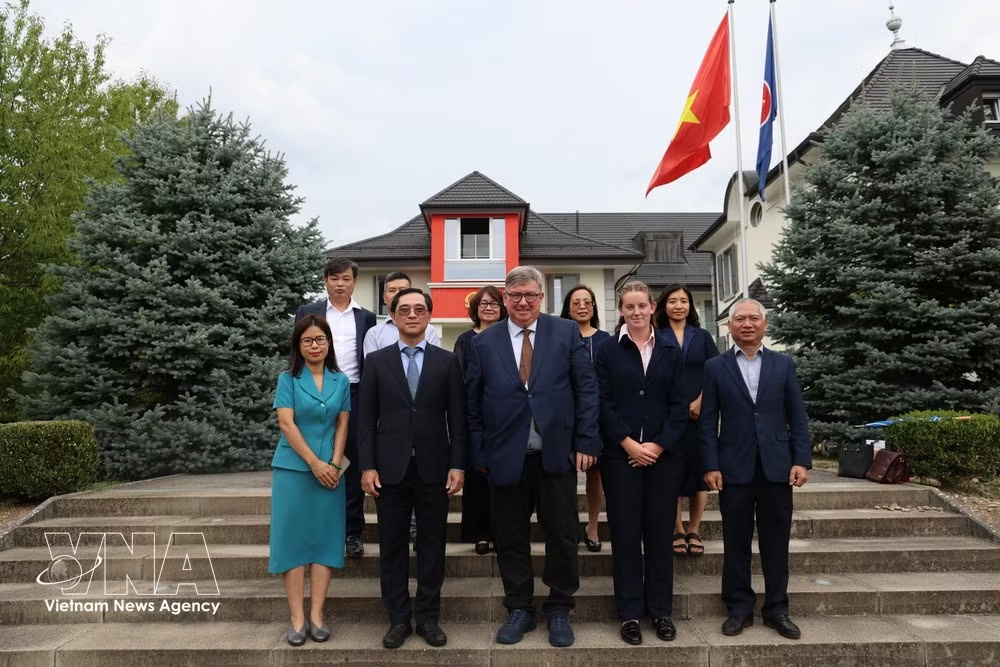
In his opening remarks, Minister Counsellor and Deputy Permanent Representative of Viet Nam in Geneva Pham Quang Huy said industrial policy is not a new issue but has returned to the centre of the economic and trade strategies of major economies.
Subsidies, technology policies, green measures, investment incentives and supply-chain policies are increasingly shaping global competition, he said, adding that for Viet Nam, these developments could have a direct impact on exports, investment, industrial competitiveness and the country’s position in global value chains.
Huy stressed the need for Viet Nam to draw on evidence-based analysis when designing measures to move up global value chains, strengthen domestic supply chains, develop strategic industries and technologies, and make more effective use of foreign investment. Viet Nam also needs to anticipate the opportunities and risks arising from the industrial policies adopted by major economies, he added.
Speaking at the seminar as the keynote speaker, Professor Simon Evenett, founder of the St. Gallen Endowment for Prosperity Through Trade and Professor of Geopolitics and Strategy at the International Institute for Management Development (IMD) in Switzerland, emphasised the growing use of industrial policy by major economies, noting that these countries have greater resources to provide subsidies and large domestic markets to support their policies.
Drawing on data from Global Trade Alert and practical examples, Evenett highlighted factors that are reshaping the industrial policy in the current global environment. The industrial policy today involves a diverse mix of measures, with a growing use of non-tariff import restrictions alongside the traditional use of subsidies, he said.
Evenett also noted a shift in the motivations behind the industrial policy, with countries increasingly adopting measures linked to national security concerns, while the use of measures related to environmental and green policies has declined.
He also mentioned businesses' management of risks associated with increasingly vulnerable and disrupted supply chains.
The professor further examined arguments concerning market failures and the need for investment coordination, particularly in strategic industries such as semiconductors. He offered policy recommendations for small and medium-sized economies, as well as businesses, amid intensifying geopolitical competition and disruptions to global supply chains.
To design effective policies, policymakers need to understand both decision-making mechanisms and practical difficulties faced by businesses, he stressed.
Analysing the factors determining the success of industrial policy, Evenett recommended that each country choose policies suited to its own circumstances, particularly countries with limited resources.
He also highlighted the need to consider industrial policy from the business perspective. Technological change, geopolitical competition, environmental changes and demographic trends are reshaping business opportunities, requiring industrial policies to adapt accordingly.
Evenett called for policymakers to develop practical knowledge of specific industries and sectors and stressed the importance of cooperation with academia. Regular mechanisms for dialogue between governments and businesses are also needed to address practical business challenges and improve policy responsiveness, he said.
The event was an initiative of the Viet Nam Mission in Geneva and formed part of a series of activities aimed at connecting Vietnamese educational and training institutions with leading lawyers and experts in Switzerland specialising in geopolitics, trade policy, international law and investment.
With its extensive network of international experts, the mission has actively worked with domestic institutions, including academic organisations, to provide professional training and updated knowledge as well as practical international perspectives on key global trade issues.
In 2022, FTU became the only Vietnamese educational institution selected by the WTO to participate in the WTO Chairs Programme for 2022-2026, which supports trade-related capacity building in developing WTO members through leading universities and research institutions.

![[Infographic] GRDP growth scenarios for 34 provinces and cities in fourth quarter of 2026](https://en-cdn.nhandan.vn/images/nyM650OGFWrOVWc-xajqN-rTZ68Rlmc1fiGJOhBRYHFSa4DhrHNDxEFdnz313Vk5dNJuxdkHglPA3rLeaPeiaUheNuCI723k2lNssd-YLJuKR58epWq7s21lV5WjM-HR2-Qpbi4MwAzqt9wRjL4WjGkfEz7RO9qhcwg8o8LQFK8/grdp-growth-scenarios-for-34-provinces-and-cities-in-q42026-anh-dai-dien.jpg.avif)