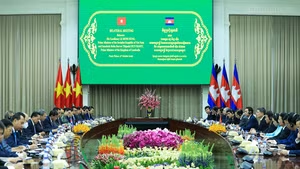
The talks were co-chaired by Tran Duc Thang, Politburo member and Secretary of the Ha Noi Party Committee, and Athsaphangthong Siphandone, member of the Lao People’s Revolutionary Party Central Committee, Secretary of the Vientiane Party Committee and Chairman of the Vientiane People’s Council.
At the meeting, leaders of the two capitals affirmed that the great friendship, special solidarity and comprehensive cooperation between Viet Nam and Laos continue to be strengthened, with cooperation between Ha Noi and Vientiane becoming increasingly substantive and effective.
Thang stressed that the recent exchanges of high-level delegations between the two Parties and States had further demonstrated the close and enduring ties and a high level of political trust between Viet Nam and Laos, while also creating fresh momentum for cooperation between their localities, including the two capitals.
According to the Ha Noi Party chief, cooperation between the two cities has continued to expand in economy, trade, investment, education, healthcare, culture and people-to-people exchanges. In particular, the signing of the cooperation agreement for the 2026–2030 period has established an important legal and strategic framework, opening a new phase in their relations.
He noted that both capitals are facing similar challenges in areas such as transport, the environment, public security and urban governance. Ha Noi stands ready to share its experience with Vientiane in streamlining administrative structures, building a two-tier local administration system, implementing administrative reform and improving the operational effectiveness of the civil service.
Thang also affirmed Ha Noi’s support for expanding grassroots-level cooperation between localities of the two capitals, expressing confidence that with strong political determination from both sides, Ha Noi–Vientiane relations would continue to develop in a more practical, sustainable and effective manner in the years ahead.
Addressing the talks, Siphandone praised Ha Noi’s socio-economic achievements and called for stronger cooperation in areas such as human resources training, local administration building, urban management and administrative reform.
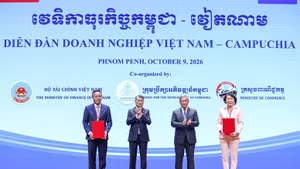
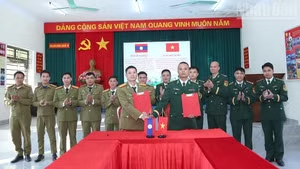
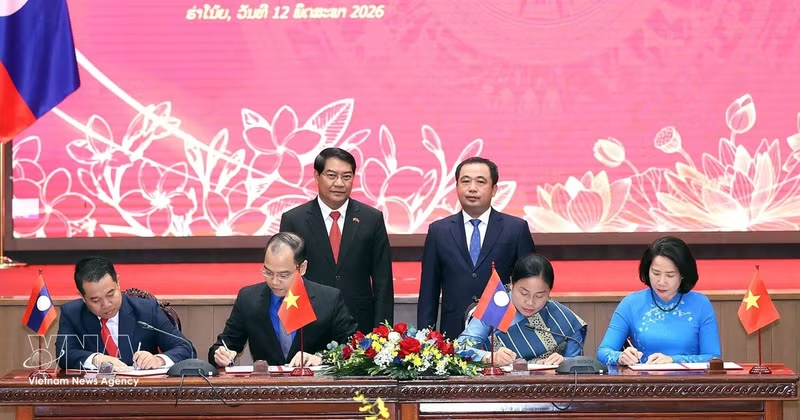
During the talks, the two sides signed memoranda of understanding on joint work in the fields of public communication and mass mobilisation, women and youth affairs, foreign relations, industry and trade, education and health care. These are expected to provide an important basis for implementing their cooperation priorities for 2026–2030.