Conflicts, economic shocks and extreme weather events are the main causes pushing many countries into poverty. According to the Global Report on Food Crises in 2024, nearly 282 million people in 59 countries and territories faced severe food insecurity in 2023.
Many experts are concerned about the fate of those who are relying on food aid every day, especially when the crises remain unresolved and even get worse.
With just a few days left in 2024, the United Nations said it has raised only about 46% of the $49.6 billion needed for global humanitarian aid this year. This is the second year in a row that the UN has raised less than half of the desired amount.
According to Jan Egeland, Director of the Norwegian Refugee Council — a non-governmental aid group, a small country like Norway is among the top humanitarian donors, while some large economies contribute only a small part to the overall effort.
The lack of resources is forcing humanitarian agencies to make a difficult choice: reduce the number of people eligible for aid or reduce the amount of food each person receives. The World Food Programme (WFP) used to feed about 6 million people in Syria.
But a look at the donations shows that the agency can now only feed about 1 million people, said Rania Dagash-Kamara, WFP’s assistant executive director. Many other places are facing a similar situation.
Aid that is not delivered as promised, or arrives late, is making the already difficult mission of humanitarian agencies even more difficult. Tom Fletcher, the UN Under-Secretary-General for Humanitarian Affairs and Emergency Relief Coordinator, is concerned that this year has seen a record number of aid workers die. Fletcher described the Gaza Strip as the most dangerous place.
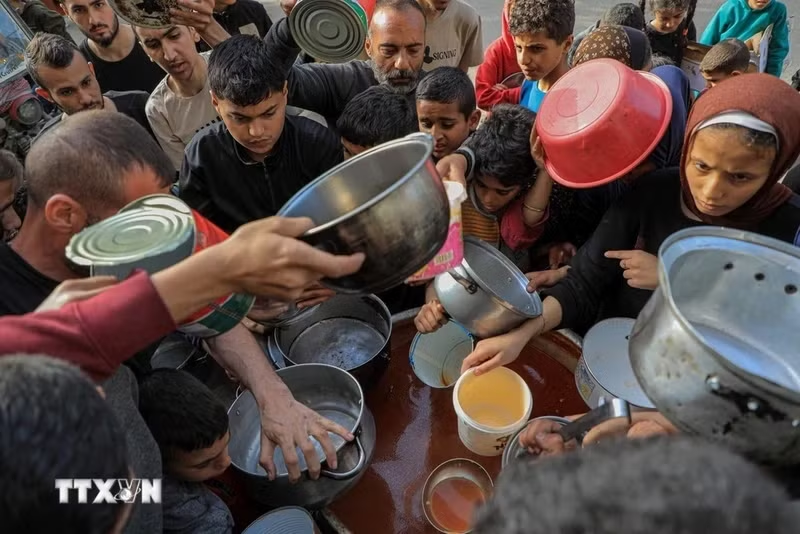
The ongoing conflict and looting by armed gangs have made aid efforts challenging. A UN convoy recently reached Beit Hanoun in the northern Gaza Strip, where aid has been cut off for more than two months.
Images of people rushing out of shelters to collect supplies underscored the desperation in the area without outside help.
Financial pressures and political changes are causing some countries to reconsider their humanitarian aid plans. Germany has reduced its funding for 2023 and 2024 as part of its “belt-tightening” policy.
Although not yet approved, German officials have recommended a reduction of about 1 billion USD in aid in 2025. The US, also a top donor, has provided about 64.5 billion USD over the past five years.
Humanitarian organisations are therefore keeping an eye on US President-elect Donald Trump as he prepares to return to the White House in 2025. Trump’s advisers have not yet provided details on his plans for humanitarian aid.
However, the fact that Donald Trump tried to reduce US funding during his previous term as president is a cause for concern.
The UN Office for the Coordination of Humanitarian Affairs (OCHA) forecasts that more than 300 million people will need assistance in 2025, but only about 190 million will receive food and other essential assistance.
This suggests that OCHA is cautious and does not set its goals too high, partly due to a lack of resources. In reality, efforts to save those who are drowning in hunger still face many barriers, and urgent calls must be met with specific commitments of support.