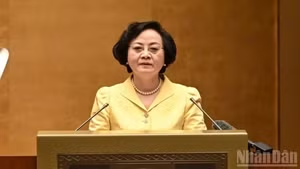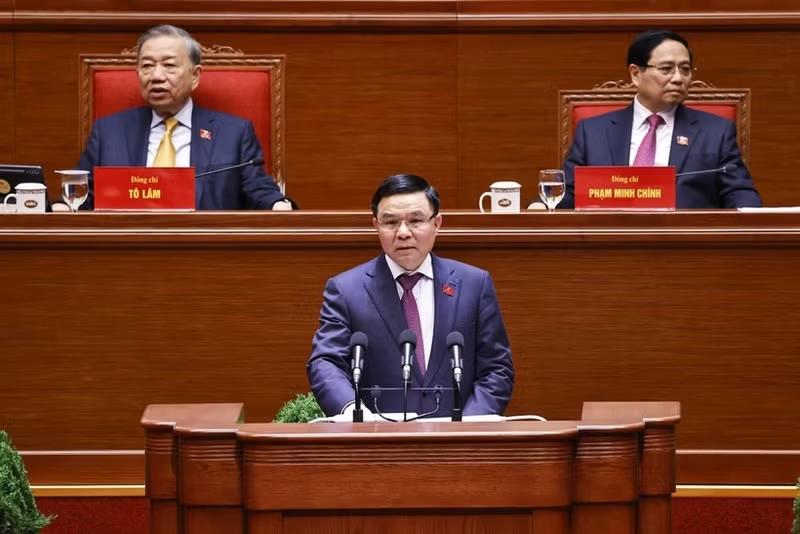
Hung said that in the 2021–2025 term, Viet Nam’s economy overcame major challenges and achieved impressive results. Within these achievements, the sector played a pivotal role as a strategic pillar and a key driver of socio-economic development.
Industrial production recovered strongly, growing by an average of 6.1% per year, with processing and manufacturing expanding by 6.9% annually, driving economic growth and industrialisation.
Localisation rates improved, several key industries successfully integrated into global value chains, and the energy sector developed robustly, placing Viet Nam among regional leaders in power system scale in Southeast Asia while ensuring national energy security.
Import-export activities remained a bright spot, growing at an average of 10.9% per year, with sustained trade surpluses supporting foreign exchange reserves and macroeconomic stability, he noted.
The domestic market kept growing at a steady 7.7% a year, helping cushion the impact of external shocks, while e-commerce surged by more than 20% annually, fueling the digital economy and digital transformation in businesses. On the global front, active engagement in 17 free trade agreements boosted exports, drew foreign investment, improved competitiveness, and sped up economic restructuring.
However, the minister acknowledged persistent challenges, including limited technological self-reliance, low value-added and labour productivity, slow progress in green and smart production, lagging energy infrastructure, and heavy reliance on imported inputs and the FDI sector. Trade and logistics infrastructure remains fragmented, with high logistics costs, he added.
Hung underlined that in the context of a new era driven by science, technology, innovation, green transition and digital transformation, and deep international integration, the Ministry of Industry and Trade will focus on key priorities.
These include improving institutions and policies, promoting the “dual transformation” - combining green transition with energy security and digital transformation, restructuring industry and trade to raise productivity and competitiveness, with processing and manufacturing to account for 28–30% of GDP.
Other key priorities include developing foundational and emerging industries and leading domestic enterprises, strengthening autonomous supply chains and linkages between domestic and FDI firms, advancing effective international integration while diversifying markets and supply sources, and accelerating digital transformation and administrative reform to reduce business costs.
He reaffirmed the sector’s commitment to shifting from a “management” mindset to a “development-enabling” approach, accompanying enterprises, mobilising resources, and turning green and digital challenges into opportunities for breakthroughs, contributing to Viet Nam’s development in the new era.