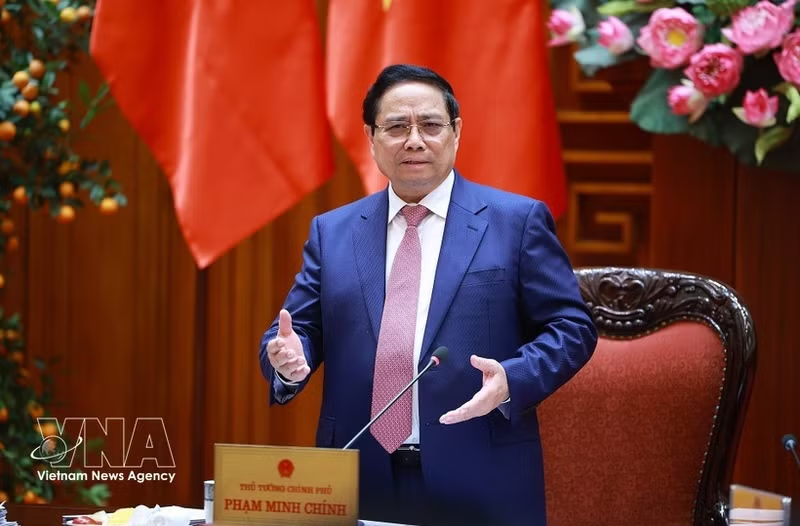
Chairing a meeting of permanent Government members in Ha Noi on March 16 to review measures to secure supply and stabilise fuel prices amid complex developments of the Middle East conflict, the PM stressed that fuel shortages must not occur under any circumstances while prices should follow market fluctuations with appropriate state regulation.
He emphasised that price stabilisation measures must remain flexible and effective, ensuring a balance of interests among the State, businesses and people while strictly preventing hoarding, price manipulation or policy abuse for illegal profit that could destabilise the market.
To maintain market stability, the PM instructed relevant ministries and agencies, including the Ministry of Public Security, to strengthen inspection and supervision to detect and stringently handle any wrongdoings.
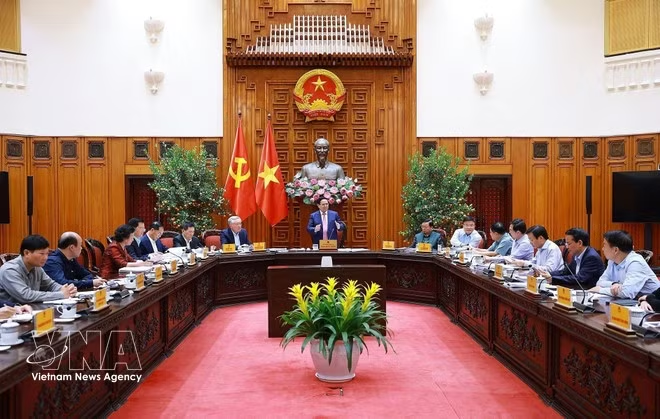
He also asked for a review of existing taxes, fees and charges related to petrol and oil to offer assistance to businesses and consumers in the current context, with proposals required to be submitted to the Government before March 20.
According to the PM, if the Middle East conflict prolongs, authorities should assess the situation and propose competent bodies allocate the state budget to support fuel price stabilisation. The policy, he stressed, must place production, business and people’s livelihoods at its core, ensuring that economic activities and daily life are kept stable and impacts are minimised.
The Government leader requested tasks and responsibilities be clearly assigned to relevant ministries and sectors, stressing the need for close coordination in implementing measures to manage and stabilise fuel prices.
He tasked Deputy PM Ho Duc Phoc with directly overseeing matters related to fuel taxes, fees and charges. Meanwhile, Deputy PM Bui Thanh Son will take charge of market stabilisation measures and other issues within the remit of the Ministry of Industry and Trade.