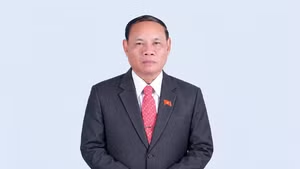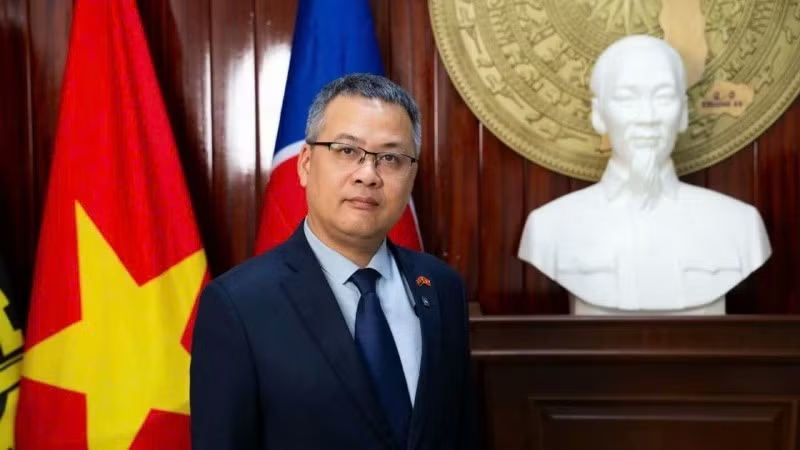
That was the assessment of Vietnamese Ambassador to Angola Duong Chinh Chuc in an interview with the press on the occasion of the 33rd Diplomatic Conference, held from August 1 to 7, 2026.
Viet Nam and Angola poised for new opportunities
The Ambassador noted that Viet Nam and Angola share a special friendship forged through their common struggle for national independence. Built on decades of political trust, bilateral ties are now entering a new stage marked by fresh demands and significant opportunities.
According to the Ambassador, the time is ripe for the two countries to translate their strong political relationship into concrete cooperation in the fields of the economy, science and technology, and human resource development. This approach aligns with Viet Nam's foreign policy objective of expanding development space and mobilising external resources to support national development.
He observed that both countries are pursuing ambitious development agendas. Viet Nam is striving to achieve its 2030 and 2045 development goals, with science, technology, innovation and digital transformation serving as key growth drivers. Meanwhile, Angola is implementing its National Development Programme for the 2023–2027 period, prioritising economic diversification, reduced dependence on oil, and the development of agriculture, processing industries, infrastructure, energy and the digital economy. Their shared development priorities provide a solid foundation for expanding cooperation.
The Ambassador also highlighted Angola's growing influence in Africa. As one of southern Africa's largest economies, Angola plays an important role in the African Union (AU), the Southern African Development Community (SADC), the Economic Community of Central African States (ECCAS) and the African Continental Free Trade Area (AfCFTA). This position creates favourable conditions for expanding bilateral economic and trade cooperation, which remains a key pillar of the relationship.
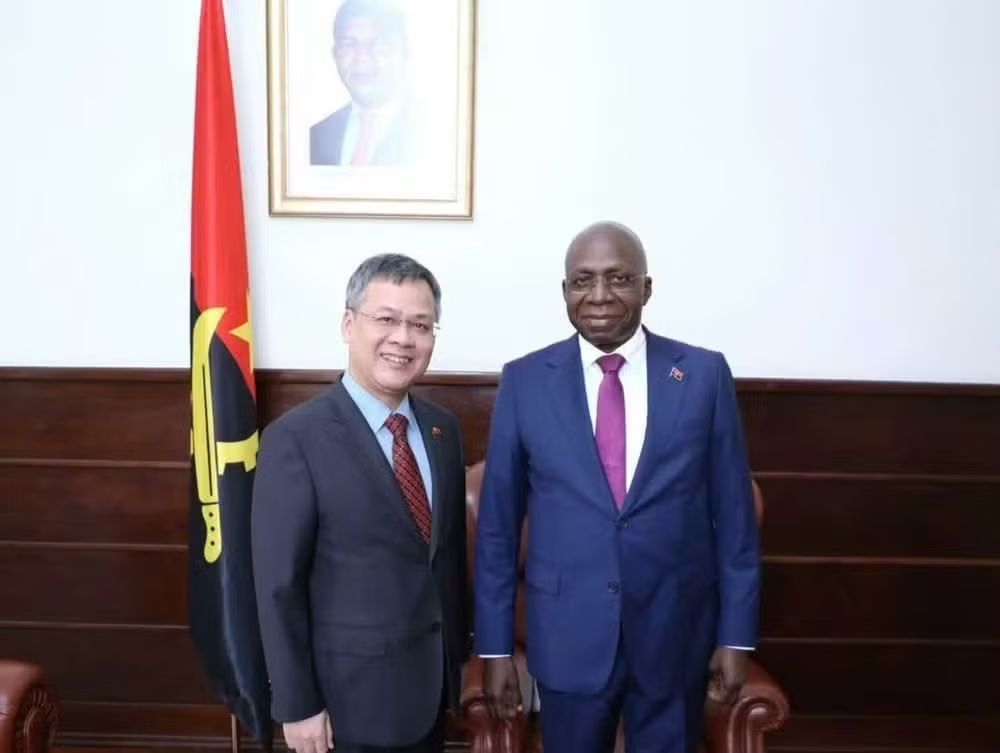
Beyond trade, Ambassador Duong identified agriculture and forestry as sectors with significant breakthrough potential. Angola possesses tens of millions of hectares of cultivable land but still imports substantial quantities of food, including rice. Viet Nam, by contrast, has extensive experience in seed development, irrigation, mechanisation, agricultural organisation and value-chain development.
"The Vietnamese Embassy in Angola has been working with the agriculture and forestry authorities of both countries to promote a wet rice cultivation cooperation programme in Angola. At the same time, it is connecting research institutes and experts from both sides, initially under South-South cooperation frameworks. This initiative could become not only an agricultural project but also a new symbol of Viet Nam–Angola cooperation in this new stage of development," Ambassador Duong said.
Science, technology and digital transformation also offer considerable room for cooperation, he added. Angola is investing heavily in digital infrastructure, data centres, e-government and digital skills development, while Viet Nam has accumulated valuable experience in building digital government and the digital economy. If the right partners and projects are identified, these areas could generate substantial added value for bilateral relations in the years ahead. Companies such as FPT and Viettel could become Vietnamese pioneers in Angola's digital transformation.
Other promising sectors include energy, telecommunications, vocational education, healthcare, mining and logistics. The Lobito Corridor, which is currently undergoing major investment, is expected to strengthen Angola's regional and international connectivity, creating new opportunities for foreign businesses, including those from Viet Nam.
According to Ambassador Duong, the priority in the coming period is not to expand cooperation across as many fields as possible, but to focus on areas capable of generating long-term value and mutual benefits. Political relations provide the foundation, while development cooperation serves as the true measure of the vitality of Viet Nam–Angola ties.
Strengthening political trust while delivering more substantive cooperation
Political trust is a necessary condition, but shared development is the decisive factor in taking Viet Nam–Angola relations to a new level. Every successful project, productive investment, joint research initiative, trained student or farmer benefiting from cooperation programmes helps deepen the friendship between the two peoples.
Duong Chinh Chuc, Vietnamese Ambassador to Angola
The Ambassador noted that the world is undergoing profound changes, with intensifying strategic competition among major powers, conflicts, protectionism, climate change, food insecurity and energy insecurity posing growing challenges to developing countries. Against this backdrop, partnerships built on political trust, mutual respect and a shared commitment to sustainable development have become increasingly valuable.
He stressed that Viet Nam and Angola enjoy a unique advantage rooted in their shared history of solidarity during the struggle for national independence and national development. The two countries have consistently maintained high political trust, supported each other at the United Nations and other multilateral forums, and shared common views on respect for international law, the peaceful settlement of disputes and multilateralism.
However, political trust alone is no longer sufficient, he said. The challenge now is to transform that trust into a driver of development, in line with Viet Nam's foreign policy of serving national development, expanding development opportunities and mobilising external resources.
For bilateral relations to become more substantive, Ambassador Duong emphasised that political trust must be continuously reinforced through shared interests and concrete cooperation outcomes rather than expressions of goodwill alone.
To achieve this, the two countries should maintain regular exchanges of high-level delegations. In 2026, bilateral ties have shown encouraging momentum, with both sides actively exchanging working visits and promoting new cooperation programmes. Such engagements not only carry political significance but also encourage ministries, localities and businesses to implement practical cooperative projects.
The Ambassador also called for existing cooperation mechanisms to become more effective. Meetings of the Intergovernmental Committee, political consultations and specialised working groups should not merely review past activities, but should identify priority projects, resolve bottlenecks and closely monitor implementation. The value of each cooperation mechanism lies not in the number of meetings held, but in the number of issues resolved.
He further observed that Angola is assuming an increasingly important role in Africa. Beyond having served as Chair of the African Union, the country is actively contributing to peace and stability efforts in Central and Southern Africa. This presents greater opportunities for Viet Nam to strengthen policy dialogue, share experience and coordinate more closely with Angola at regional and international forums. Viet Nam could also serve as an effective bridge between ASEAN and the African Union.
Ambassador Duong believes multilateral cooperation will become an increasingly important pillar of bilateral relations. He expressed the hope that the two countries would deepen coordination on sustainable development, food security, climate change, global governance reform and enhancing the voice of developing countries. Effective cooperation in international forums would further reinforce political trust.
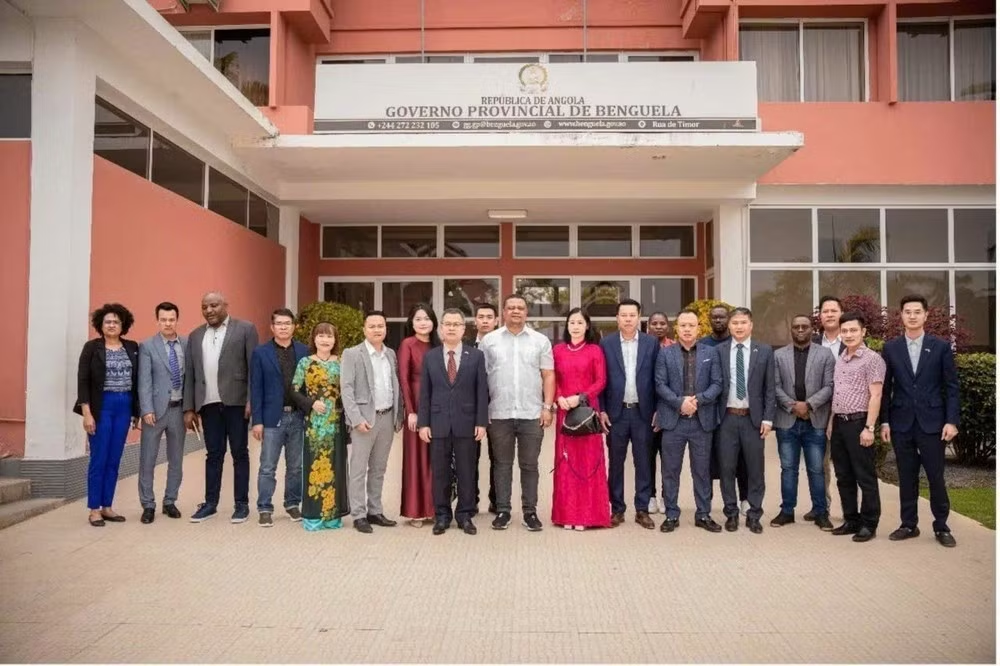
Looking ahead, he argued that cooperation between Viet Nam and Angola should shift decisively from a model of "development assistance" to one of "joint development". Angola is seeking not only to learn from Viet Nam's experience but also to jointly implement projects in agriculture, digital transformation, vocational education, science and technology, and human resource development. Shared investment, shared benefits and shared responsibility will provide a much stronger foundation for bilateral ties.
"Political trust is a necessary condition, but cooperation for shared development is the sufficient condition for Viet Nam–Angola relations to enter a new phase. Every successful project, every productive investment, every joint scientific endeavour, every trained student and every farmer benefiting from cooperation programmes contributes to making the friendship between our two peoples deeper and stronger," Ambassador Duong concluded.
He expressed confidence that, with the special friendship cultivated by generations of leaders and people of both countries and a shared commitment to placing development at the heart of cooperation, Viet Nam and Angola have every reason to elevate bilateral relations to new heights for the benefit of both nations while contributing to peace, stability and development in Asia, Africa and beyond.