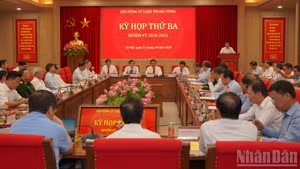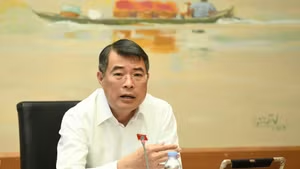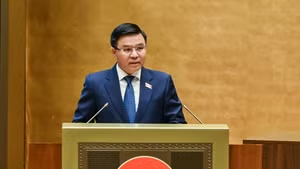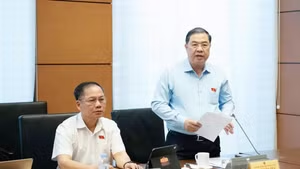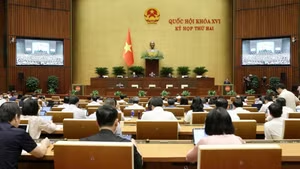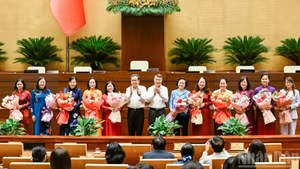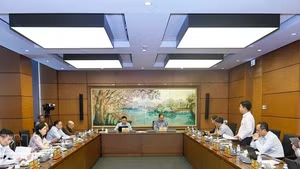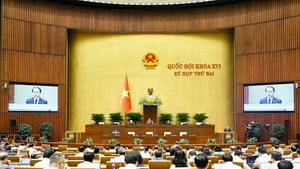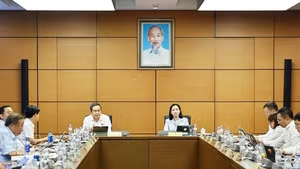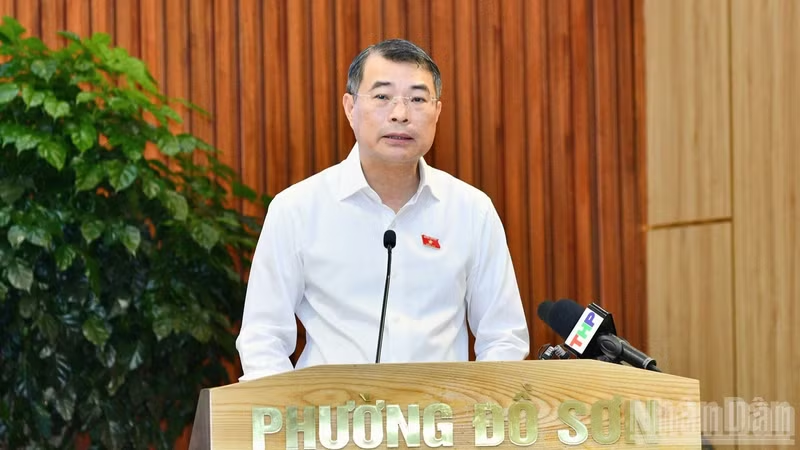
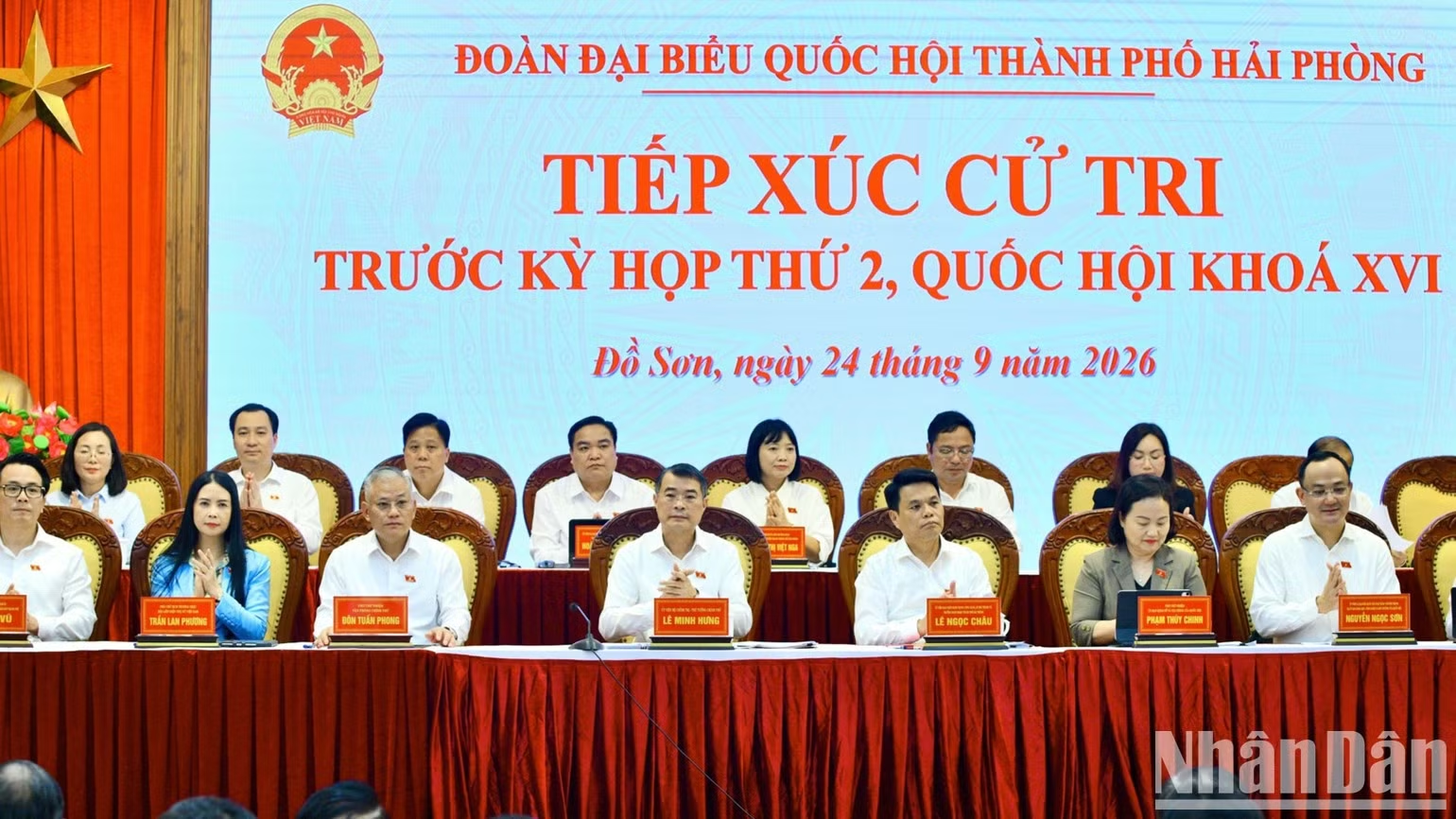
The meeting was held in person in Do Son ward and connected online with the city’s conference centre and 113 communes, wards and special zones across Hai Phong.
After hearing a report on the anticipated agenda for the second session and the Hai Phong NA delegation’s activities since the first session, local voters put forward suggestions related to infrastructure, maritime management, support for small and medium-sized enterprises, administrative reform, digital transformation, education, as well as land and housing issues.
In particular, voters called for stronger investment in port infrastructure and inland waterways, streamlined procedures for the allocation of marine areas, more effective support for private businesses, better data connectivity for online public services, clearer guidance on the use of artificial intelligence in schools, and more consistent regulations on land compensation and relocation.
Speaking at the meeting, PM Hung said the second session of the 16th NA would be particularly important in institutionalising the strategic orientations and major policies of the Party Central Committee and Politburo to implement the Resolution of the 14th National Party Congress.
He said the session would cover a wide range of areas, including socio-economic development, national defence and security, foreign affairs and national governance, with a focus on creating a more modern and consistent legal and institutional framework for development.
The PM said 2026 is a foundational year for creating momentum and resources for development during the current tenure and beyond. Against a complex and unpredictable global and regional backdrop, Viet Nam is focusing on strengthening strategic autonomy, pursuing rapid and sustainable development, putting people at the centre, and taking institutions and science and technology as key breakthroughs.
He told participants that over the past eight months, macroeconomic stability has been maintained, inflation controlled and energy security ensured, while progress has been made in strategic infrastructure, regional connectivity, science and technology, digital transformation and administrative reform. For the remainder of 2026, the Government remains committed to its target of double-digit economic growth, while accelerating public investment disbursement, attracting private and foreign investment, resolving long-standing projects and improving people's living conditions.
Regarding Hai Phong, PM Hung praised the city’s contributions to the country’s overall performance but said its tasks for the final three months of the year remained substantial. He asked the city to work harder to achieve its targets for economic growth, budget collection, investment attraction and public investment disbursement, while addressing bottlenecks and promoting industry, electronics, trade, tourism and support for businesses, particularly small and medium-sized enterprises.
The PM said the delegation of NA deputies would fully receive voters’ opinions and report them to the relevant authorities. Issues under the Government’s authority would be directly addressed, while proposals requiring legislative action would be reported to the NA.
On marine and island resources, he said the Government would direct the Ministry of Agriculture and Environment to study solutions to problems concerning marine-area allocation, decentralisation and transitional mechanisms. Regarding small and medium-sized enterprises, he backed a shift towards a law on SME development, with transparent and predictable policies, and simplification of administrative and tax procedures to reduce compliance costs and encourage business households to become enterprises.
He also asked the Ministry of Construction to incorporate voters’ proposals into revisions to maritime and inland-waterway legislation, with attention to high-quality human resources and the shipbuilding industry.
On urban development and digital infrastructure, the PM said the Government is reviewing policies for major cities and special economic zones and working to mobilise more resources for transport, port, trade and tourism infrastructure. He also acknowledged gaps in data and digital infrastructure and said ministries, sectors and localities must complete data connection and sharing by December.
PM Hung affirmed that the Government would continue directing ministries and sectors to address voters' legitimate proposals, focusing on institutional, infrastructure, administrative and resource bottlenecks to create better conditions for people and businesses and promote socio-economic development.