Prime Minister Le Minh Hung has asked the Ministry of Science and Technology (MST) and relevant ministries and agencies to continue proposing, appraising, approving and implementing strategic technology development tasks in accordance with regulations, ensuring that each task creates value and makes a substantive contribution to socio-economic growth.
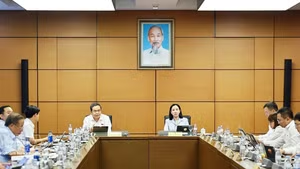
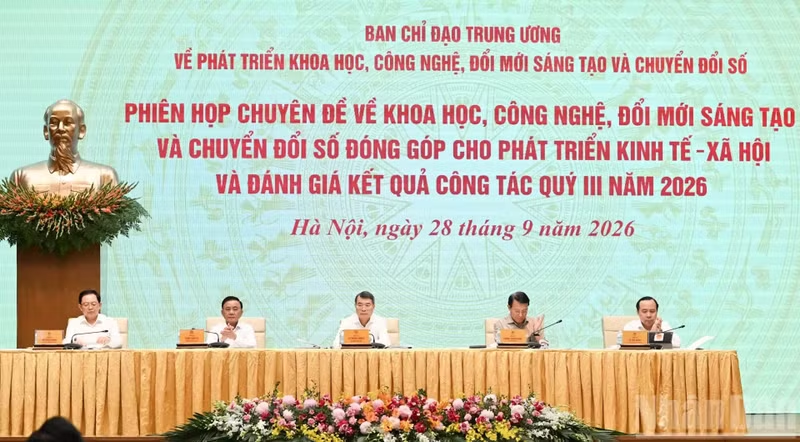
The Prime Minister made the request while chairing an online thematic meeting on September 28 to explore ways science and technology, innovation and digital transformation can contribute more effectively to socio-economic growth and reviewing progress in the third quarter of 2026.
PM Hung, who is also head of Central Steering Committee on science-technology development, innovation and digital transformation, asked the Ministry of Industry and Trade to coordinate with the MST and the Ministry of Finance (MoF) to formulate a pilot mechanism for creating first orders for strategic technology products, and submit it to competent authorities in the second quarter of 2027.
The MST was assigned to work with ministries, agencies and localities to remove bottlenecks hindering the commercialisation of research results and propose amendments to regulations on the science and technology exchange, with a report due in October 2026. It was also tasked with completing regulations on the operation and shared-use mechanism of research and testing centres and national key laboratories in the first quarter of 2027.
The MST and the Ministry of Education and Training will continue studying reforms to the “three stakeholders” linkage model, under which ministries and businesses proactively set research requirements, institutes and universities conduct research, while the State facilitates and shares risks. Human resources development will focus on leading experts, R&D, design and integration engineers, and production and operation technicians.
The Government leader called on corporations, businesses and banks to play a central role in science and technology, innovation and digital transformation, participating throughout the process from identifying needs and commissioning research to technology selection, investment, testing, mastery, commercialisation, production and market development.
Regarding financial resources, he ordered ministries, agencies and localities to strengthen financial discipline and minimise the carryover of funds, while reallocating capital from units with slow disbursement to those with good disbursement capacity and additional funding needs. The MST and MoF were asked to propose stronger solutions to resolve urgent bottlenecks in financing and disbursement for science and technology.
To promote the digital economy and digital society, ministries, agencies and localities were asked to identify growth potential and bottlenecks in each sector, region and value chain, with businesses at the centre, contributing to the goal of double-digit economic growth this year.
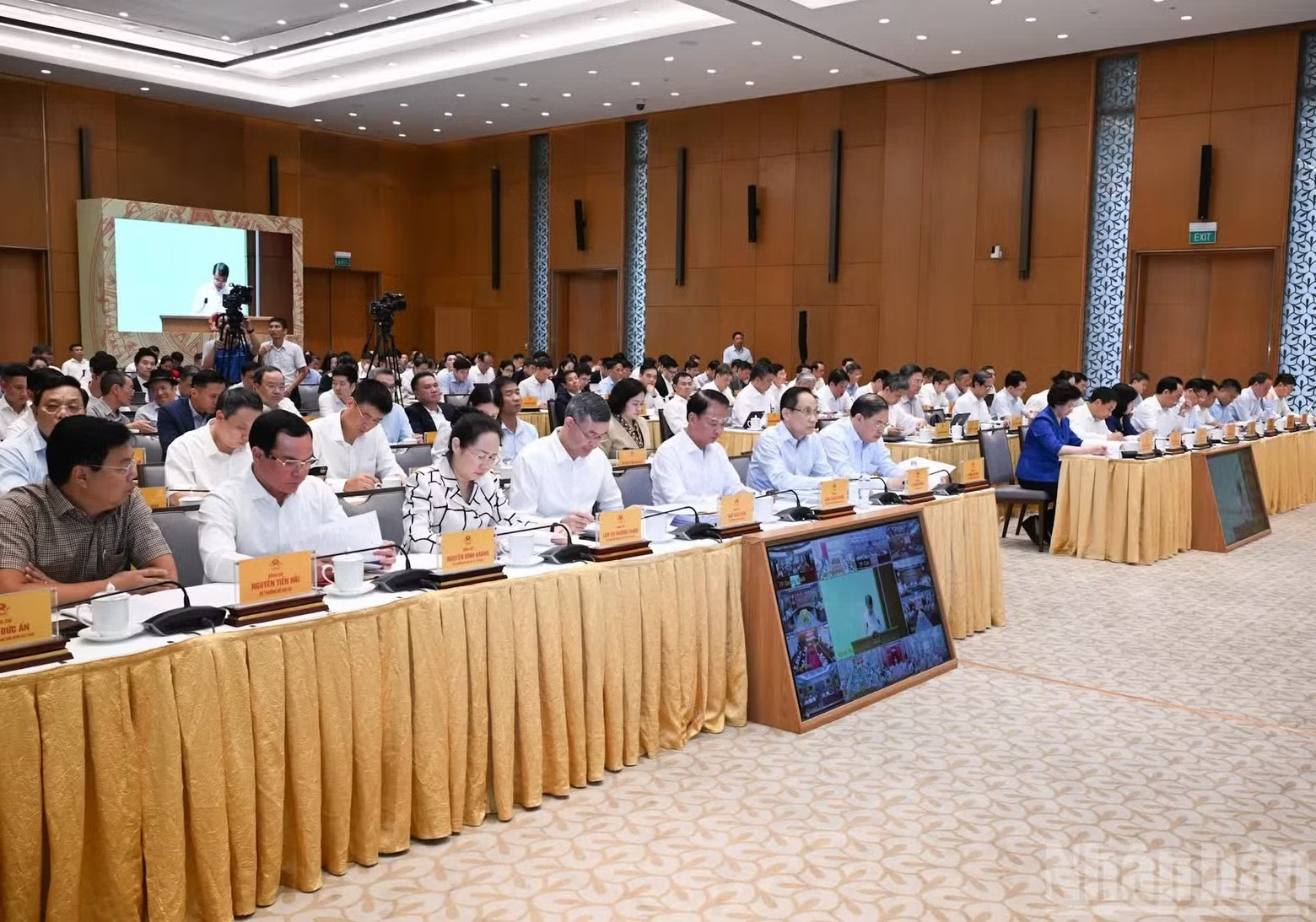
Reports presented at the meeting showed that progress has been made in these fields. A total of 3,030 standards had been completed for 30 groups of strategic technology products, while the national science and technology exchange had connected data with 15 local exchanges. High-tech products accounted for approximately 54.2% of total export value, and 2,647 international publications had been recorded on Scopus.
The reports also noted that 38 tasks had been proposed to address 11 strategic technology challenges. Of these, 28 had been appraised and 14 approved for implementation.
However, the Prime Minister pointed out that 27 assigned tasks remained overdue. Data creation, connectivity and sharing continued to be major bottlenecks, while the commercialisation of research results remained difficult. Many local science and technology tasks had yet to sufficiently reflect market and business needs or clearly identify their expected products and applications.
He requested that the 27 overdue tasks be completed urgently and that no new overdue tasks arise. Ministries, agencies and localities were also told to accelerate the development of national databases and digital infrastructure, with key databases on education, social security, personnel and health to be completed by November 30, 2026.
The MoF was tasked with promoting large-scale FDI projects in data centres and high-performance computing centres linked with technology transfer and data security, while the Ministry of Industry and Trade was asked to ensure sufficient power for such facilities.
PM Hung also set a number of deadlines for digital public services, including integrating academic records and diplomas into VNeID by October 30, providing free digital signatures on VNeID by October 15, and completing the integration of 82 essential administrative procedures by October 31, 2026.
The Ministry of Public Security was asked to accelerate efforts to connect VNeID with Singaporean and Lao electronic identification systems and pilot international aviation identification at Noi Bai and Tan Son Nhat airports, along with several cross-border services.