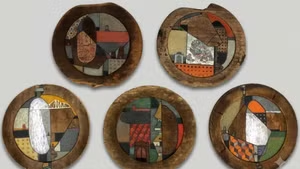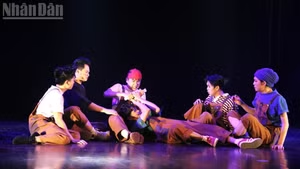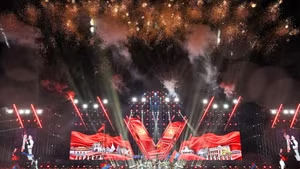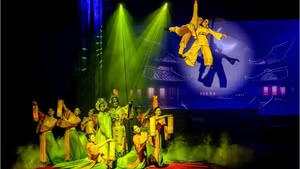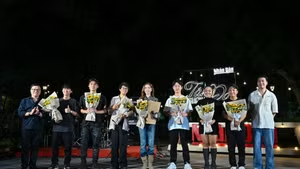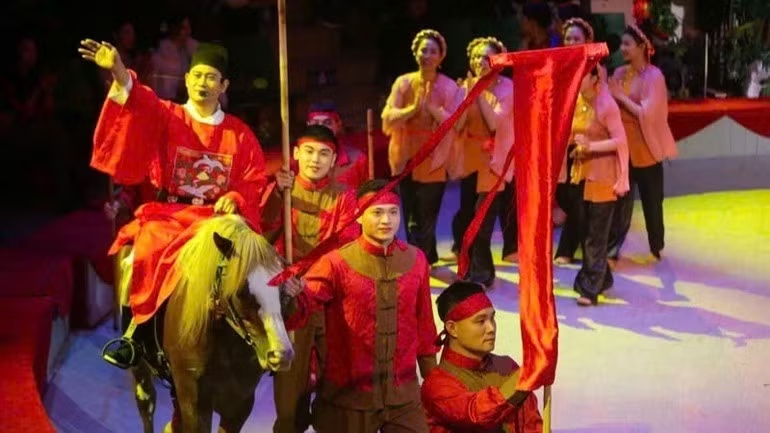
The highlights of “Dong Ho Circus Paintings” were the performances “Memories of Dong Ho Village” and “Little Ti’s Story”, distinguished by their strong visual composition. Circus art vividly conveyed the beauty of Dong Ho paintings while opening up new approaches to renewing the preservation of the painting craft as well as other forms of cultural heritage. Familiar folk motifs from Dong Ho paintings were brought off the traditional do paper and onto a vibrant stage. The fusion of contemporary circus with folk art transformed heritage into evocative creative material rich in identity.
Alongside the performances, the participation of Dong Ho village artisans in interactive exchanges created a link between past and present, thereby honouring the community’s role as the central subject in preserving and revitalising heritage. Stories about the village’s history, production techniques, and aesthetic philosophy helped audiences gain a deeper understanding of the cultural value of each work, while also promoting Vietnamese culture and inspiring younger generations to engage in the continuation of heritage.
In its efforts to renew traditional performing arts, the Viet Nam Circus Federation has also collaborated with the Viet Nam National Traditional Theater to stage the production “Tran Nhan Tong”. This unique combination of cai luong and circus art opens a more accessible pathway for contemporary audiences, especially young people. The approach leaves a strong impression through its creative use of traditional materials expressed in a modern stage language. Similarly, performances blending water puppetry with folk music, or tuong theatre with contemporary and folk dance set to traditional music, have expanded creative space and brought traditional arts closer to the public.
Practical experience in heritage preservation shows that many forms of heritage are facing the risk of decline. The causes include shifts in audience tastes, presentation methods that have not kept pace with contemporary life, and a lack of appropriate promotional spaces. In static exhibition formats, interaction between heritage and viewers is diminished. In response to the need for innovation, models that promote heritage through performance arts, interdisciplinary creativity, and direct experience demonstrate the potential to broaden audience engagement. When staged or integrated into performing arts, heritage gains opportunities to expand its presence in social life.
With a diverse and rich cultural resource system, including 37 heritages inscribed by UNESCO, experiences such as Dong Ho Circus Paintings and the production Tran Nhan Tong highlight the potential for combining performing arts with various forms of heritage. Applying modern stage language together with lighting and music helps narrow the perceptual gap for audiences engaging with ca tru or quan ho. For traditional crafts, integration with creative design, fashion, visual arts, and cultural-tourism products enables heritage to participate directly in consumer life. For intangible heritages requiring urgent safeguarding—such as ca tru, the pottery-making art of the Cham people, or the Dong Ho folk painting craft—the approach that combines preservation with creativity is seen as a solution to nurture and revitalise heritage in contemporary society.
Alongside vocational transmission, expanding spaces for practice, and diversifying markets, interdisciplinary preservation models are gradually shaping approaches that meet the public’s growing artistic appreciation needs while spreading heritage values throughout daily life.