Shifting from mobilisation and support to partnership and facilitation
Resolution No. 23-NQ/TW (Resolution 23) represents a breakthrough in the Party’s thinking and strategic vision. It builds on existing foundations while forming part of the broader system of foreign policy and international integration perspectives in the new situation. Its landmark feature is a shift in approach from “mobilising, bringing together, and supporting” overseas Vietnamese to “working alongside them, creating enabling mechanisms, and mobilising resources.” The aim is to establish favourable conditions for overseas Vietnamese to proactively participate directly and extensively in the cause of national construction, development, and defence.
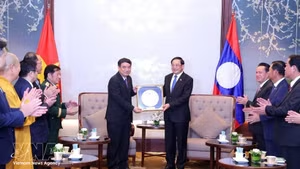
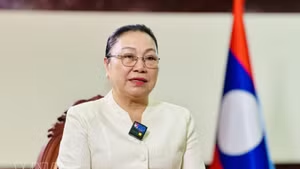
This guiding spirit is already being translated into practical initiatives within Vietnamese communities around the world. In Laos, community affairs have consistently been identified as a central and ongoing task. Vietnamese Ambassador to Laos Nguyen Minh Tam said that the diplomatic mission has worked closely with community associations to strengthen their organisations, support the material and spiritual life of Vietnamese people in the country, and promote activities that foster ties with their homeland and preserve their cultural identity. Notably, efforts to strengthen and consolidate Vietnamese community organisations across all 18 provinces and cities of Laos have helped establish a connected network, improve support effectiveness, enhance living standards, and encourage compliance with local laws.
Strong and trusted ties have become a driving force behind remarkable achievements in economic cooperation. According to the Association of Vietnamese Businesses in Laos, Viet Nam is currently the second-largest investor in Laos, while Laos ranks first among the 88 countries and territories in which Viet Nam is investing abroad. So far, Vietnamese businesses have invested in nearly 300 projects in Laos, with total registered capital exceeding 7 billion USD. The strong presence of Vietnamese enterprises in strategic sectors such as telecommunications, finance and banking, energy, and high-tech agriculture not only affirms Viet Nam’s solid economic standing but also demonstrates its commitment to working alongside Laos for sustainable development.
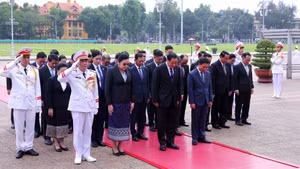
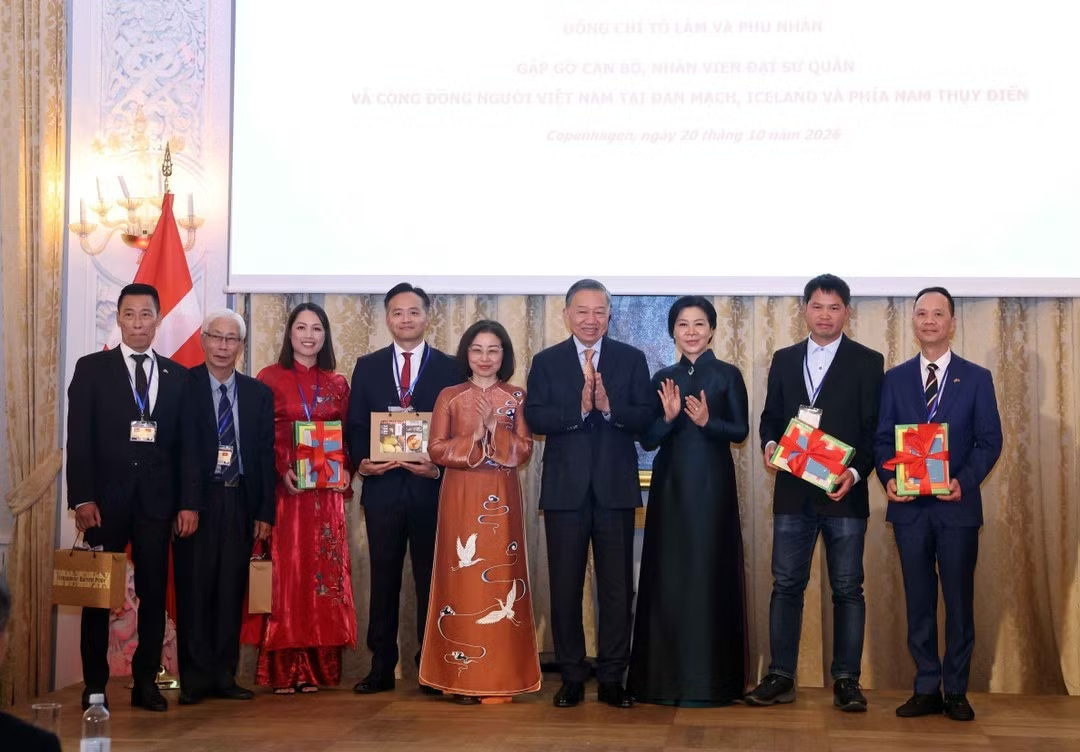
During overseas visits by Party and State leaders, as well as meetings with Vietnamese communities at Vietnamese embassies, the message of appreciation and partnership has been consistently reaffirmed. Contributions from overseas Vietnamese are becoming increasingly diverse, in-depth, and groundbreaking. Many Vietnamese experts, scientists, and intellectuals working at innovation centres around the world are contributing to their homeland through policy advice, technology transfer, and the training of highly skilled personnel. Resolution 23 opens a strategic direction: building a global ecosystem to connect Vietnamese communities around the world, particularly in cutting-edge fields such as semiconductors, artificial intelligence, and innovation.
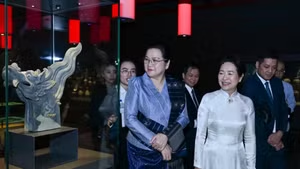
During a recent official visit to the Kingdom of Belgium, General Secretary and President To Lam and a high-level Vietnamese delegation met with representatives of the Vietnamese expert and intellectual communities in Belgium and Luxembourg. After listening to and expressing his appreciation for their policy recommendations, General Secretary and President To Lam affirmed that these proposals reflect the perspectives of the people directly involved and demonstrate their love for their homeland through concrete action.
In line with the direction set out by the General Secretary and President, scientists do not need to return to Viet Nam physically to make contributions. Flexible mechanisms are needed, such as task-based expert contracts, remote working, joint research, and payment arrangements tied to final deliverables. Committees, ministries, sectors, local authorities, and businesses should clearly specify their requirements. Experts and intellectuals should confidently put forward proposals and be ready to take on assignments. The Party, State, and Government of Viet Nam, along with relevant agencies, must listen, resolve obstacles, and demonstrate their responses through tangible results.
Preserving and spreading the culture of the homeland
By recognising every overseas Vietnamese as a “cultural ambassador”, the preservation of national identity is no longer limited to preserving the traditions. It also emphasises the proactive promotion and development of cultural values as an important resource for strengthening soft power and national prestige. Particular attention is being paid to younger generations through activities that teach national traditions, history, and culture, as well as experiential programmes, visits to their homeland, education, entrepreneurship, innovation, and people-to-people exchanges.
The story of Nguyen Thi Xuan Oanh, co-founder of the first Vietnamese-language school in Thailand in 2017, is a case in point.
Born and raised in Thailand, she has always regarded her pride in her Vietnamese homeland as something deeply sacred. Xuan Oanh recalled that in 1962, when she was still a young schoolgirl, she was invited to help teach Vietnamese. In the bitter cold of northeastern Thailand, Vietnamese-language classes kept the warm flame of love for the homeland alive. She taught Vietnamese in the mornings and spent her evenings knocking on doors to encourage young people to attend supplementary education classes and promote patriotism.
Now advanced in age, she continues to teach Vietnamese online, hoping to help Vietnamese children master listening, speaking, reading, and writing in their mother tongue, while retaining their pride in being Vietnamese, their love and respect for President Ho Chi Minh, and their connection with their roots. Alongside preserving their national cultural heritage, the Vietnamese community in Udon Thani is also known for its business acumen, success, and unwavering attachment to its homeland. Whenever natural disasters, storms, or floods strike Viet Nam, heartfelt charitable activities in support of the homeland once again bring to life the tradition of sharing both hardship and good fortune.
Emphasising the community’s role as a bridge that contributes to the development of its host country while building a strong community with close ties to its homeland, Pham Van Hung, Chairman of the General Association of Vietnamese People in Laos, said that since its establishment in 2009, the general association has continuously organised practical activities and become a reliable pillar of support, helping the community establish stable businesses and lives, comply with the law, and enhance the reputation of Vietnamese people within the international community. The general association has also proactively disseminated the policies and guidelines of the two parties and the two states, further strengthening the great national unity bloc. This commitment is demonstrated through dedication and practical action. Preserving the Vietnamese language has been identified as a “matter of survival.”
The network of Vietnamese-language schools, traditional cultural activities, and national religious practices have been maintained and further developed. “No matter which generation of Vietnamese children is born in Laos, they must still speak their mother tongue fluently and always take pride in the Lac Hong blood flowing through their veins,” Pham Van Hung said.
As long as culture survives, the nation survives; as long as the Vietnamese language lives, the Vietnamese soul lives on. Through the many ups and downs of history, our ancestors protected and developed the Vietnamese language as a precious inheritance. Vietnamese language has become the very essence of the nation. It embodies the vitality, soul, lifestyle, and thinking of the Vietnamese people.

Lively Vietnamese-language classes in foreign lands and concrete, heartfelt actions in support of the homeland are meaningful and moving responses, demonstrating the sense of responsibility and commitment of overseas Vietnamese to the sound policies of the Party and State. Work relating to overseas Vietnamese people not only reflects the development of the Party’s strategic thinking and creates fresh impetus for the entire political system and society to implement more comprehensive and vigorous initiatives in this field in the time ahead, but it also helps create an open and expansive space in which every Vietnamese living far from the homeland, driven by passionate patriotism and a desire to contribute, can join hands in shaping the country’s future of rapid and sustainable development.