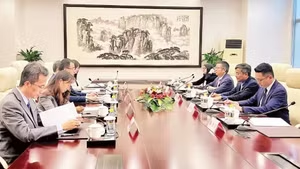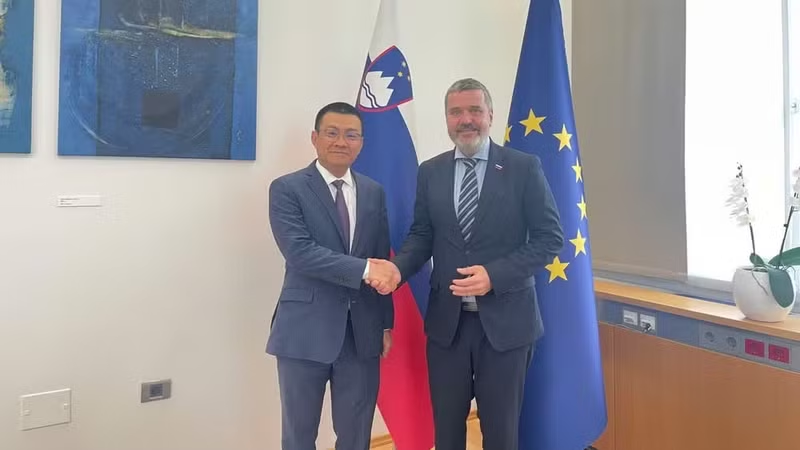
During the meeting, Minister Tone Kajzer — appointed in June 2026 as part of Prime Minister Janez Janša’s new government — expressed his satisfaction with the outcome of his talks with Foreign Minister Le Hoai Trung in New York.
The Minister welcomed Ambassador Vu Le Thai Hoang’s working visit and emphasised the importance of translating agreements into practical cooperation programmes.
He affirmed that Slovenia regards Viet Nam as a key partner in Southeast Asia and spoke highly of Viet Nam’s economic achievements and its rising international stature.
Ambassador Vu Le Thai Hoang congratulated Minister Kajzer on his new appointment and commended Slovenia for successfully completing its term as a non-permanent member of the UN Security Council.
The Ambassador emphasised that, after more than 30 years of diplomatic relations, there is significant potential to elevate bilateral ties and expand the cooperation framework across areas of mutual priority.
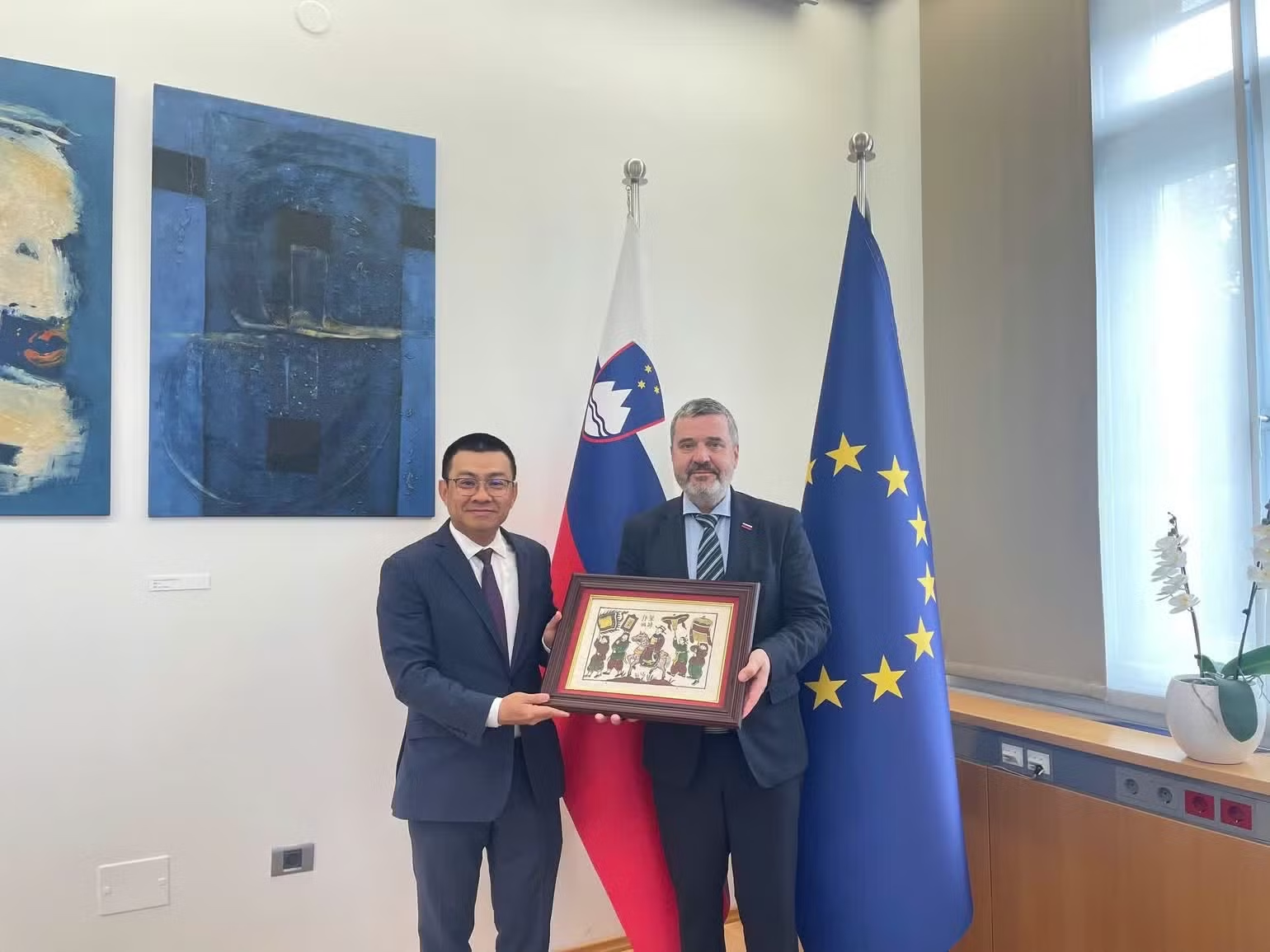
The two sides agreed to strengthen cooperation in economics, trade, and investment, particularly in the fields of science and technology, artificial intelligence, innovation, biotechnology, green energy, nuclear power, and logistics.
The Ambassador urged Slovenia to swiftly ratify the EU–Viet Nam Investment Protection Agreement (EVIPA) and to advocate for the EU’s early lifting of the IUU “yellow card” on Vietnamese seafood exports; he also called for enhancing cooperation between the Port of Koper and Vietnamese seaports, as well as fostering connections between businesses and localities of both countries.
Notably, the two sides discussed prospects for cooperation in labour and vocational training, especially in the healthcare, nursing, and elderly care sectors. Minister Kajzer expressed interest in the workforce training cooperation models that Viet Nam has successfully implemented with several European countries — such as Germany and Austria — and agreed to explore the possibility of launching similar programmes in Slovenia.
The two sides agreed to enhance coordination at multilateral forums, upholding international law, multilateralism, and the role of the United Nations; they also agreed to promote ASEAN–EU cooperation and discuss maritime and ocean issues, as well as freedom of navigation, based on the 1982 UN Convention on the Law of the Sea (UNCLOS).