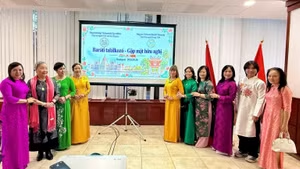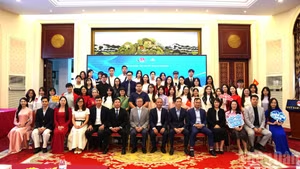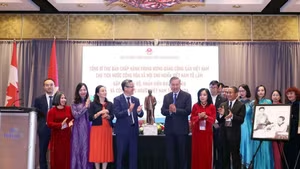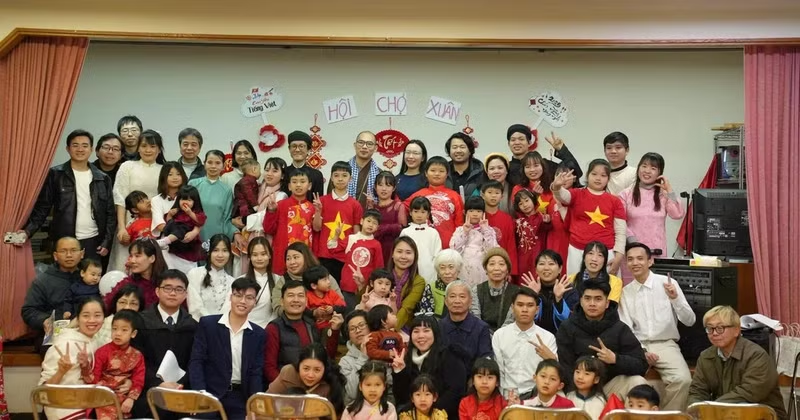
On the occasion of International Mother Language Day (February 21) and the traditional Lunar New Year of the Vietnamese people, for the first time Vietnamese language schools and classes in Osaka and the Kansai region (Japan) coordinated to organize a Spring Fair for students and the Vietnamese community in Japan, creating a cultural-educational space rich in identity.
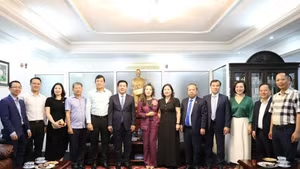
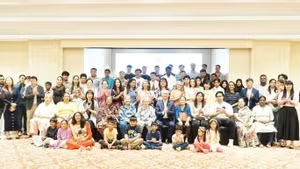
The program was attended by Nguyen Minh Anh, Chief of Office of the Consulate General of Viet Nam in Osaka; Le Thuong, President of the Vietnamese Association in the Kansai region; Venerable Thich Duc Tri, President of the Japan–Viet Nam Support Association; along with numerous parents, teachers, and students from Vietnamese language schools in the area.
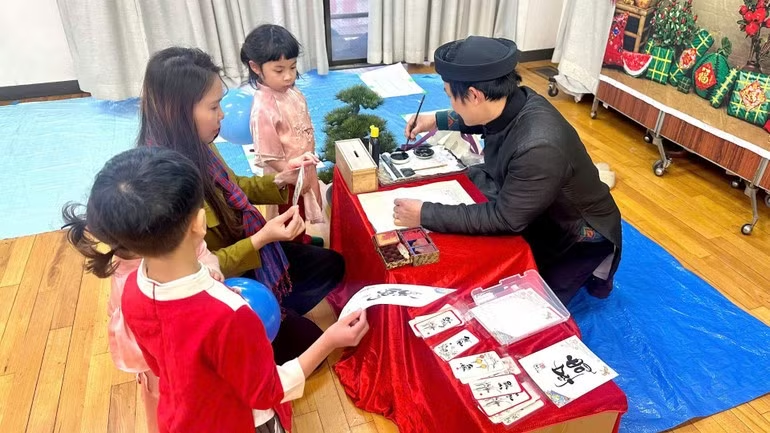
In the joyful atmosphere of welcoming the new Spring, the Spring Fair is not only a community entertainment activity but also opens up a vivid experiential education model where Vietnamese is used naturally in life. Through activities such as buying and selling, communication, reading books, singing and dancing, and collective activities, students “live in Vietnamese,” thereby nurturing love for their homeland and awareness of preserving national identity while living and studying far from the Fatherland.
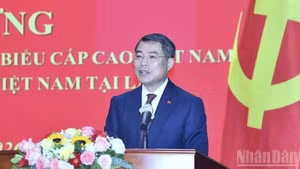
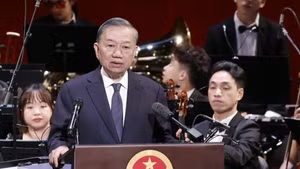
Speaking at the program, Le Thuong, President of the Vietnamese Association in the Kansai region, Principal of Cay Tre Vietnamese Language School, and Vietnamese Language Ambassador 2026, affirmed: “The Spring Fair is a comprehensive experiential education model in which Vietnamese is not only taught in the classroom but also used in real life. When children communicate, trade, read books, sing, and perform in Vietnamese, love for the language and national culture will form naturally and sustainably.”

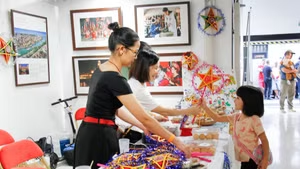
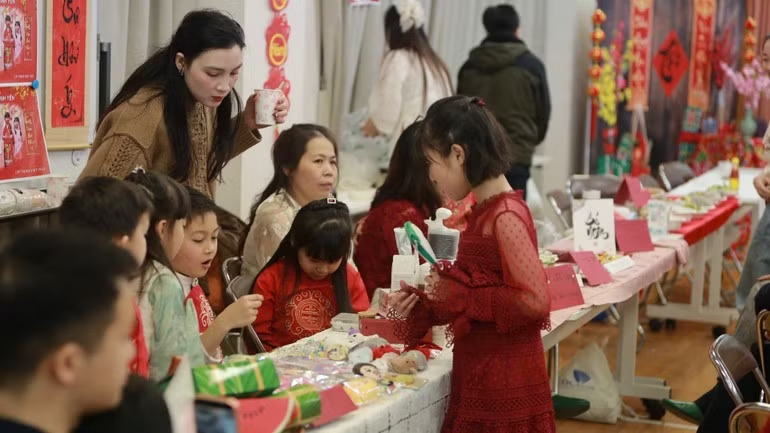
A highlight of the fair was the family booths prepared jointly by parents and students. Here, the children directly displayed and sold food, handicrafts, organized folk games, and used real Japanese yen for transactions. This activity helps students practice communication skills, calculation, and teamwork, while at the same time practicing Vietnamese in real-life contexts.
In addition, the mobile Vietnamese Community Book Station arranged within the fair grounds attracted many students and parents. Numerous Vietnamese-language books for children, as well as cultural and historical books, were introduced, read together, and told as stories, contributing to forming reading habits and enriching linguistic capital and cultural knowledge for young Vietnamese generations abroad.
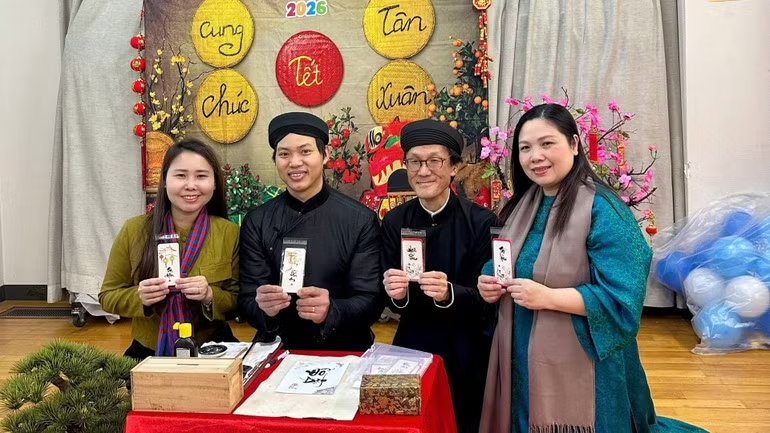
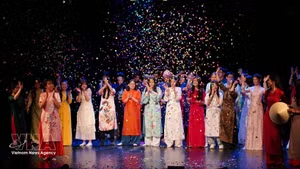
The atmosphere of Vietnamese Tet at the fair became even more lively with Spring celebration dances and songs, traditional ao dai performances, and cultural exchanges performed by students and parents themselves, creating a cultural picture deeply imbued with Vietnamese identity in Osaka.
According to the Organizing Committee, the first-time coordination among Vietnamese language schools to organize the Spring Fair marks a new development in Vietnamese language education and in strengthening the Vietnamese community in Japan.
Sharing at the event, Venerable Thich Duc Tri, Head of the Organizing Committee, emphasized: “The Spring Fair is not only a community cultural activity but also carries long-term educational significance, in line with the spirit of Resolution 80 on cultural and educational development, which affirms that culture is the spiritual foundation of society and education is the key driving force for sustainable development. Caring for the young Vietnamese generation abroad is contributing to preserving and spreading the vitality of Vietnamese culture in the context of integration.”
The Organizing Committee hopes that this model of a Spring Fair combining education, culture, and experiential activities will be maintained annually, gradually expanded in scale, and become a bright spot in preserving the Vietnamese language, promoting national cultural identity, and strengthening the Vietnamese community in Japan.