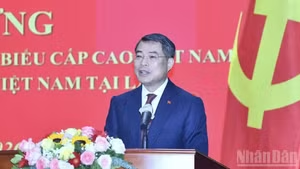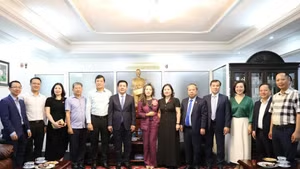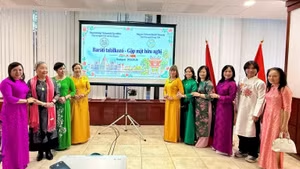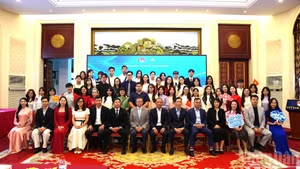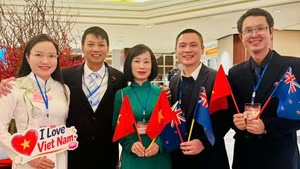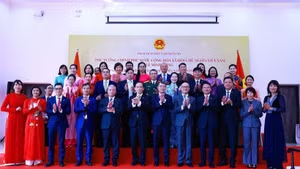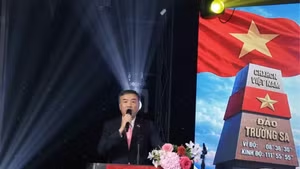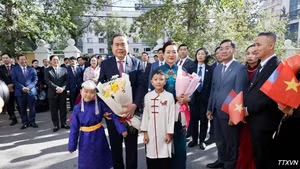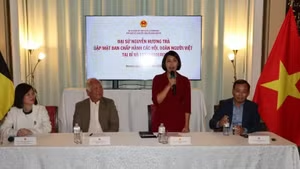
Their views were highlighted at a hybrid roundtable hosted by the Canada Viet Nam Cultural & Educational Council (CVCEC), bringing together members of the Vietnamese community and international scholars in Canada. The discussion reflected the growing attention of OVs and foreign intellectuals to Viet Nam’s developments and their desire to accompany the country in its next stage of development.
Speaking to a Viet Nam News Agency correspondent in Canada, Do Nga, a Vietnamese expatriate in Toronto, described the election as a significant event for the country’s development, noting that the NA plays a key role in shaping policies and setting national development directions.
She said the Vietnamese community in Canada always hopes to stay connected with the homeland and contribute to its development.
Phan Thi Quynh Trang, founder of the CVCEC, said that from a foreign affairs perspective, parliamentary diplomacy and the expansion of relations with many countries have helped affirm Viet Nam’s growing prestige and influence on the international arena.
“These are positive signals that further strengthen our confidence and motivation to continue contributing to the country’s development ,” she noted.
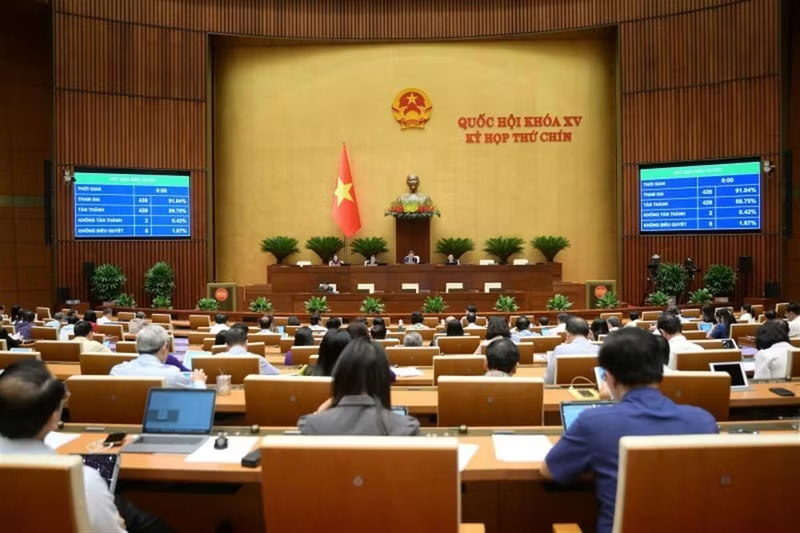
In recent years, the NA has adopted many important decisions, including ratifying new-generation free trade agreements, helping enhance the country’s position, open new opportunities for economic and trade cooperation, and enable Vietnamese businesses integrate more deeply into global value chains.
Looking ahead to the new term, OVs in Canada expect the legislature and People’s Councils to continue promoting institutional reforms and creating a more transparent and favourable environment for businesses, especially in innovation, digital transformation and sustainable development, which are essential for improving national competitiveness amid rapid changes in the global economy.
Nguyen Kim from the Golden Edu organisation expressed her hope that Viet Nam’s legislature and People’s Councils at all levels to further expand proactive and deeper international integration, not only in economic and trade fields but especially in education, science, and innovation.
Pham Dung, manager of Bold Em Academy, suggested that the NA could establish more consultation mechanisms or forums to gather opinions from OVs in areas such as education, science, technology and economic development. She noted that these initiatives will contribute to strengthening connections with Vietnamese communities around the world and help Viet Nam tap into valuable international knowledge and experience.
Canadian scholars and experts have also spoken highly of the role of the Vietnamese NA in the country’s development and in promoting international relations.
Aida Stefani, President of Oxford College Toronto, said the NA in the coming term should focus on areas that enhance Viet Nam’s long-term competitiveness, including improving the legal environment for innovation, investing in high-quality human resources, promoting digital transformation and advancing sustainable economic development.
Meanwhile, Steve Rutchinski, a member of the Canada–Viet Nam Friendship Society’s Executive Board, described the upcoming election as an important event in Viet Nam’s political life, particularly as it follows the 14th National Congress of the Communist Party of Viet Nam. According to him, Viet Nam is entering a new stage of national development, and the election provides an opportunity for voters to choose capable representatives who are closely connected with the people and able to help implement the country’s development goals in the coming period.
Participants at the roundtable expressed confidence that the new NA will continue to play a vital role in improving institutions, promoting economic growth, strengthening international integration and enhancing connections with OV communities, thereby contributing to Viet Nam’s sustainable development in the new era.