Representatives from more than 30 robot manufacturers and research institutes, along with businesses, associations, educational institutions, and research organisations working in robotics and artificial intelligence, took part in the event and showcased 30 robot models designed for a wide range of applications in everyday life.
Decision No. 1131/QD-TTg dated June 12, 2025, and Decision No. 21/2026/QD-TTg dated April 30, 2026, issued by the Prime Minister, include robotics and automation in the list of strategic technologies and strategic technology products prioritised for research and development investment.
In this context, Viet Nam’s challenge is not only to increase robot adoption but also to gradually enhance its capacity to participate in value creation across the industry. Access to equipment from international suppliers can accelerate adoption, but building sustainable industrial capabilities requires more businesses that can integrate systems, develop solutions, provide technical services, and conduct research.
Viet Nam’s industrial robot market was valued at approximately 112 million USD in 2025 and is forecast to grow at a compound annual growth rate of 12.88% over the 2026–2031 period.
Meanwhile, industrial robot density in Viet Nam is estimated at 23–58 robots per 10,000 workers in the manufacturing sector, below the figures of 84 in Thailand and 101 in Malaysia. This gap indicates considerable room for expanding robot adoption in manufacturing.
The growth of the robotics market is also linked to the development of smart factories. According to IMARC Group’s Viet Nam Smart Factory Market Report 2026–2034, Viet Nam’s smart factory market was worth more than 926 million USD in 2025 and is projected to reach 2.14 billion USD by 2034, amid growing demand among businesses to digitise production processes.
These figures show that the economic opportunities extend beyond robot sales. As businesses expand their use of robots, demand is also growing for integrating robots into existing production lines, developing software, connecting data systems, training personnel, providing maintenance, and optimising operations. These are also areas in which Viet Nam has strengths across the robotics value chain.
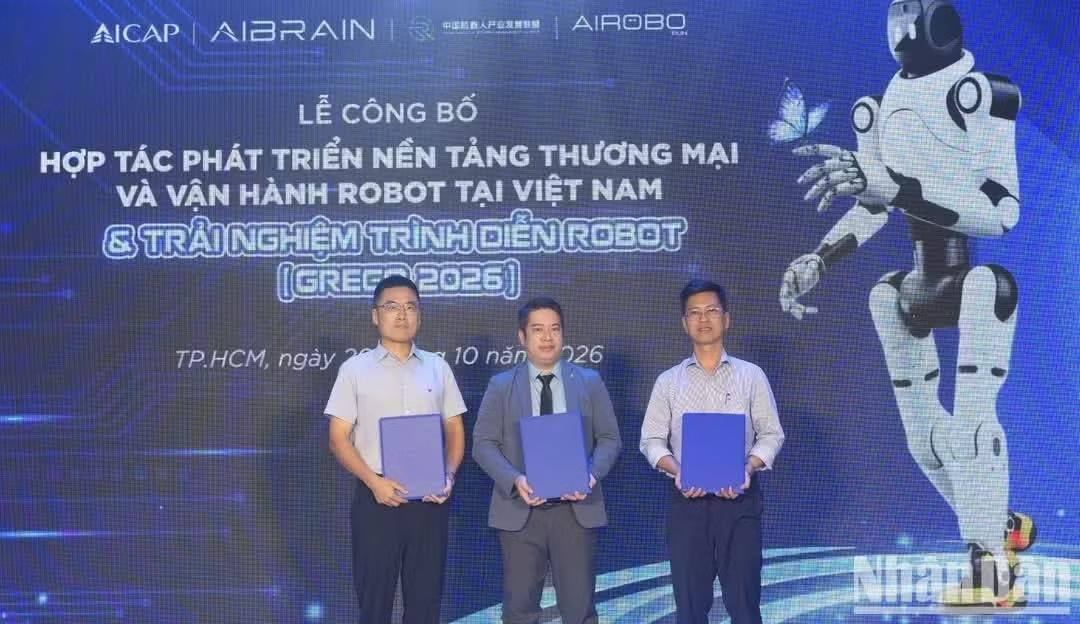
The strategic partnership between AICAP and AIBRAIN will help advance plans to develop a localised platform for the commercialisation and operation of robots in Viet Nam. Through the partnership, the parties will build an industrial cooperation platform and promote the sale, servicing, and operation of localised robots for a wide range of everyday applications.
Assoc. Prof. Dr Nguyen Thanh Phuong, Vice Rector of Ho Chi Minh City University of Technology, said it was difficult to develop a single all-purpose device capable of solving every problem, while businesses had highly diverse practical needs. A more viable approach, he said, was to build technology platforms, foundational systems, and common communication standards that would allow different components to be integrated and applications tailored to the specific needs of each business or even individual tasks.
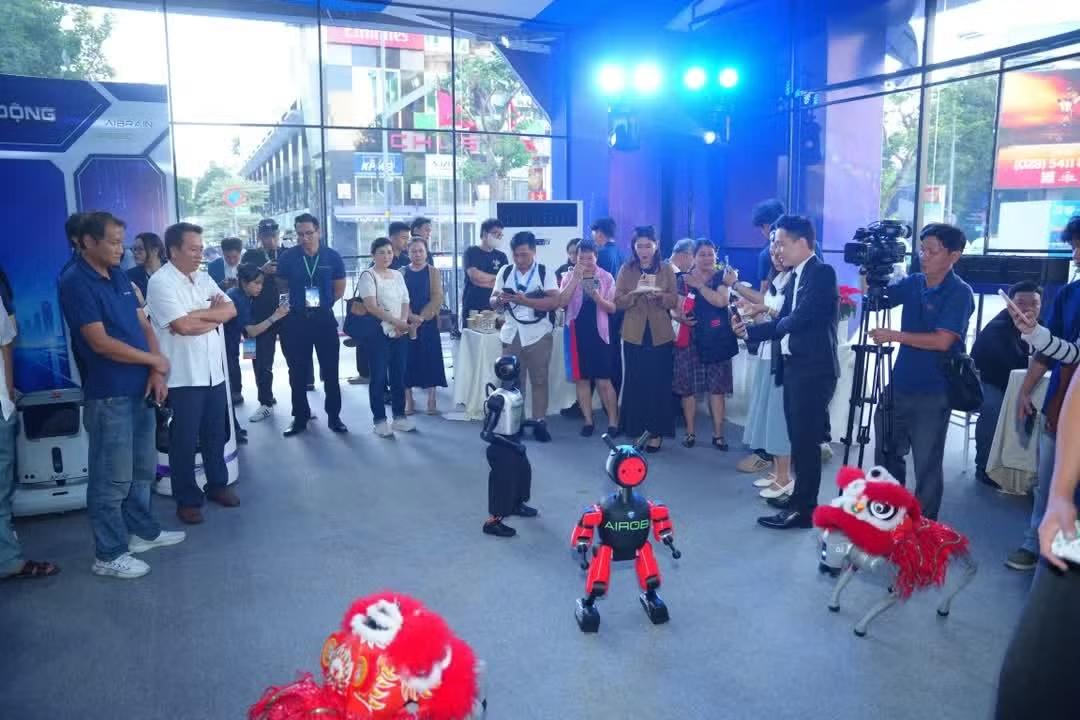
Representatives of the participating organisations said that connecting technology businesses with educational and research institutions would help Vietnamese engineers gain access to technology, take part in research, and develop solutions suited to domestic needs, narrowing the gap between theoretical knowledge and practical application.