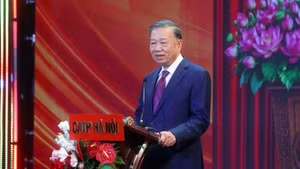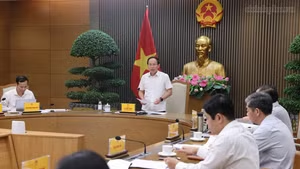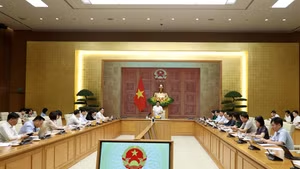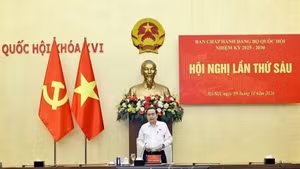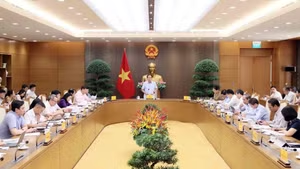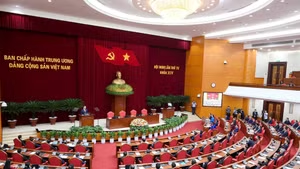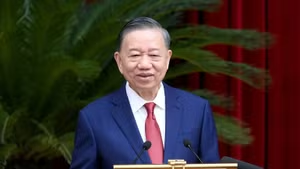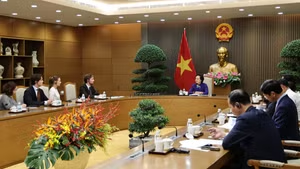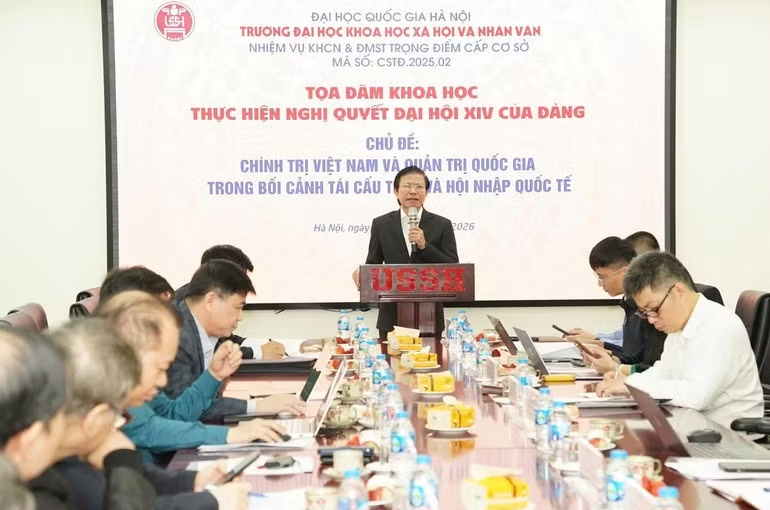
The seminar aimed to systematise theoretical foundations, analyse the current situation, and propose solutions to enhance the effectiveness and efficiency of national governance in the new development phase.
Speaking at the event, Associate Professor Dr Pham Van Linh, Standing Vice Chairman of the Central Theoretical Council, stated that national governance needs to be approached in a transparent, effective manner with the people placed at the centre.
According to him, governance must aim for a multi-stakeholder coordination model, in which the State plays the central role. Activities should be organised through networked linkages between stakeholders rather than operating in isolation. Decisions must be evidence-based and data-driven, as data and the data economy have become strategic national assets.
He also noted that Viet Nam’s state model is gradually aligning with global trends in integrating politics and governance. In the context of restructuring and deep international integration, competition between nations is increasingly evident at the institutional level.
Viet Nam’s participation in numerous free trade agreements also raises the requirement to innovate governance methods, particularly emphasising the role of the private economy and the participation of social organisations in development.
At the symposium, scientists and experts delivered numerous papers clarifying theoretical and practical issues arising in the implementation of the 14th National Party Congress documents.
Discussions centred on Party building and the political system, national development orientations, and key social development pillars such as culture, people, science and technology, and human resources. Issues relating to foreign affairs, national defence and security, great national unity, and institutional development were also addressed.
Participants shared opinions and proposed solutions to enhance governance efficiency at the grassroots level, improve the operation of the two-tier local government model, and strengthen the role of grassroots authorities in state management.