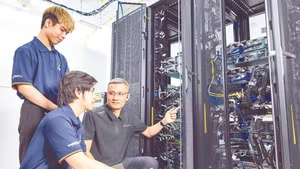
In 2026, the target of achieving double-digit economic growth is placing heavier demands on energy infrastructure.
In central Viet Nam, electricity demand continues to rise sharply in industrial parks, economic zones, tourist areas, and major urban centres, while extreme weather and prolonged heatwaves are driving rapid increases in peak demand.
Against this backdrop, the application of science and technology is no longer merely a supplementary option, but has become a critical solution for the broader power sector, and the Central Power Corporation (EVNCPC) in particular, to enhance electricity supply capacity while making efficient use of investment and human resources.
Starting with unmanned substations
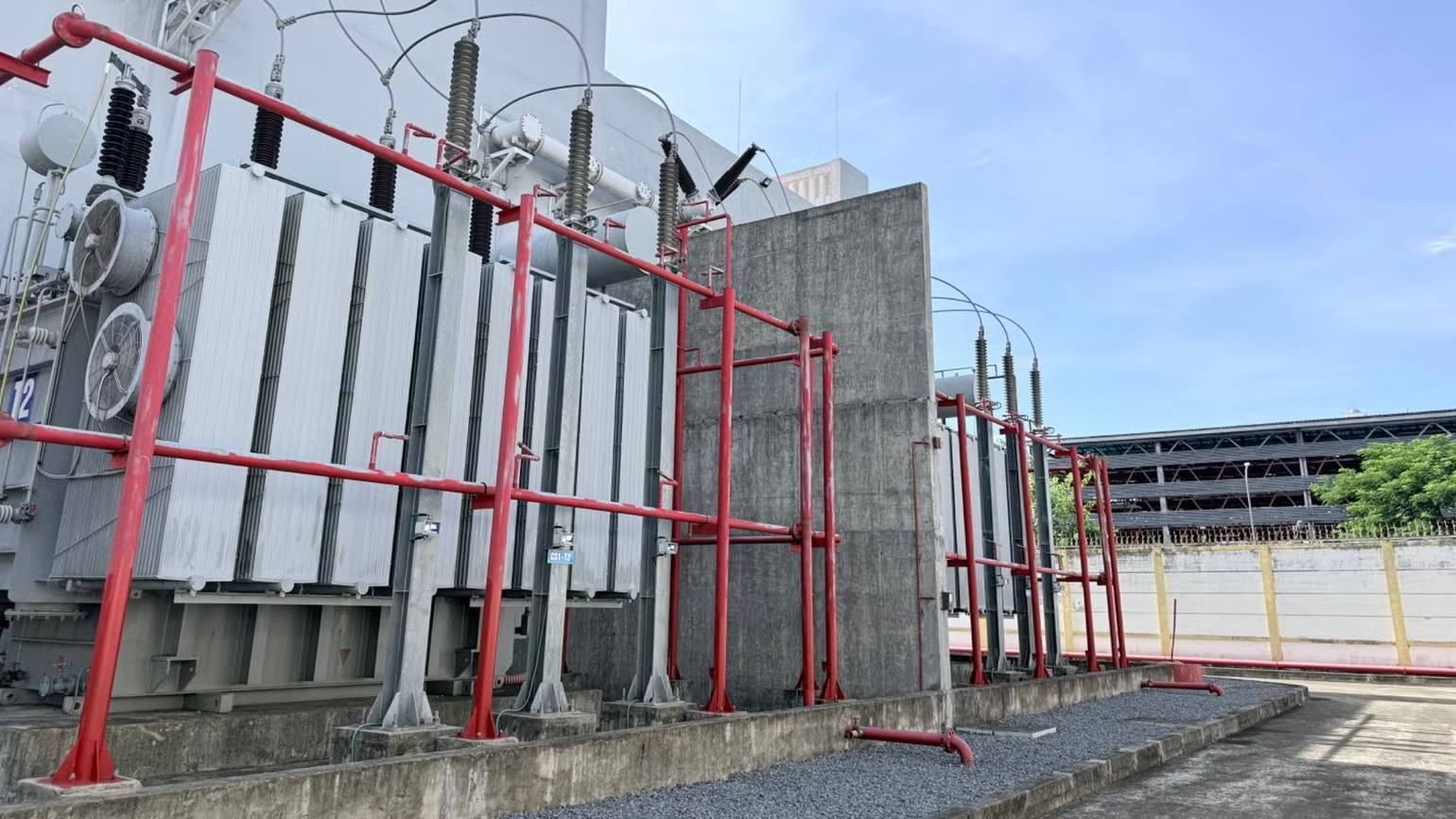
Da Nang Power Company, an EVNCPC subsidiary, has rolled out an integrated suite of technological solutions. A notable example is its system of unmanned 110kV substations, including Chi Lang 110kV Substation – EVNCPC’s first GIS substation in Da Nang.
Using SF6 gas-insulated switchgear technology, the substation occupies an area of only around 1,700 square metres, less than half the footprint of a conventional substation. The model not only addresses land constraints in residential areas but also reduces the need for on-site personnel.
According to Pham Tan Vu from the Da Nang Power Company, the company is operating its unmanned 110kV substation system as a synchronised network. Thanks to the application of technology, a single operations team can safely manage five to seven substations, thereby optimising human resources.
Technology is not only transforming high-voltage grids, but is also bringing significant changes to dispatching and fault response on distribution grids.
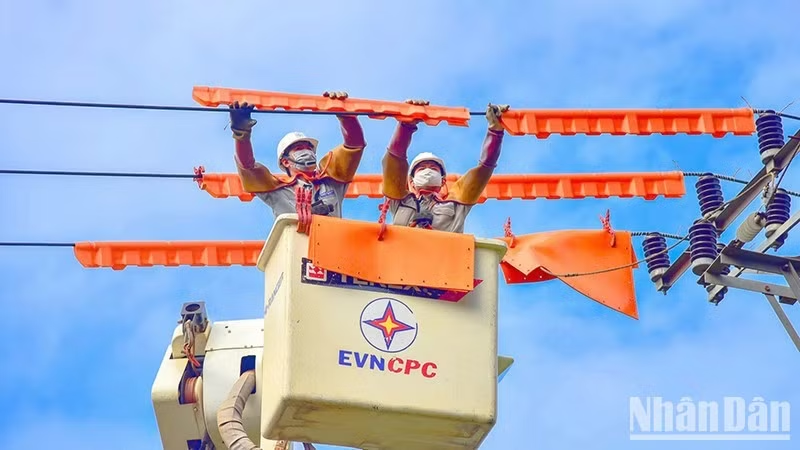
In Quang Tri, during this year’s summer peak, electricity demand increased by more than 30%, placing considerable pressure on grid operations.
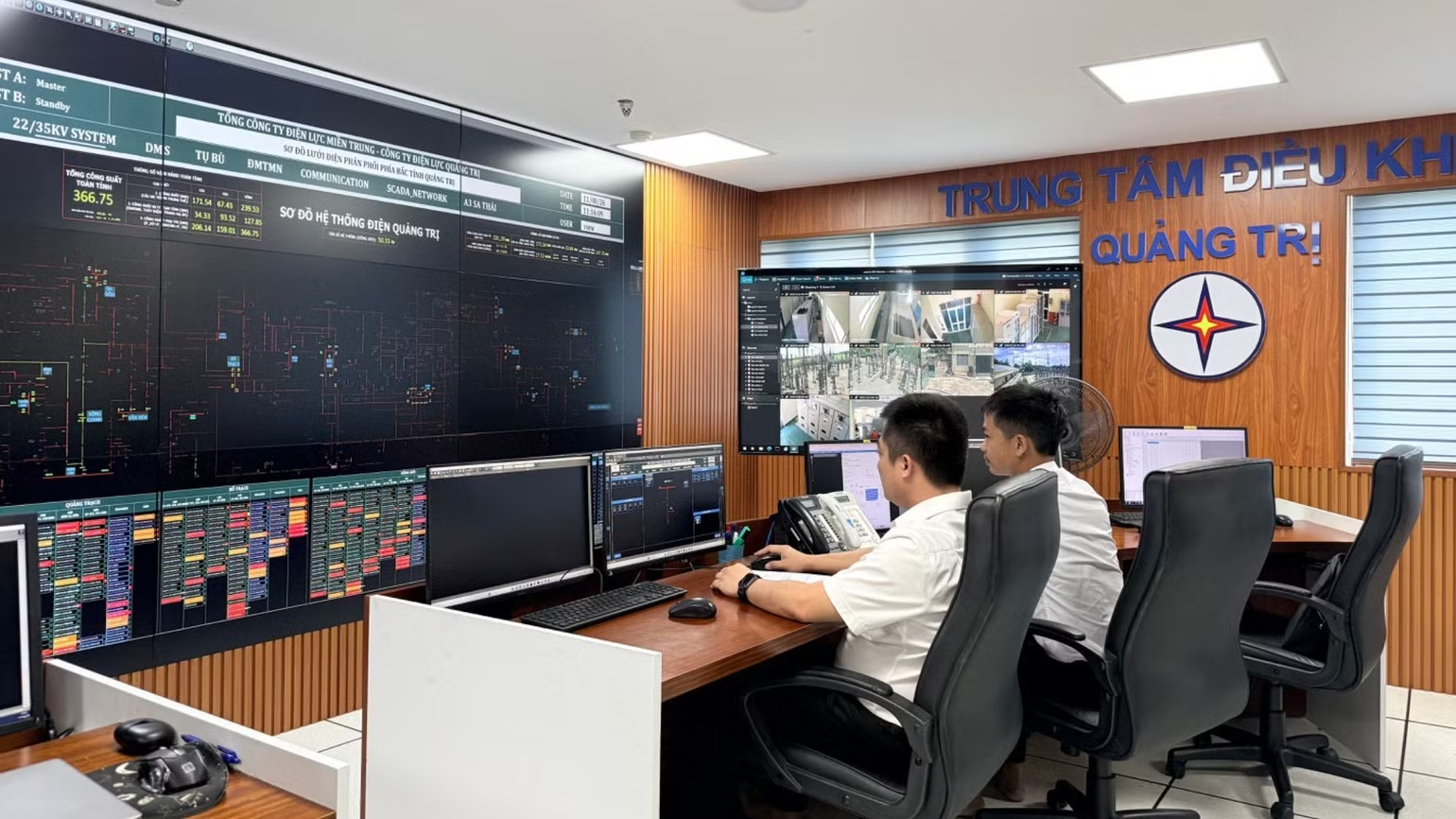
Trang Hieu Tan, Deputy Head of the Dispatching Division of Quang Tri Power Company, said that before 2016, switching operations and fault verification were heavily manual and relied on field staff, requiring considerable time for travel and response times. The introduction of automation and remote-control systems has brought about fundamental changes.
Engineer Ho Thanh Binh of the Dispatching Division of Quang Tri Power Company added that SCADA and DMS systems can automatically issue alerts when faults occur, enabling dispatchers to quickly locate and address them within roughly five minutes. This has shortened power outage times and improved the reliability of electricity supply to customers.
In Hue City, remote-control technology has also been integrated into power grid management. Le Tan Phuoc, Deputy Head of the Technical Division of the Phu Vang Regional Power Unit, said that equipment is connected to a control centre, enabling rapid fault detection and power restoration, while also increasing operational flexibility.
In particular, during storms and heavy rainfall, when accessing field sites can be difficult, remote monitoring and control enable the power sector to take a more proactive approach to fault response and minimise supply interruptions.
These models show that the application of technology is not simply about replacing manual operations. More importantly, data from connected equipment is becoming the foundation for the power sector to transition to a more proactive, faster, and more accurate operating model.
From automation to smart grids
Alongside the application of existing technologies, EVNCPC is researching and developing new solutions suited to the specific requirements of regional power grid operations.
Hue Power Company has researched and developed an autonomous robot for use at unmanned substations. The robot is configured to conduct periodic inspections automatically or be controlled remotely or on site, while incorporating smart monitoring functions to detect equipment abnormalities at an early stage.
According to Ho Duc Phuong, Deputy Head of the Dispatching Division of Hue Power Company, the robotic system can identify abnormalities such as elevated temperatures at joints or contact points. When a fault is detected, the robot automatically sends an alert to the control centre, enabling dispatchers to promptly devise an appropriate response.
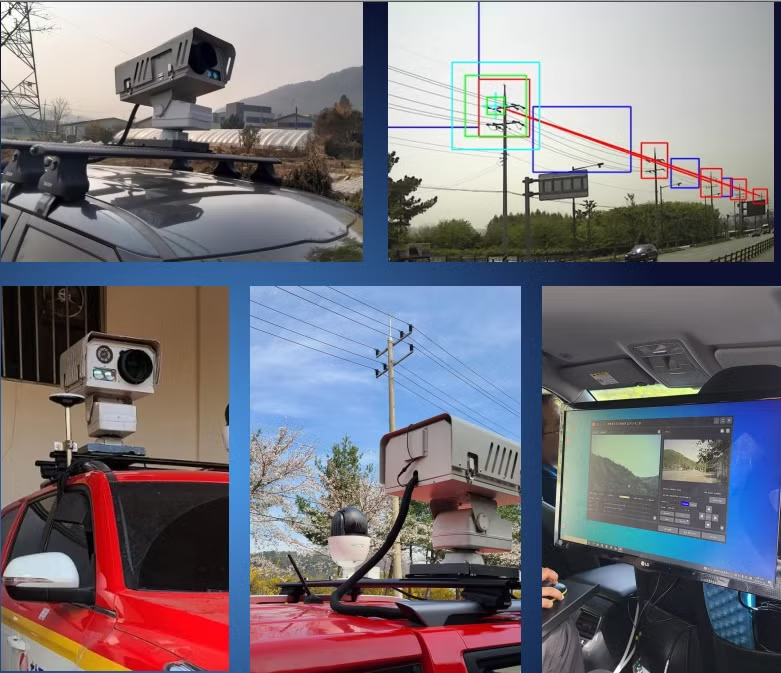
In practice, these technologies have demonstrably improved customer service quality, electricity supply reliability, and the reduction of power losses. Unmanned 110kV substations, remote control centres, automatic loop-closing systems for medium-voltage feeders, and remote meter-reading systems are gradually laying the foundations for a smart grid.
EVNCPC is recognised as one of the leading units within EVN in applying science and technology, innovation, and digital transformation to management business operations, and construction investment.
EVNCPC General Director Ngo Tan Cu emphasised that, alongside immediate solutions, EVNCPC would continue investing in developing the power system in an integrated and modern network to meet growing electricity demand and the region’s socio-economic development.
The corporation will strengthen data connectivity and sharing between the DGMS, SCADA, GIS, OMS, and other operational systems; while stepping up automation and digitalisation, developing a smart grid, and enhancing monitoring and control capabilities and the reliability of electricity supply.
The rollout across central Viet Nam, from the unmanned GIS substation in Da Nang and the SCADA/DMS system in Quang Tri to remote control in Hue, and autonomous robots, shows that technology is gradually becoming part of daily management and operational practices.
Science and technology is therefore being incorporated not only into operations, but increasingly into the entire process of power system planning, investment, and management. This is also a requirement as localities enter a new phase of development, with larger electricity loads and stricter power supply requirements.