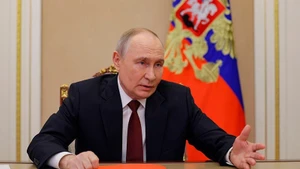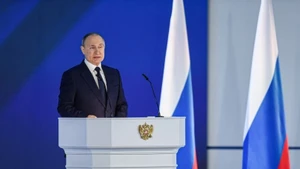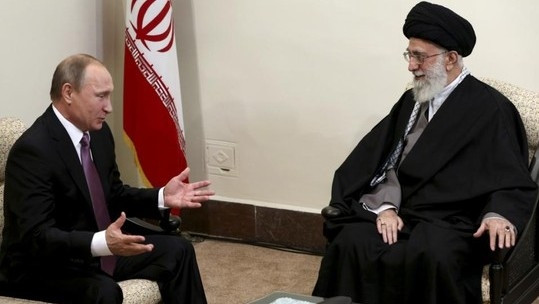
During his one-day visit, the Russian President had effective meetings with the supreme leader of Iran Ayatollah Ali Khamenei and Iranian President Hassan Rouhani.
Visiting the Muslim country at this time, the leader of the Kremlin will help Russia catch a ‘new wind’ blowing to Iran after the West’s sanctions on Iran are lifted following a nuclear deal between six world powers and Tehran signed in July. The two sides have agreed to boost co-operation in fields including nuclear energy, banking and transport, of which banking is one of pillars of their bilateral relations.
Russia and Iran have also signed several memorandums of understanding as well as numerous co-operation agreements worth approximately US$25 billion. The two countries have recently announced the use of their local currencies in bilateral trade transactions in order to promote bilateral trade turnover.
The two nations intend to form a bank or create a common account to increase transactions in local currencies, aiming to help Iran escape the constraints of economic and finance embargos by the West.
Moscow has also announced that it would provide US$5 billion in credit for common projects, opening a new era in economic relations between the two countries. The Russia-Iran co-operation will help both sides expand their relations with other countries in the Middle East.
The two countries are planning to establish a free trade area between Iran and the Eurasian Economic Union (comprised of Russia, Kazakhstan, Belarus, Armenia and Kyrgyzstan) as well enhance payment in their local currencies in transactions with Tehran.
Despite many ups and downs over the past years, the relationship between Russia and Iran is becoming increasingly closer as they have reached many agreements in finding proper solutions to security issues in the Middle East. Iranian Minister of Defence Hossein Dehqan emphasised that the two countries’ relationship has significantly contributed to stabilising the regional situation. The two sides also stressed the need for further strengthening their ties in the fight against terrorism, which was considered the basis of their defense co-operation.
Moscow is facilitating the delivery of S-300 missile air defense systems to Iran, while Iranian soldiers have been trained to operate these systems in Russia. The over US$800 million contract on Russia’s provision of five S-300 systems to Iran that was canceled in 2010 was resumed in April with Russia providing more modern S-300 systems than the original contract.
One of the main topics discussed during the recent meetings between Russian President Putin and leaders of Iran in Tehran was Syria. As two key allies of Syrian President Bashar al-Assad, Russia and Iran share the same view in finding solutions for the Syrian crisis.
In the context of both Russia and the United States conducting airstrikes aimed at the self-proclaimed Islamic State (IS) in Syria, the close links between Russia and Iran have created many advantages for Moscow, and have even helped Russia change the nature of the aggressive fight against terrorism in this Middle East country.
Considered 'oil and gas giants', the ‘handshake’ between Russia and Iran is not only beneficial to their bilateral relations, but also can help them to strengthen and promote their role and position in the Middle East. Although the visit of the Kremlin leader was short, it was expected to bring strategic and long-term benefits to the ‘land of white poplars’.