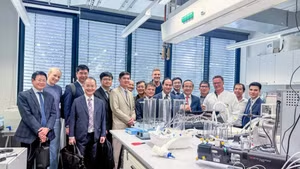
The symposium was held by the Embassy of Sweden in Viet Nam in partnership with AstraZeneca, Ericsson, EviBody and Getinge, in Ha Noi, on December 11.
The event is part of the Sweden–Viet Nam Health Innovation Initiative, launched in 2024 to strengthen Viet Nam’s capacity in chronic-disease management, healthcare digitalisation and high-quality care delivery.
Sweden and Viet Nam are writing the next chapter in a health partnership that began more than five decades ago. From landmark projects such as the Viet Nam–Sweden Uong Bi Hospital and the National Children’s Hospital in the 1980s, to health-policy and systems development in the 2000s, and today’s joint research and PhD exchanges, health has long been a cornerstone of this relationship.
Swedish experience in health-data systems, clinical quality improvement and sustainable medical technologies will inform practical solutions for Viet Nam’s hospitals and health authorities.
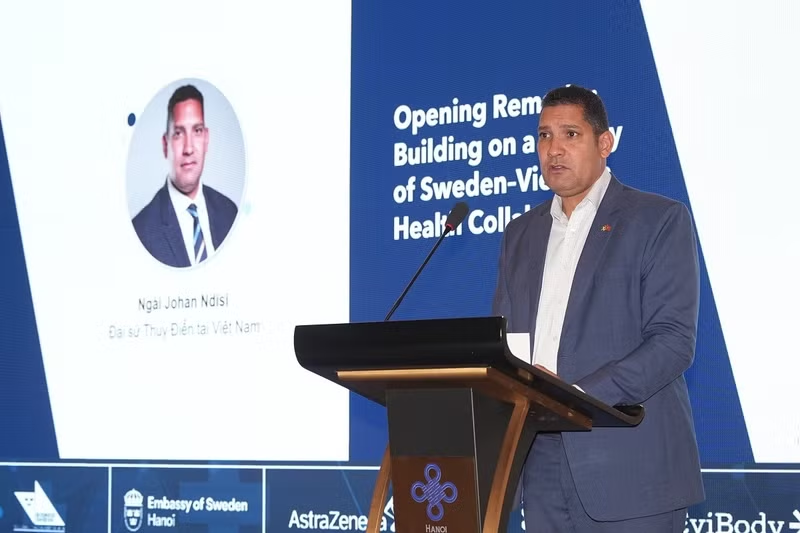
In his opening speech, Ambassador of Sweden to Viet Nam Johan Ndisi said: “Sweden and Viet Nam have built trust in healthcare over decades. We are moving from shared history to shared innovation, combining Swedish expertise in digital health and sustainability with Viet Nam’s ambition to deliver better care for all. This is about turning ideas into action that improves lives.”
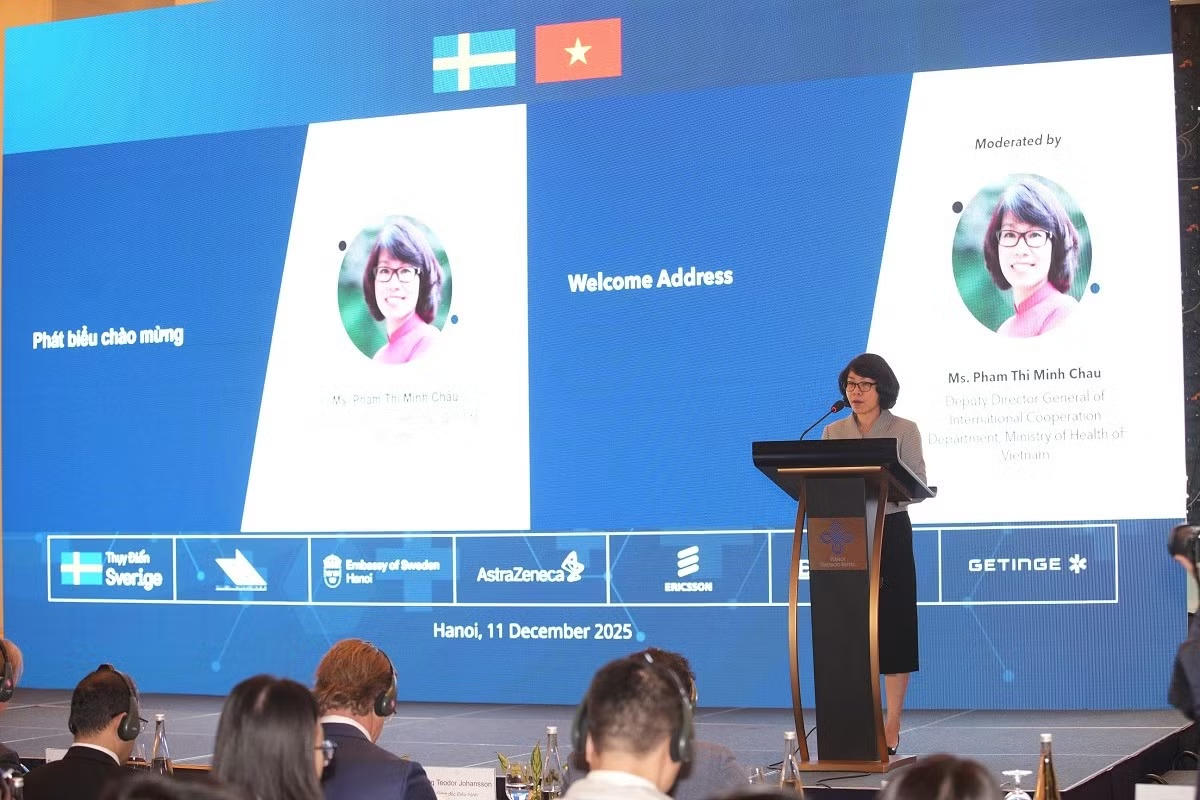
Speaking at the symposium, Pham Thi Minh Chau, Deputy Head of the Department of International Cooperation under the Ministry of Health, emphasised that Viet Nam, in its pursuit of a modern, equitable and sustainable healthcare system, requires a comprehensive approach in which the prevention of non-communicable diseases and the development of digital health solutions will play a pivotal role.
“I hope today’s symposium will serve as a platform for in-depth discussion and for learning from Sweden’s valuable experience in innovative solutions — from proactive prevention and continuous management of non-communicable diseases to building data infrastructure and deploying digital technologies in healthcare.
“We also need to consider effective public–private partnership agreements to mobilise societal resources and improve health outcomes, ensuring that no one is left behind,” Chau added.
From a policy perspective, Chau stressed that Viet Nam is committed to placing people at the centre, equity as a guiding principle, quality as the benchmark, and innovation as a pillar — four foundations for building a modern, internationally integrated and sustainable health system.
The programme features senior leaders from the Ministry of Health, along with Swedish academic and industry partners such as Karolinska Institutet, Sophiahemmet University, AstraZeneca and Getinge, alongside Vietnamese hospital directors, researchers and digital-health authorities.
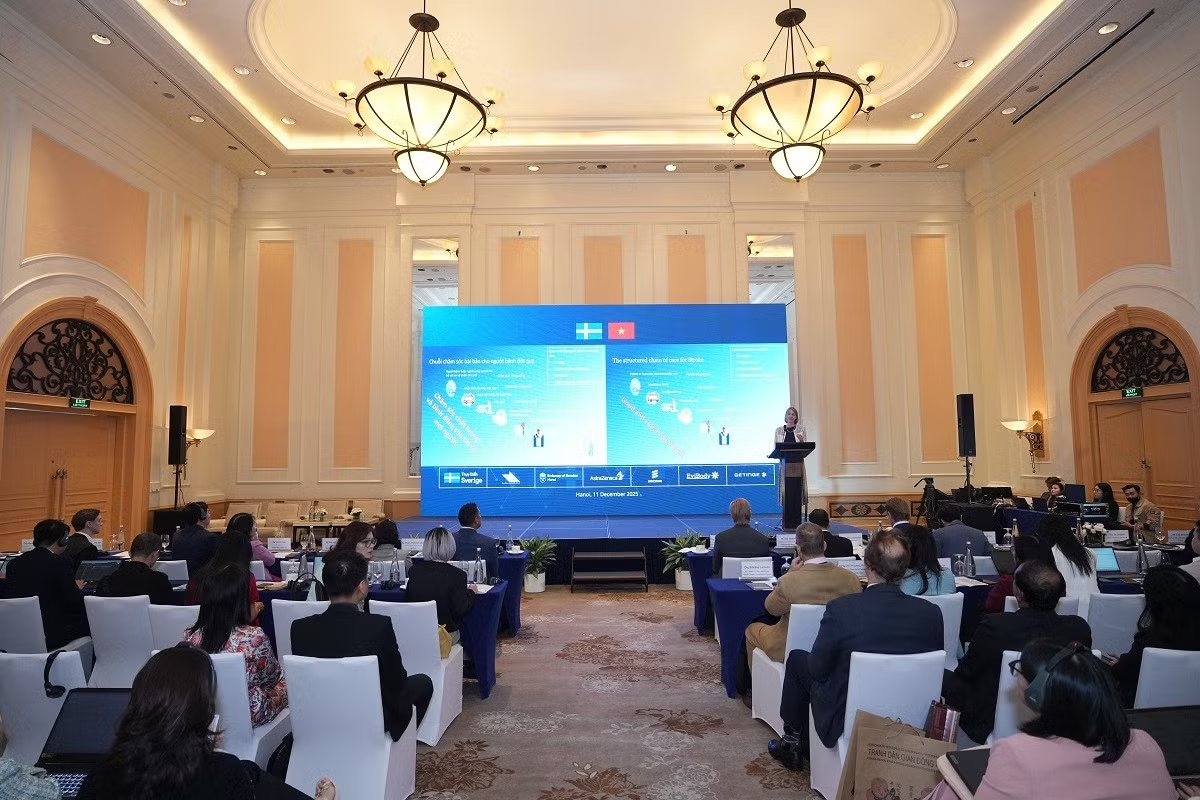
At the event, Assoc. Prof. Mattias Larsson of Karolinska Institutet and Medical Director at Family Medical Practice delivered a lecture titled “Sweden–Viet Nam Health Collaboration: Past Progress and Future Potential.” He highlighted the long-standing collaboration between Ha Noi Medical University (HMU) and Karolinska Institutet (KI), noting that 64 PhDs have been defended at KI and more than 300 publications have arisen from the KI–Viet Nam partnership. Academic cooperation in training and research, he said, has also strengthened the internationalisation of Swedish universities by building on existing infrastructure to expand exchange in research and education between Viet Nam and Sweden.
Prof. Mia von Euler, President of Sophiahemmet University, shared lessons from Sweden in preventing and implementing high-quality care for non-communicable diseases. She identified the top three causes of death and disability — stroke, ischaemic heart disease and road injuries in Viet Nam; and falls, ischaemic heart disease and anxiety disorders in Sweden.
She underscored that addressing unhealthy lifestyles must become a core component of modern healthcare, highlighting Sweden’s model of structured, patient-centred interventions within primary care.
She explained that the approach is grounded in advisory and motivational consultations delivered on equal terms for the entire population, ensuring that no group is disadvantaged in access to prevention and treatment. Priority is given to adults at high risk of serious disease or disease progression, pre-operative patients, pregnant women and children and adolescents under 18.
According to von Euler, this framework has helped Sweden strengthen early prevention, improve clinical outcomes and reduce long-term health costs — offering valuable lessons for Viet Nam as it advances its digital and preventive healthcare transformation.
Sharing his perspective on transforming non-communicable disease care pathways through public–private collaboration, Atul Tandon, Chairman and General Director of AstraZeneca Viet Nam, said that the future depends on taking bold action for the health of people, society and the planet. He noted that AstraZeneca is working to improve equitable access, drive innovative solutions, reduce carbon footprints and strengthen robust healthcare systems.
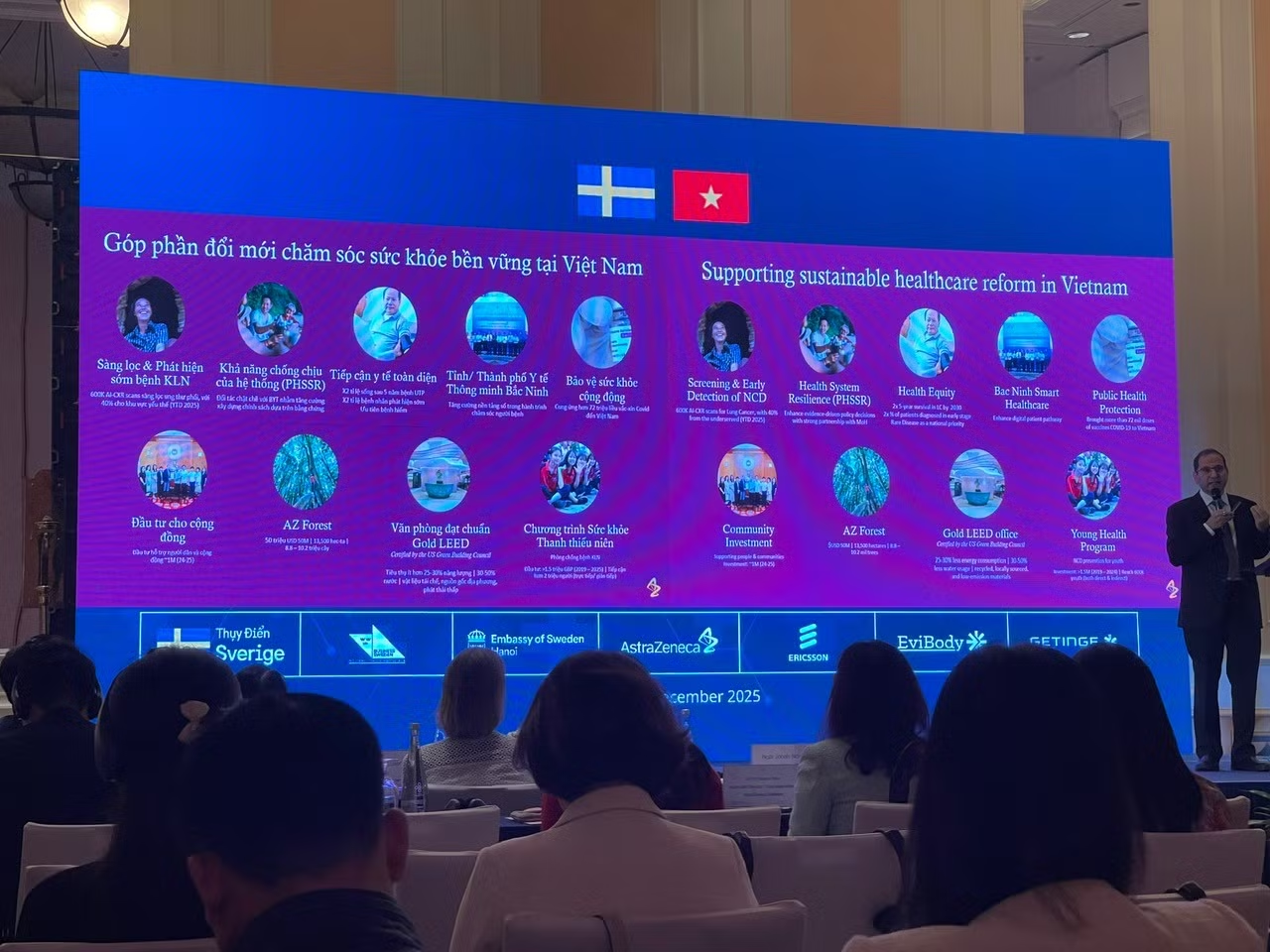
He emphasised that extensive collaboration between the public and private sectors will unlock new opportunities, enhancing Viet Nam’s capacity to spearhead and advance healthcare innovation.
The afternoon sessions focused on digital transformation in healthcare and sustainable operating-room solutions, turning ideas into actionable pathways for implementation.
Sweden is globally recognised for its advanced health-data ecosystems and quality registries that drive evidence-based improvements in patient outcomes and health-system efficiency. This experience now informs bilateral cooperation on digital health, clinical decision support and quality improvement in Viet Nam.
The collaboration also builds on the strategic sectoral partnership between Sweden and Viet Nam on science, innovation and digital transformation signed in June 2025. This agreement provides a strong framework for data-driven healthcare, responsible health-data use and the development of digital hospitals. It reflects a shared ambition to combine Swedish expertise in advanced health technologies with Viet Nam’s vision for accessible, high-quality care.