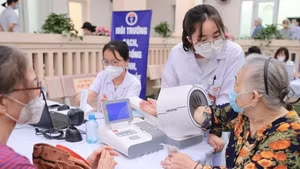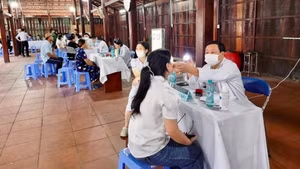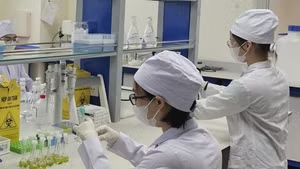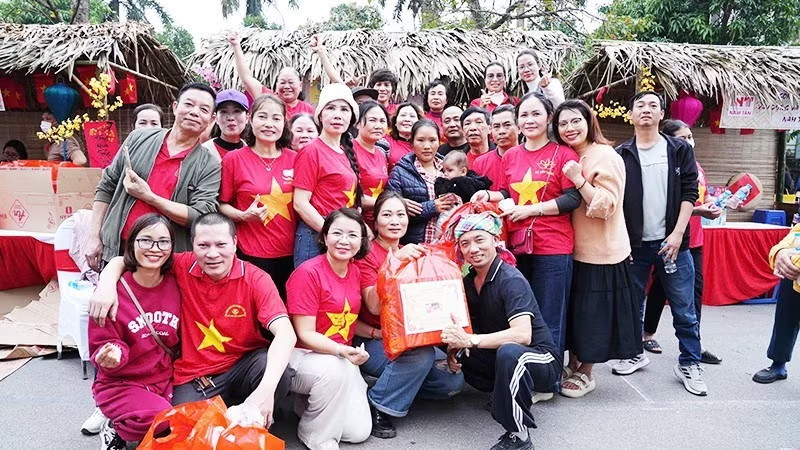
They cannot enjoy a full Tet, but the care and sharing from medical staff, mass organisations and other groups have helped bring a warmer Tet atmosphere within the hospital setting.
When the hospital becomes a shared home
A spring atmosphere is spreading at Ha Noi Medical University Hospital. Recently, the “Tet for Patients” programme held at the Oncology Department presented 90 Tet gift packages to patients under treatment. These gifts, delivered directly into patients’ hands, carry not only material value but also wishes for peace, faith, and encouragement. In brief moments along hospital corridors, smiles appeared on patients’ faces; the warm looks exchanged between giver and receiver seemed to ease, at least in part, the fatigue of the long treatment journey.
Le Thi M (50 years old), who is caring for her son undergoing oncology treatment, was moved when receiving a Tet gift: “The gift is not big, but at this moment, that care is far more precious. My child is tired and in pain, yet today, seeing the aunts and uncles come to visit and ask after him, he smiled more. This Tet there is no banh chung at home, but with such encouragement, I feel my heart becomes lighter.”
At the National Hospital for Tropical Diseases, the hospital’s Social Work Department proactively prepared a warm “Tet table” with banh chung, gio (Vietnamese pork roll), fruit, sweets and other traditional dishes to give to patients and family members who cannot return home for Tet. Essential supplies such as instant noodles and ready-to-eat porridge were also carefully prepared, ready to support patients during the extended holiday. With around 150 million VND raised, the hospital is urgently reviewing and compiling a list of patients in difficult circumstances to provide support to the right people, in line with real needs.
In another corner of the hospital, a place few notice — the building’s basement — has become a temporary resting area with neatly arranged beds for patients’ family members, especially relatives of patients in the Intensive Care Unit and Emergency Department. This is also a very special “place to stay” during Tet. Not luxurious and not well-equipped, but clean, safe and sufficient for family members to lie down after long hours of caring for their loved ones. Every week, the area is thoroughly cleaned and disinfected, and managed through registration slips to ensure order. These small arrangements, for those directly involved, are a great comfort.
Tran Thi Th (35 years old), a family member of a patient in the Intensive Care Unit and Emergency Department, quietly said: “My home is more than 200 km from Ha Noi, so this Tet we have decided not to go back. Having a place to rest in the hospital basement like this is already very precious. When night falls, we just need somewhere to doze off a little to regain strength, so in the morning we can continue caring for our relative. For us, that is Tet warm enough.”
At Bach Mai Hospital, over the three Tet days from the 30th day of the twelfth lunar month to the second day of the first lunar month, main meals for patients and on-duty medical staff will be provided free of charge. Hot meals with adequate nutrition not only help ensure health but also carry the message of sharing that the Board of Directors, the Trade Union and the hospital collective wish to convey: even without going home, patients and medical staff can still welcome Tet with care and warmth.
The Tet zero-cost stall at Bach Mai Hospital has been organised annually for four years, overseen by the Social Work Department. The stall stays open continuously for seven Tet days, serving patients’ family members and on-duty medical staff free of charge. From hot sticky rice packages in the morning, crusty bread rolls, hearty lunch portions to warm blankets, towels, shampoo and woollen hats, everything is given with kindness and respect.
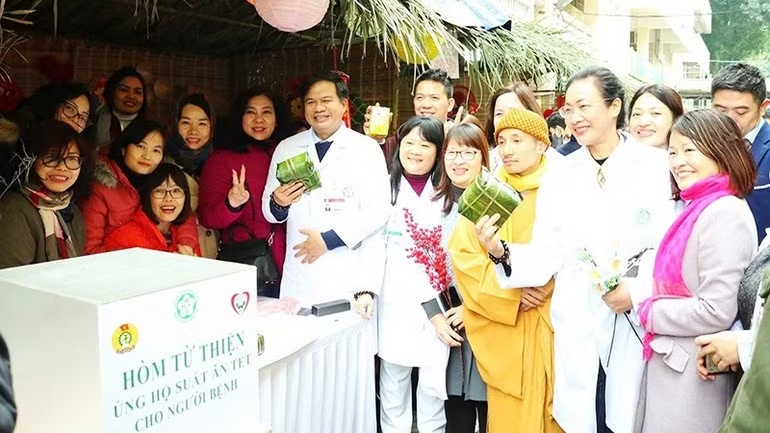
For Viet Duc Friendship Hospital, caring for patients during Tet has become a cherished tradition. The annual programme “Spring of Love – Tet of Sharing” connects the hospital with benefactors to bring the taste and spirit of Tet to patients in difficult circumstances. This year, a “Spring Market” session was held with 10 stalls, providing milk, nappies, food, personal items and warm clothing to more than 600 patients, with total support exceeding 2.2 billion VND.
Associate Professor, Dr Nguyen Manh Khanh, Deputy Director of the hospital, shared that the programme not only helps ease patients’ hardships, but also spreads humanistic values and strengthens solidarity among medical staff in the early days of spring.
By the end of 2025, the total value of support provided to disadvantaged patients through the social welfare programmes of Viet Duc Friendship Hospital had reached nearly 40 billion VND. Free shuttle trips quietly covered more than 51,000 km, bringing patients home safely — a beautiful image affirming that the hospital is not only a place to treat illness, but also a compassionate anchor.
Pham Van Q (41 years old, a construction worker) being treated for severe injuries, said while holding a gift bag: “I didn’t think the hospital could have such a Tet atmosphere. There are flowers, banh chung, and gifts. The doctors and nurses even offer Tet greetings room by room. Perhaps this is a Tet I will remember for a very long time.”
Tet in a place without holidays
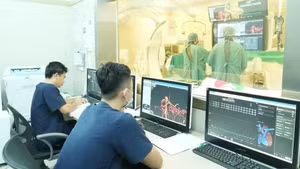
As a tertiary-level hospital, during Tet, the Stroke Centres, A9 Emergency, Cardiology, Nephrology–Urology, Poison Control and other units at Bach Mai Hospital will keep their lights on day and night. It is estimated that nearly 1,000 patients will continue inpatient treatment, with more than 600 doctors, nurses and other medical staff regularly on duty, ready to respond to emergencies.
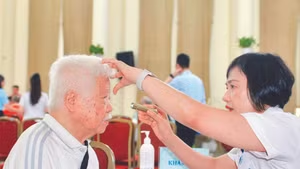
At E Hospital (Ministry of Health), professional work has been carefully prepared from early on. Duty rosters, in-house on-call arrangements, and shift handovers are strictly implemented; the leadership hotline is always open; and out-of-hospital emergency response is ready for any situation. Nguyen Van H (62 years old from Phu Tho), receiving cardiovascular treatment, shared on an afternoon close to Tet: “For decades, there hasn’t been a year I spent Tet in hospital. Saying I’m not sad would not be true, but seeing the doctors and nurses on duty day and night, asking about every meal and every sleep, I feel greatly comforted. This Tet I won’t go home, but I believe I am in a safe place.”
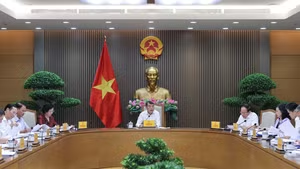
Leaders of the Department of Medical Services Administration (Ministry of Health) said that during Tet, on-duty work is carried out strictly and in accordance with regulations. Lists of on-duty staff are publicly posted at departments and units; duty and in-house on-call regimes and shift handovers are tightly observed. The hospital leadership hotline remains active, ready to provide professional support for lower-level facilities and consultations in complex situations, especially out-of-hospital emergency cases through the 115 system.
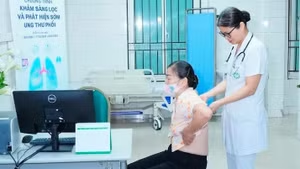
Emergency departments are places where there is no laxity or rest. Medical staff are on duty all day and night, ready to receive and handle traffic accidents, domestic accidents, fires and explosions, and food poisoning — risks that often increase during Tet.
At the same time, disease prevention and control is maintained at a high-alert level. Departments and units strictly follow Ministry of Health guidance; patient triage and screening at emergency departments are clearly organised, especially for those showing respiratory symptoms. The Tropical Diseases Department proactively allocates a reserve bed capacity, ready to receive and treat patients if outbreaks occur, while strengthening internal communications and guiding patients and family members on measures to prevent seasonal flu and other infectious diseases.
Behind the smooth operation of examination and treatment is the quiet but crucial involvement of hospital logistics teams. From electricity, water, fuel, ambulances and emergency transport, to information technology systems, electronic medical records, Wi-Fi and hospital fee payments — all are ensured to run continuously without interruption. Supplies of medicines, blood and blood products, infusions, consumables and medical equipment are stocked adequately. Infection control, as well as the handling of medical and domestic waste, is strengthened to ensure hospitals remain green, clean and safe, even during the Tet peak period.
According to the Ministry of Health, caring for patients during Tet is a major policy implemented consistently over many years, reflecting the principle of putting patients at the centre. The ministry requires health facilities to maintain full staffing on duty, provide timely emergency care, avoid shortages of medicines and blood, ensure uninterrupted treatment, and pay close attention to the spiritual well-being of patients and medical staff during Tet.